I've seen books by Joshilyn Jackson taken out quite frequently at my library, but I never read her books before. When I saw her latest book, Someone Else's Love Story, the premise and the reviews sound promising. I thought I would give it a shot.
Description: I fell in love with William Ashe at gunpoint, in a Circle K
For single mom Shandi Pierce, life is a juggling act. She's finishing college; raising her delightful three-year-old genius son, Nathan, aka Natty Bumppo; and keeping the peace between her eternally warring, long-divorced Christian mother and Jewish father. She's got enough to deal with before she gets caught in the middle of a stickup in a gas station mini-mart and falls in love with a great wall of a man named William Ashe, who steps between the armed robber and her son to shield the child from danger.
Shandi doesn't know that her blond god has his own baggage. When he looked down the barrel of the gun in the gas station he believed it was destiny: it's been exactly one year since a tragic act of physics shattered his universe. But William doesn't define destiny the way other people do. A brilliant geneticist who believes in science and numbers, destiny to him is about choice.
Now, William and Shandi are about to meet their so-called destinies head-on, making choices that will reveal unexpected truths about love, life, and the world they think they know.
Review: Someone Else's Love Story is an enjoyable read though there are parts that I had issues with the story. The novel captures the ambiance and customs of a Southern life. It is part of a coming of age story though the main character is well in her twenties and part of a love story though the identity of the love interests are a bit of a mystery. Shandi is a young woman preparing for college but finds herself caught up in a real-life drama. Shandi has a miracle baby named Nathan, but she and her BFF, Walcott, call the precocious 3-year-old genius Natty. The events leading to Natty's birth and Natty's biological father is a mystery and it is slowly unveiled as the story progresses.
I didn't get the sense that Shandi is in her twenties, but I pictured her more like sixteen. Her voice is very young and she still seems to be a pawn used in the chess game of her parents' divorce. As Shandi moves out of her mother's home to her successful physician father's condominium in Atlanta, she, Walcott and Natty become caught up in an armed robbery. It's during this robbery that Shandi meets William Ashe, a giant of a man with a palpable, lingering sorrow. When William takes a bullet during the robbery, Shandi decides to take on William and starts caring for him on the day he leaves the hospital. The instant love for Shandi made me roll my eyes a bit, but I was more interested in learning about William and his tragic loss. In fact I was hoping these two characters would not get together because then it would ruin the character building both characters have as they both help each other cope with their dilemmas.
As I continued to read the story, I wanted to know about the mystery surrounding Shandi's pregnancy. When the truth was revealed, I was a bit alarmed at how a serious issue was dealt with so matter of factually. I don't agree with how this plot line was handled and it made me lower my rating. Perhaps I'm over thinking about it and not understanding that forgiveness is the higher road taken. Overall, Someone Else's Love Story feels like a summer read though you may be a bit irritated with the main character. Despite my issues I did like it enough to recommend it to others.
Rating: 3.5 stars
Words of Caution: There is an allusion to sexual assault, sexual situations, and some language. Recommended for older teens and adults.
If you like this book try: Looking for Me by Beth Hoffman, The Whole Golden Egg by Kristina Rigggle, The Book of Someday by Dianne Dixon
hotel sahid surabaya
Showing posts with label 3.5 stars. Show all posts
Thursday, June 26, 2014
Thursday, June 19, 2014
Savage Girl
Savage Girl by Jean Zimmerman has an attention grabbing premise: What would happen if a wealthy couple with everything they could possibly imagine came across a so-called "feral child" in a tawdry Nevada sideshow and decides to bring her back to New York and convert her into a society belle? Though light on the suspense, Savage Girl is an intriguing historical fiction.
Description: Bronwyn, a very smart eighteen year-old girl raised in the wild by wolves in Nevada, is adopted in 1875 by the Delegates a wealthy Manhattan couple, and taken back East to be civilized and introduced into high society, but the men who seek to be her suitors start turning up dead.
Review: Savage Girl is marketed as a historical fiction/murder mystery and its blurb grabbed my attention right away. Set in the 1870s post-Civil War America, the book's plot centers around a serial killer whose rampage ranges from a rough mining community in Nevada to upper-class Manhattan. Our narrator Hugo Delegate, Harvard-educated son of one of New York's wealthiest and most socially connected families, is locked up for the gruesome murder of another New York dandy. He willingly claims his guilt, but we can easily tell that he is taking the blame for someone else who has committed the real crime. Sensing a story folded in a Hugo's confession, Hugo's expensive lawyers demand he tell them the true story from the beginning.
Hugo starts with his family's visit to Virginia City, Nev., home of his father Freddy's silver mine. Soon, Hugo's parents, eccentric liberals interested in the nurture/nature debate raised by Darwin, are eager to adopt a young girl they have discovered in a Virginia City freak show, the girl's owner of which claims she was raised by wolves. Of unknown origins, she speaks Comanche as well as a smattering of English, and her performance involves a set of mechanical claws and a swimming tank.
The unknown girl, whose name turns out to be Bronwyn, travels on the Delegates' private train to New York, where the Delegates plan to give her a makeover a la My Fair Lady and show her off as their prized possession and a symbol of compassion and philanthropy. Bronwyn captivates her audiences, particularly males and never manages to shake off her mysterious aura. Soon one grisly murder after another seems to follow in Bronwyn's wake, the victim always a man who has shown his attraction to Bronwyn's considerable charms. Is Bronwyn, with her animal-like instincts, the killer? Or is it Hugo, with his past mental problems, his capacity to black out and his love for Bronwyn that borders on jealous insanity?
I really enjoyed the historical aspects of this book. Zimmerman zeroes in the the mannerisms and social issues of the late 1800s much like Edith Wharton did, which for me, was the highlight of this book. I was shocked to find out that cases of feral children being sold and "trained for society" was common especially when a bloody Civil War about slavery was recently over. Unfortunately, the mystery surrounding the serial killer is not as prominent in this book and it felt underdeveloped with new clues and a hurried solution appearing at the end of the book, which made me disappointed. I would still recommend it to those who enjoy a well written historical fiction and are interested in learning the social, political, and philosophical issues that are the driving issues of post Civil War America.
Rating: 3.5 stars
Words of Caution: There are allusions to sexual assault and sexual situations though never explicit. There are some disturbing images such as mutilated body parts in the book and some language. Recommended for adults.
If you like this book try: The Wife, the Maid, and the Mistress by Ariel Lawson, The Ghost of Mary Celeste by Valerie Martin
Wednesday, May 28, 2014
Liar and Spy
Description: Seventh grader Georges moves into a Brooklyn apartment building and meets Safer, a twelve-year-old self-appointed spy. Georges becomes Safer's first spy recruit. His assignment? Tracking the mysterious Mr. X, who lives in the apartment upstairs. But as Safer becomes more demanding, Georges starts to wonder: what is a lie, and what is a game? How far is too far to go for your only friend?
Review: Seventh grade is not going well for Georges (pronounced George), the only child of an out-of-work Brooklyn architect and a nurse who named him after her favorite painter, pointillist Georges Seurat. Although Georges's mother has taken on double shifts to bring in extra income, the family has had to sell their house and move into an apartment. At school, former best friend Jason, who has started dressing like the skateboarder he isn't, now stands idly aside while bullies harass Georges. Liar and Spy is a book examining all the different and complex aspects of friendships.
Stead balances Georges's dark, sad period with the introduction of the new neighbors: amateur spy Safer, and his younger sister, Candy, whose parents (in one of many hilarious details) let the kids name themselves. As homeschooled siblings, they offer refreshing perspectives on the ridiculousness of what goes on at Georges's school, including a forthcoming science unit on taste buds that the kids believe forecasts one's destiny. Safer recruits Georges to investigate and observe--using the lobbycam to track a mysterious tenant and binoculars to monitor a nest of wild green parrots--but the biggest secrets are the ones these two boys have buried in their hearts.
Like Stead's previous novel, When You Reach Me, Liar and Spy has been critically acclaimed and garnered several starred reviews, however, I don't understand the hype. The pacing is quite slow and it stalls in several places, making the reader wonder where and how the many plot lines are going to converge and make sense. There a lot of subtleties and metaphors in this book and I'm not sure whether kids would care enough to find them in this multi-layered story on their own. While there are fascinating characters and intelligent questions presented in the book, it may not appeal enough to kids to finish it.
Rating: 3.5 stars
Words of Caution: None. Recommended for Grades 3 and up.
If you like this book try: Harriet the Spy by Louise Fitzhugh
Thursday, April 10, 2014
Medea (Delphic Women #1)
I've been interested in Greek Mythology for as long as I could remember. When I came across Kerry Greenwood's Delphic Women which retold the myths of Jason and the Gold Fleece, the Trojan War and its aftermath from the point of view of the important female characters, I knew I had to read them. Greenwood makes the myths come alive and provides a different spin on characters who were once thought to be weak and one dimensional.
Description: Medea, Princess of Colchis, is a priestess of Hecate, Three Named, Lady of Phantoms. She is the custodian of the wood in which the Golden Fleece is hung. She alone can tame the giant serpent which guards the grove. And then Jason and his Argonauts come along, and she falls catastrophically in love. She helps him steal the Golden Fleece ans sails with him to claim his throne. And that's when things go wrong... and she must attempt to reclaim her humanity through abandonment, murder, grief and heavy seas.
Review: The story of Medea is not a feel good bedtime story. It is a story of a woman's rage that is so strong, she even killed her own children to make a point. Needless to say, Medea isn't a heroine girls aspire to be, but Greenwood transforms this notorious female character into someone we can sympathize and root for. Medea is a feminist retelling of the Medea and Jason and the Argonauts myths. In many renditions of these stories, Medea doesn't have a voice to share her feelings and point of view. In Greenwood's version of the tale, Medea has a strong voice that can not be ignored and it is contrasted with a fictional member of Jason's Argonauts named Naupolis.
Greenwood's Medea is a priestess of Hecate and a princess of Colchis, in what will become the modern-day Republic of Georgia. She has learned well the teachings of her tutor, the sour Trioda, and is used to a good deal of freedom as she roams the area, always accompanied by her two black hounds. Greenwood spends a lot of time discussing Medea's upbringing which I found fascinating as Medea struggles to learn what it means to become a woman and the double standards of gender. From Argonaut Nauplios' narration, we learn of the difficulties faced by the heroes who accompany Jason in his quest for the Golden Fleece, his ticket to reclaim his rightful inheritance. After harrowing adventures, the Argonauts arrive in Colchis, where Medea's father, Aetes, sets Jason impossible tasks to acquire the fleece. It is through Nauplios' character that we see what makes a man of honor even though he may appear as a mere mortal man.
To my surprise and disappointment, the Golden Fleece myth is only a few pages and goes by quickly. Jason as you can imagine is not seen in a good light. He is a person who has no backbone and can not make a decision to save his life. One is left to wonder why he was even picked for this dangerous quest and made a demigod. Greenwood follows the overall Golden Fleece myth with Medea instantly falls in love with the charismatic Jason and secretly helps him when he promises to marry her and be forever faithful. The best and biggest surprise is how Greenwood handles the end of her story. Though it is a drastic change in what we know of the 'original' myth, it works really well and emphasizes on all themes Greenwood touches upon in her story.
It is clear that Greenwood has done her research thoroughly in every aspect of life in Ancient Greece. The setting and lifestyle isn't glorified but rough, messy, and full of injustices. The pacing of the book is a bit uneven and the prose is a bit clunky at times, however, I found myself really enjoying the Medea-centric parts of the story. I would recommend this book to readers who are serious about Greek Mythology and are interested in learning to read these myths from a feminist angle.
Rating: 3.5 stars
Words of Caution: There is strong violence and sexual situations throughout the book as well as language. Recommended for mature teens and adults who enjoy and are serious about Greek Mythology.
If you like this book try: Penelopiad by Margaret Atwood, Lavinia by Ursula Le Guin
Thursday, April 3, 2014
Panopticon
"As specimens go, they always get excited about me. I'm a good one. A show-stopper. I'm the kind of kid they'll still enquire about ten years later. Fifty-one placements, drug problems, violence, dead adopted mum, no biological links, constant offending. Tick, tick, tick. I lure them in to being with. Cultivate my specimen face. They like that."
Description: Anais Hendricks, fifteen, is in the back of a police car. She is headed for the Panopticon, a home for chronic young offenders. She can't remember what’s happened, but across town a policewoman lies in a coma and Anais’s school uniform is covered in blood. Raised in foster care from birth and moved through twenty-three placements before she even turned seven, Anais has been let down by just about every adult she has ever met. Now a counter-culture outlaw, she knows that she can only rely on herself. And yet despite the parade of horrors visited upon her early life, she greets the world with the witty, fierce insight of a survivor.
Anais finds a sense of belonging among the residents of the Panopticon – they form intense bonds, and she soon becomes part of an ad hoc family. Together, they struggle against the adults that keep them confined. When she looks up at the watchtower that looms over the residents though, Anais knows her fate: she is an anonymous part of an experiment, and she always was. Now it seems that the experiment is closing in.
Review: Jenni Fagan's Panopticon is not for the faint of heart, especially if you don't like books that are gritty, dark, and you are offended by strong language and drug usage. The Panopticon is centered on the philosophical institution of corrective behavior created by an English philosopher in the 18th century.
The concept of the circular and open design prison is to allow a single watchman to observe
inmates of an institution without them being able to tell whether they are being watched or not. Although it is physically impossible for the single watchman to observe all cells at once, the fact that the inmates cannot know when they are being watched means that all inmates must act as though they are watched at all times, effectively controlling their own behavior constantly. In Fagan's book the Panopticon is a reference to Scotland's temporary holding pen for foster children who are waiting for their next foster home.
Anais Hendricks is unlike any character I've met before. She is full of contradictions and her story broke my heart into tiny shards. Anais has been a foster child since she was a toddler. She doesn't remember her parents and comes up with her own birth stories, fantasizing that she is a lost rich heir waiting to be found or a child of French artists who met a tragic end. The blurb of the book is a bit misleading, leading readers to believe it's more of a mystery of what occurred the night that Anais was found bloodied and hauled off the police after her foster mother is found stabbed to death and a police officer has been brutally assaulted. Though we are given clues about that night and there is an ongoing investigation, things are left hazy either due to Anais's high on drugs and eventual blackouts or maybe she just doesn't want to talk about it. I'm not really sure, but honestly I found myself less intrigued by the mysterious night and more enraptured by Anais's ad hoc family of lost children, who come alive in Fagan's story and their own heartbreaking back stories are revealed. The book is really a slice of Anais's life in the foster care system in all its messy and ugly pieces from children committing suicide when they reach adulthood and can no longer be in the system, dying from AIDS after working as a prostitute to earn wages, etc.
It took me a while to get into The Panopticon, for two reasons. One reason is that the book is written in a Scottish dialect. I didn't always understand the slang and I had to read the dialogue aloud the first few times just to get adjusted to the dialect. I wish there was an audiobook available for the book, but I couldn't find one. The second reason is that I could only take the intense subject matter for only a few pages but then I had to put it down. I did find the book well written and eye opening, but I'm honestly not sure who I would recommend it to perhaps readers who enjoy intense stories and like stories set outside of the U.S.
Rating: 3.5 stars
Words of Caution: Strong language and drug usage throughout the book. Sexual situations and violence including rape. Recommended for adults only.
If you like this book try: Language of Flowers by Vanessa Diffenbaugh , White Oleander by Janet Fitch, Brewster by Mark Slouka
Jenni Fagan's Panopticon is a book completely out of my comfort zone, but thoroughly intrigued me with quotes such as the one above. I knew when I picked this book up that I would face some of these issues:
- This book isn't appealing, entertaining, fun read.
- This book isn't going to be about a girl who beats, stands up to the system.
- This book wouldn't have a happy ending or even closure.
- This book wouldn't have characters that I would like or could even support.
Description: Anais Hendricks, fifteen, is in the back of a police car. She is headed for the Panopticon, a home for chronic young offenders. She can't remember what’s happened, but across town a policewoman lies in a coma and Anais’s school uniform is covered in blood. Raised in foster care from birth and moved through twenty-three placements before she even turned seven, Anais has been let down by just about every adult she has ever met. Now a counter-culture outlaw, she knows that she can only rely on herself. And yet despite the parade of horrors visited upon her early life, she greets the world with the witty, fierce insight of a survivor.
Anais finds a sense of belonging among the residents of the Panopticon – they form intense bonds, and she soon becomes part of an ad hoc family. Together, they struggle against the adults that keep them confined. When she looks up at the watchtower that looms over the residents though, Anais knows her fate: she is an anonymous part of an experiment, and she always was. Now it seems that the experiment is closing in.
Review: Jenni Fagan's Panopticon is not for the faint of heart, especially if you don't like books that are gritty, dark, and you are offended by strong language and drug usage. The Panopticon is centered on the philosophical institution of corrective behavior created by an English philosopher in the 18th century.
The concept of the circular and open design prison is to allow a single watchman to observe
inmates of an institution without them being able to tell whether they are being watched or not. Although it is physically impossible for the single watchman to observe all cells at once, the fact that the inmates cannot know when they are being watched means that all inmates must act as though they are watched at all times, effectively controlling their own behavior constantly. In Fagan's book the Panopticon is a reference to Scotland's temporary holding pen for foster children who are waiting for their next foster home.
Anais Hendricks is unlike any character I've met before. She is full of contradictions and her story broke my heart into tiny shards. Anais has been a foster child since she was a toddler. She doesn't remember her parents and comes up with her own birth stories, fantasizing that she is a lost rich heir waiting to be found or a child of French artists who met a tragic end. The blurb of the book is a bit misleading, leading readers to believe it's more of a mystery of what occurred the night that Anais was found bloodied and hauled off the police after her foster mother is found stabbed to death and a police officer has been brutally assaulted. Though we are given clues about that night and there is an ongoing investigation, things are left hazy either due to Anais's high on drugs and eventual blackouts or maybe she just doesn't want to talk about it. I'm not really sure, but honestly I found myself less intrigued by the mysterious night and more enraptured by Anais's ad hoc family of lost children, who come alive in Fagan's story and their own heartbreaking back stories are revealed. The book is really a slice of Anais's life in the foster care system in all its messy and ugly pieces from children committing suicide when they reach adulthood and can no longer be in the system, dying from AIDS after working as a prostitute to earn wages, etc.
It took me a while to get into The Panopticon, for two reasons. One reason is that the book is written in a Scottish dialect. I didn't always understand the slang and I had to read the dialogue aloud the first few times just to get adjusted to the dialect. I wish there was an audiobook available for the book, but I couldn't find one. The second reason is that I could only take the intense subject matter for only a few pages but then I had to put it down. I did find the book well written and eye opening, but I'm honestly not sure who I would recommend it to perhaps readers who enjoy intense stories and like stories set outside of the U.S.
Rating: 3.5 stars
Words of Caution: Strong language and drug usage throughout the book. Sexual situations and violence including rape. Recommended for adults only.
If you like this book try: Language of Flowers by Vanessa Diffenbaugh , White Oleander by Janet Fitch, Brewster by Mark Slouka
Tuesday, March 18, 2014
And We Stay
There are different ways people grieve. Some clam up and want to be left alone while others use writing as catharsis, trying to articulate what can't be said verbally. Jenny Hubbard's latest novel, And We Stay, is a lyrical story that takes readers on a journey towards healing after a tragedy. Many thanks to the publisher for providing me an advanced reader's copy of this book via Netgalley.
Description: When high school senior Paul Wagoner walks into his school library with a stolen gun, he threatens his girlfriend Emily Beam, then takes his own life. In the wake of the tragedy, an angry and guilt-ridden Emily is shipped off to boarding school in Amherst, Massachusetts, where she encounters a ghostly presence who shares her name. The spirit of Emily Dickinson and two quirky girls offer helping hands, but it is up to Emily to heal her own damaged self.
Review: And We Stay is a beautifully and powerfully written novel about overcoming guilt,and healing after a tragic loss. Emily Beam is a new student at Amherst School for Girls. She enrolled in the school in January of her junior year and no one knows why. There are of course rumors circulating about her, but none of them come close to reality. Only Emily knows the tragic truth and ruminates about it quietly while scribbling away in her secret journal, each time revealing a bit more about the circumstances leading up to the day when her boyfriend entered the school library where she was working with her class, lured her into the stacks to talk, and then shot himself in the head.
The book has an unique structure that may not work for some readers as it mixes prose and poetry as well as narrative tenses throughout the story. In past-tense flashbacks, readers learn the circumstances of Emily and Paul's relationship, while the poems Emily writes in her present-day environment infuse those same circumstances with newly realized perceptions. The narrative switches to present tense when it relates Emily's current life in boarding school, a fresh and unexplored world with emerging possibilities as well as potential pitfalls.
Due to the layered structure of the novel, the story's pacing is uneven though that might be intentional. I found the present to a bit slow to read, but I wanted to know what lead to the devastating events so I continued to read. Once the past is unveiled, I read the book quickly. I loved how Hubbard uses poetry to show Emily's the state of Emily's psyche. Poetry is very personal and Hubbard uses the right amount of words in length and in weight to show Emily's psyche. The poems are not to be skipped as they show Emily's extraordinary growth and talent as well as her connection to her namesake, Emily Dickinson, who lived and wrote just down the street from the boarding school, and draws on her spirit to pour her emotions onto paper. I learned a few interesting tidbits about Dickinson while reading this book too.
And We Stay is a book that will receive critical acclaim though it may have a small readership. The book addresses hard hitting issues such as teen suicide, depression, and even abortion yet despite the heavy topics, it offers hope of a brighter future. Budding poets may particularly appreciate Emily's story, but there is certainly something for anyone looking for a good read with a strong, believable female lead who is working her hardest to overcome tragedy.
Rating: 3.5 stars
Words of Caution: There is some strong language, discussion and allusion to sex and abortion. Recommended for Grades 9 and up.
If you like this book try: Death, Dickinson, and the demented Frenchie Garcia by Jenny Torres Sanchez, You Don't Know Me by David Klass, 13 Reasons Why by Jay Asher, Looking For Alaska by John Green
Tuesday, February 25, 2014
YA Mini-Reviews: The Waking Dark + Crash into You (Pushing the Limits #3)
I'm a bit behind in some of my YA reviews. Below are my reviews of The Waking Dark by Robin Wasserman and Crash into You by Katie McGarry. Please note that these reviews are based on the advanced copies provided by the publisher via Netgalley.
Description: They called it the killing day. Twelve people dead, all in the space of a few hours. Five murderers: neighbors, relatives, friends. All of them so normal. All of them seemingly harmless. All of them now dead by their own hand . . . except one. And that one has no answers to offer the shattered town. She doesn't even know why she killed—or whether she'll do it again.
Something is waking in the sleepy town of Oleander's, Kansas—something dark and hungry that lives in the flat earth and the open sky, in the vengeful hearts of upstanding citizens. As the town begins its descent into blood and madness, five survivors of the killing day are the only ones who can stop Oleander from destroying itself. Jule, the outsider at war with the world; West, the golden boy at war with himself; Daniel, desperate for a different life; Cass, who's not sure she deserves a life at all; and Ellie, who believes in sacrifice, fate, and in evil. Ellie, who always goes too far. They have nothing in common. They have nothing left to lose. And they have no way out. Which means they have no choice but to stand and fight, to face the darkness in their town—and in themselves.
Review: I was completely out of my reading comfort zone when I was reading The Waking Dark. I'm not a big contemporary horror fan. I prefer Gothic atmosphere with the potential threat looming above the characters rather than see a person ripped to shreds with blood gushing for all to see. I've debated on picking up The Waking Dark for quite sometime but after reading some fabulous reviews, I got intrigued by the plot and thought I would give it a shot.
The Waking Dark is a book for someone who has a sensitive stomach for violence and gore. Wasserman holds nothing back by bringing horrific situations to the citizens of this sleepy town in Kansas from a senseless mass shooting in a convenience store to a teen killing a baby. While I was appalled and felt uneasy by the violence in the novel, I was interested in the introspective horrors that the teens of this story deal with unfit parents with mental instability and homophobia, just to name a few, and this is what prevented me from not finishing the story. I liked reading from multiple perspectives, but there were just too many in this book without any smooth transitions between the two which made it a bit difficult keeping track of who is who. The book lost its steam for me when we are given the reason behind the violent acts that took place in the town. I felt the twist had a M. Night Shyamalan-ish ending that was suppose to be clever but it came off as a bit silly. Still I would recommend this book to Stephen King fans for both teens and adults.
Rating: 3 stars
Words of Caution: Strong violence, including attempted rape, and strong language. Recommended for older teens and adults only.
If you like this book try: Under the Dome by Stephen King, Scowler by Daniel Kraus
Description: The girl with straight As, designer clothes and the perfect life-that's who people expect Rachel Young to be. So the private-school junior keeps secrets from her wealthy parents and overbearing brothers...and she's just added two more to the list. One involves racing strangers down dark country roads in her Mustang GT. The other? Seventeen-year-old Isaiah Walker-a guy she has no business even talking to. But when the foster kid with the tattoos and intense gray eyes comes to her rescue, she can't get him out of her mind. Isaiah has secrets, too. About where he lives, and how he really feels about Rachel. The last thing he needs is to get tangled up with a rich girl who wants to slum it on the south side for kicks-no matter how angelic she might look. But when their shared love of street racing puts both their lives in jeopardy, they have six weeks to come up with a way out. Six weeks to discover just how far they'll go to save each other.
Review: I've adored Isaiah from the moment he appeared in Pushing Limits and have been waiting for him to have his happy ending since his heart was broken in Dare You To. I was really looking forward to reading Crash into You and hoped that the melodrama was turned down a bit.
The plot of Crash into You is pretty much the same as the previous novels in this series, focusing on the slices of life, coming of age of gritty, urban teens in the foster care who find love and an identity. Isaiah is the bad boy, with a heart of gold, who has a broken past as much as a broken present. His mother wants back in his life and he is staying with Noah to avoid his foster family. Monetary funds are running low to nothing so Isaiah participates in illegal street racing in order to cover rent for the apartment and food.
On the other side of the spectrum is Rachel, the good, affluent girl caught in he middle of a controlling family. She suffers debilitating panic attacks, which she hides from everyone. Everyone, including herself, perceives her as weak when she really wants to do her own thing, and step out of the shadow of her deceased sister who went too soon from cancer.
I thought it was a bit too convenient how Isaiah and Rachel met. Their relationship, particularly from Isaiah's side, happened too quickly for my taste. I found it strange that at one moment Isaiah is still reeling from his unrequited feelings for Beth and then the next heartbeat he was thinking about Rachel. I would have preferred if we got see Isaiah and Rachel grow as characters separately and then come together. I did like the couple enough and their chemistry in places was very cute. I loved how they bonded and shared a passion about cars.
Unfortunately, there is not much character growth as I would have liked for Isaiah. I didn't really learn anything new about him that I didn't know from the previous books. It took me some time to warm up to Rachel as her story was frustrating because I constantly wanted her to find her footing, step up to the plate, and start saying no to all the people asking her not only to lie in the dimensions of her family, but also lie to herself. I was glad when she did grow a backbone.
As for the side characters, I really liked Abby and Ethan and would love to know more about them. I think they would make an interesting couple. I'm not entirely sure about West, Rachel's playboy brother, but I'm willing to know him beyond his reputation and will follow his story just to see what happens next.
Rating: 3.5 stars
Words of Caution: Strong language and some underage drinking. Recommended for Grades 9 and up.
If you like this book try: Take Me On by Katie McGarry (will be released in May 2014), Where the Stars Still Shine by Trish Doller, Racing Savannah by Miranda Kenneally
Monday, February 24, 2014
Manga Mondays: Boys Over Flowers Vol 19 + Counting to D Giveaway Winner!
Manga Mondays is a meme hosted by Alison at Alison Can Read where bloggers can share their passion for reading mangas. It's a great place to get new manga titles to try and to meet new bloggers. Volume 19 is filled with over the top silliness but it also shows character development in Tsukasa, a character that I don't particularly love but holds my curiosity.
Description: When Tsukushi is left homeless, she has no choice but to become a maid in the mansion of her one-and-off boyfriend, Tsukasa. Not only that, but she becomes his own personal maid! Her duties include the dreaded task of waking him up in the morning, a job normally left to three people. Then Tsukasa orders her to come to his room unseen at midnight, causing Tsukushi to panic. Will this pull bring them closer together or push them further apart?
Review: Romance takes the stage with this volume of Boys Over Flowers. Tsukushi and Tsukasa are in a very awkward situation. Now that Tsukushi's home is destroyed, she finds solace in Tsukasa's mansion but she refuses to be a burden on his family. She insists to work for the shelter and food, but she is not prepared to take on the role the senior housekeeper gives her: to be Tsukasa's personal maid!
Interestingly enough Tsukasa does not want Tsukushi as his maid and puts up a fight to give Tsukushi another job. Tsukasa doesn't want Tsukushi to be treated as a servant and this is a real change in his behavior and attitude. The old Tsukasa we've met in the first installments of this manga would have relished the thought of bossing Tsukushi to do his bidding, seizing every opportunity to show his power and superiority. The new Tsukasa is less focused on stature and wants to show Tsukushi is that he is more than the average stuck up, spoiled rich boy and that is capable of being a serious relationship.
It takes Tsukushi a while to notice the change in Tsukasa's behavior. She always expects the worst of him, but she does admit that he is really trying to change. She even likes the sensitive and playful Tsukasa, but will he remain this way? And if he is still persistent of wanting to be in a relationship with him, will she say yes?
Rating: 3.5 stars
Words of Caution: There is some language and crude humor. Recommended for teens and adults.
If you like this book try: Boys Over Flowers Vol 20 by Yoko Kamio, Kare Kano: His and Her Circumstances by Masami Tsuda, Mars by Fuyumi Soryo
GIVEAWAY WINNER
Thank you all for participating in the Counting to D giveaway. Congrats to Melissa from Books and Things on winning the ARC to Kate Scott's Counting to D! Melissa, I sent you an email. Please reply with your contact information by the end of the day so I can ship the book to you.
Thursday, February 20, 2014
The Girl You Left Behind
Jojo Moyes is quickly becoming of the many authors that is constantly checked out at my library. Although she has been writing for quite some time, just recently she has appeared in the spotlight in the United States. I think what draws readers to her books are the wonderful relationships that she creates between her characters and the extra care she gives to her female protagonists. Though I didn't enjoy The Girl You Left Behind as much as I did Me Before You, I thought it was a decent read.
Description: In 1916, French artist Edouard Lefevre leaves his wife Sophie to fight at the Front. When her town falls into German hands, his portrait of Sophie stirs the heart of the local Kommandant and causes her to risk everything - her family, reputation and life - in the hope of seeing her true love one last time.
Nearly a century later and Sophie's portrait is given to Liv by her young husband shortly before his sudden death. Its beauty speaks of their short life together, but when the painting's dark and passion-torn history is revealed, Liv discovers that the first spark of love she has felt since she lost him is threatened.
Review: The title of Moyes' latest book is the name of a fictional painting that serves as catalyst in linking two loves stories, one set in occupied France during World War I, the other in 21st-century London. In occupied France, Sophie is helping the family while her husband, an artist who studied with Matisse, is off fighting. I liked Sophie right away and admired her tenacity in standing up to the German occupiers and to her suspicious neighbors who believe she is a German sympathizer. Sophie's vibrant personality draws the interest of the new German kommandant in the village. It turns out that the German kommandant is also an art lover and notices the portrait of Sophie, drawn by her husband, which captures her essence and her husband's adoration. Arranging to dine regularly at Sophie's inn with his men, the German kommandant begins a cat-and-mouse courtship trying to lure Sophie in by providing her more food for her family and security, but Sophie resists. In what could be described as emotional blackmail, Sophie learns that her husband is being held in a particularly harsh "reprisal" camp and she must decide what will sacrifice for his freedom: "The Girl You Left Behind" or herself.
Jumping to 2006, we are faced with a different moral puzzle also entangled in a relationship. Liv is a young widow who has been struggling financially and emotionally since her husband David's sudden death. In an attempt to move on, she meets Paul in a bar after her purse is stolen. The two have chemistry and he is the first man she's been drawn to since she was widowed. They spend time together and their relationship blooms but things turn tumultuous when Paul notices that the "Girl You Left Behind" portrait on Liv's wall and rushes away with no explanation. There is no doubt that Paul is as smitten as Liv, but his career is finding and returning stolen art to the rightful owners specifically Liv's portrait is what threatens them apart. Liv and Paul soon find themselves on opposite sides of a legal battle.
My issue with this book lies with the under-developed and the off-pace of the story lines. While I found Sophie's story heartbreaking in the depictions of a squalled occupied France and was drawn to the details of this story, I found it to be slow. I couldn't tell if the German kommandant was actually drawn to Sophie as a person or how she was represented in the portrait. I would have liked to have a bit more moments shared between Sophie and her husband which would give the portrait a more prominent role.
Interestingly enough I found Liv's story line had a better pace and I was able to support the romance between Liv and Paul, who were adorable together, the legal battle went on much longer than needed. I grew restless towards the end and found myself skimming some sections just to see what would happen to Liv and Paul's relationship.
If you are looking for a book that has a bit more emotional intensity, I would suggest reading Moyes' Me Before You instead of this book. If you're interested in art and World War I history without having your heart ripped out, you might enjoy this one a bit more.
Rating: 3 stars
Words of Caution: There is some strong language, allusion to rape, and sexual situations. Recommended for older teens and adults only.
If you like this book try: Birdsong by Sebastian Faulks, The Eight by Katherine Neville
Monday, February 17, 2014
Manga Mondays: Boys Over Flowers Vol 18
Manga Mondays is a meme hosted by Alison at Alison Can Read where bloggers can share their passion for reading mangas. It's a great place to get new manga titles to try and to meet new bloggers. A new romance story arc is slowly forming in the next few volumes of Boys Over Flowers albeit with some obstacles and awkward moments.
Description: When the Makino family's finances hit rock bottom yet again, they decide to move to the countryside so Tsukushi's father can earn a living as a fisherman. Poor Tsukushi is left behind in their apartment to try her hand at independent living. A few guests stop by, one most unwelcome--Tsukasa's mother! Tsukushi stands up to the domineering woman, effectively declaring war. Then a housewarming gift from the F4 wreaks havoc on the apartment, leaving Tsukushi homeless! Will anyone take her in?!
Review: Volume 18 was a fun read full of awkward moments for Tsukushi and Tsukasa. Tsukushi's family is once again in financial peril. Her parents have decided that they and Tsukushi's younger brother will move to a fishing village in order for Tsukushi's father to get a job. When Tsukushi insists she joins her family, her parents refuse and tell her that she must continue her schooling and indirectly keep Tsukasa interested in her. It's frustrating how Tsukushi's parents view Tsukasa as their panacea for their financial troubles without even caring how he treats their daughter, but I like how Tsukushi refuses to let anyone solve her own problems.
Meanwhile Kaede, Tsukasa's domineering mother has found out that Tsukasa's engagement is broken and visits Tsukushi to remind her that she is worthless and no good for Tsukasa. Tsukushi is a moment full of rage, accepts whatever challenges that Kaede wants to give her and indirectly gives Tsukasa hope that she does care for him in more of a love interest way.
On a high for standing up to a new bully, Tsukushi spends a few blissful days making over her parents house. When the F4 visit her, they are shocked to see how "simple" Tsukushi lives and orders her brand new furniture as a homecoming gift, which is incredibly thoughtful except the furniture is so heavy that it breaks the floors of her house making it unlivable. Now Tsukushi is homeless and running out of choices until one very unlikely solution arises: live in Tsukasa's house. Will Tsukushi accept the invitation? And under what terms is she to live in the Tsukasa's mansion? Find out in the next volume of Boys over Flowers!
Rating: 3.5 stars
Words of Caution: There is mild language in this volume. Recommended for teens and adults.
If you like this book try: Boys Over Flowers Vol 19 by Yoko Kamio, Kare Kano: His and Her Circumstances by Masami Tsuda, Mars by Fuyumi Soryo
Wednesday, February 5, 2014
Children Picture Book Reviews: Black Dog, More, and Little Bird
I'm excited to find out what the Monarch Reader Choice Awards for this year will be! I've thoroughly enjoyed reading and discovering new picture books. It's a common misconception that picture books are meant to be only simple stories that help children begin to learn to read, but the picture books that I've read and reviewed below all have powerful and deep messages that adults can benefit.
Description: When a huge black dog appears outside the Hope family home, each member of the household sees it and hides. Only Small, the youngest Hope, has the courage to face the black dog, who might not be as frightening as everyone else thinks.
Review: Black Dog is an adorable read about the timeless fable about facing your own fears. Small Hope, the youngest member of her family, ventures outdoors one snowy morning to confront a monstrous black dog that's been terrifying her parents and siblings. From each of her siblings and from her parents, we get an exaggerated interpretation of the dog. For the parents, the dog is more like a feral wolf and to the older children is it a dog that is bigger than a tank. In a striking and absorbing spread, Pinfold paints a tiny Small Hope gazing up at a dog the size of Mount Rushmore, its black snout looming malevolently. "Golly, you ARE big!" she says, unafraid. "What are you doing here, you guffin?" She takes off across the snowy ground with a rhyming taunt: "You can't follow where I go,/ unless you shrink, or don't you know?" The dog pursues Small Hope from spread to spread, shrinking as he goes, and the pair arrives home to find the rest of the family comically armed for battle with kitchen utensils. Pinfold's illustrations are crammed with quirky detail, which is not a bad thing. I spent more time looking at the illustrations because they were so elegant. The story stays focused while the pacing is strong, allowing for suspense but doesn't become too dark for younger readers. Better yet Small Hope is as charming and adorable as she is brave.
Rating: 4 stars
Words of Caution: None. Recommended for Grades K-2
If you like this book try: The Wolves in the Walls by Neil Gaiman
Description: One magpie, lots of stuff, and a few friendly mice
show us that less is more. This innovative and spare picture book asks the question: When is MORE more than enough? Can a team of well-intentioned mice save their friend from hoarding too much stuff?
Review: Are you a hoarder? Can't get rid of anything? Then perhaps you need to take a few minutes and read Springman's More. A very simple, spare yet important tale about how is more. A bird has a bad habit of collecting things and bring it to its nest. The bird nest becomes to full and heavy, the weight causing it to collapse unless the bird remove things. With the help of a few friendly mice, the bird reduces its clutter and remains safely in his nest. Springman’s text is intentionally and effectively comprised almost entirely of quantity words such as lots, plenty, and much too much. The illustrations by Lies' are gorgeous and realistic, comprised of acrylic-paint and colored-pencil illustrations which are particularly impressive in detailed close-ups of the animals. One powerful image depicts the bird's greedy, sparkling eye reflected back in a mirror he’s acquired. For adults, it could be a message about consumerism and materialism, but I think kids will notice the bird's habit of amassing stuff.
Rating: 4 stars
Words of Caution: None. Recommended for Grades PreK-3.
If you like this book try: Magpie's Treasures by Kate Slater
Description: A man drives his truck up to a cliff's edge. Unable to go any further, he opens the back door of his truck and a flock of birds flies out, but, as the man soon discovers, a small timid bird remains. Surprised and delighted, the man acts kindly towards the bird and an intimacy develops. After lunch, the man tries to show the bird that he should fly off and join his friends. The man's comic attempt at flight deepens the encounter between these two very different creatures. Soon the bird flies off and the man drives away, but in a surprise twist the bird and his friends return, and in a starkly lyrical moment we see them all experience something entirely new.
Review: In Zullo's Little Bird little things are noticed and important thanks to the spare, rustic cartoons in bright colors which unfolds our story. A truck driver, dressed in simple overalls, delivers a wealth of glorious birds from an enormous red van into the golden wild. All of the birds depart except for one tiny blackbird who refuses to leave. The trucker thinks the tiny bird can't fly so he offers flight coaching. The bird takes small steps, soaring in the sky for limited amounts of time and finally departs but returns with his original companions to pursue the van and lift the driver into the skies, where he, too, soon takes flight to change the world. Little Bird is quirky and while the art is simplistic, I didn't find it as appealing as the message behind the story. I'm not sure if the younger readers would understand the message so adults might need to provide context to the story, but it would be a good opportunity to talk about how one person can change the world.
Rating: 3.5 stars
Words of Caution: None. Recommended for Grades K-3.
If you like this book try: If I never forever endeavor by Holly Meade, Every little thing adapted by Cedella Marley
Wednesday, January 29, 2014
Doll Bones
The Newbery Awards were announced earlier this week. Flora and Ulysses, a novel I thoroughly enjoyed was named the winner and Holly Black's spooky middle grade fantasy, Doll Bones was a Newbery Honor book. While I didn't enjoy Doll Bones as much as Flora and Ulysses, I still think there is a lot that young readers will enjoy: an action packed adventure, a ghost story, and a little hint of romance.
Description: Zach, Poppy and Alice have been friends for ever. They love playing with their action figure toys, imagining a magical world of adventure and heroism. But disaster strikes when, without warning, Zach’s father throws out all his toys, declaring he’s too old for them. Zach is furious, confused and embarrassed, deciding that the only way to cope is to stop playing . . . and stop being friends with Poppy and Alice. But one night the girls pay Zach a visit, and tell him about a series of mysterious occurrences. Poppy swears that she is now being haunted by a china doll – who claims that it is made from the ground-up bones of a murdered girl. They must return the doll to where the girl lived, and bury it. Otherwise the three children will be cursed for eternity.
Review: Doll Bones is a middle grade fantasy that also works quite well as a creepy ghost tale that delivers the ever-changing nature of friendship, the price of growing up and the power of storytelling. Zach, Poppy, and Alice have been friends ever since they were little and enjoy spending their time in their joint creation, an epic role-playing saga of pirates and perils, queens and quests. As they approach 12, their interests are changing along with their bodies.
When Zach's father trashes his action figures and commands him to "grow up," Zach abruptly quits the game even though a large part of him doesn't want to. Poppy begs him to join her and Alice on one last adventure: a road trip to bring peace to the ghost possessing her antique porcelain doll. The ghost is supposedly a princess who was brutally murdered and her soul has been transferred into the porcelain doll. While Zach is reluctant to join the adventure, his draw to the adventure and one of the girls takes over and he changes his mind. As they travel by bus and boat (with a fateful stop at the public library), the ghost seems to take charge of their journey--and the distinctions between fantasy and reality, between play and obligation, begin to dissolve.
The book moves quite slowly at first, but once the trio go on their journey and the tale of the porcelain doll is slowly unraveled, the pace picks up quickly. Black packs both heft and depth into a deceptively simple narrative. A lot of the metaphors glide their way into the story and you don't really notice it until much later. Each of the characters are given time and space to talk about their own family issues from Zach's bitter relationship with his father to Anna's chafing at her overprotective grandmother to Poppy's resignation with her neglected relations, however, I really wished these relationships were further explored. While we see the trio complete their journey and the fate of the porcelain doll, I was left wanting to know what happened next. Spooky, melancholy, yet ultimately hopeful, Doll Bones is a story of that confusing time when adolescents shed of their childhood innocence and jump into the murky waters of adulthood.
Rating: 3.5 stars
Words of Caution: There are some disturbing images and violence that is associated with the doll but they are toned down a bit and take place off the page. Recommended for strong readers in Grades 4 and up.
If you like this book try: The Old Willis Place by Mary Downing Hahn, Spellbinder by Helen Stringer
Monday, January 20, 2014
Manga Mondays: Boys Over Flowers Vol 14
Manga Mondays is a meme hosted by Alison at Alison Can Read where bloggers can share their passion for reading mangas. It's a great place to get new manga titles to try and to meet new bloggers. Boys Over Flowers is not overly romantic than the other shojo mangas that I've read. Though there is chemistry between Tsukushi and Tsukasa, there are plenty of moments and instances that suggest they are not right for one another. Perhaps this will change as the series comes to its climax?
Description: Tsukasa's raucous behavior at Tsukushi's junior high school class reunion has her fed up with him once again. Tsukasa is crushed by this but is too stubborn to apologize. Later, Tsukushi is assaulted by two school girls and then rescued by a "young nerdy boy" who returns out to be Junpei, a famous male model who has been dying to meet Tsukushi! Her dumb luck then gets her involved in a photo shoot with him, and she ends up on the cover of a famous magazine. This causes quite a scene at school, but not nearly as big a scene as when Tsukasa finds the two of them together!
Review: Boys Over Flowers manga series can get a bit repetitive in terms of plot, but it still manages to pique my interest with how the characters deal with a particular situation. This volume begins with a dramatic start. Tsukushi is enjoying a reunion dinner with her junior high friends at a local restaurant. Tsuksasa and the rest of the F4 appear and begin making fun of the group. Tsukasa sneers at their lower social status and even begins a fight! Tsukushi is humiliated and furious so much so that she smacks Tsukasa for his unruly behavior in front of everyone and tells him she never wants to seem him again. Everyone in the manga gasped and I did too! I never thought Tsukushi would have that much guts in her.
News of the argument between Tsukasa and Tsukushi spread like wildfire at school. Tsukushi is mistreated by Tsukasa's groupies and later saved by an unnamed, mysterious boy named Junpei.There is something sinister about Junpei in that he is super sweet. Tsukushi actually finds out that he is the brother of one of her junior high friends and is a very famous model who disguises himself like Clark Kent. Meanwhile Tsukasa is no where to be seen. The F3 look for him and tell him that he was in the wrong and should apologize to Tsukushi. The proud Tsukasa has never apologized in his entire life and doesn't know how! Once Tsukasa gets the courage to apologize to Tsukushi, he finds out that she is spending time with Junpei who he has known in the past! Who is Junpei really? What is his connection to Tsukasa? We'll find out in the next volume!
Rating: 3.5 stars
Words of Caution: There is some minor language and violence. Recommended for teens and up.
If you like this book try: Boys Over Flowers Vol 15 by Yoko Kamio, Kare Kano: His and Her Circumstances by Masami Tsuda, Mars by Fuyumi Soryo
Tuesday, January 14, 2014
Sex and Violence
Carrie Mesrobian's debut novel and Morris Award Nominee, Sex and Violence, is not a book that will suit everyone's tastes. Crass, crude, yet an accurate portrayal of language of teens coupled with a balance of harsh moments and sensitive character transformations make Sex and Violence a very interesting book to discuss with mature teens and adults, but I would not be surprised to see this title grace the list of books for Banned Book Week.
Description: Sex has always come without consequences for seventeen-year-old Evan. Until he hooks up with the wrong girl and finds himself in the wrong place at very much the wrong time. After an assault that leaves Evan scarred inside and out, he and his father retreat to the family cabin in rural Minnesota—which, ironically, turns out to be the one place where Evan can't escape other people. Including himself. It may also offer him his best shot at making sense of his life again.
Review: Evan has been the perpetual new guy for far too long. He relocates constantly with his unsettled, non-communicative widower father, hence never making any real friends or lasting connections. Evan, however, he has no problem scoping out "easy girls" to add to his growing and alarming list of conquests in whatever town they happen to land.
At his last school, a boarding school in North Carolina while his father is working overseas, Evan hooks up with the wrong girl, a schoolmate Collette who comes on to him faster than you can say her full name, which leads to two dangerous and violent encounters: Evan severely beaten outside the group showers by two stereotypical big jocks and Collette viciously rape by the same boys. Although Evan's badly scarred body heals, needless to say that his wounded spirit struggles with post-traumatic stress disorder. He completely alters his looks by avoiding the shower at all costs, avoid looking at man who have strong physiques, cutting his hair completely short, and dramatically decrease his flirtatious behavior.
In an effort to become a good parent, his father moves them to the family's lake house in rural Minnesota and enlists a helpful therapist. Evan slowly works through his fears and awkwardness to gradually connect with a whole new cast of teens who offer friendship, partying, sexual, and even romantic potential; gets a job and a car; and slowly begins to resolve his feelings about the assault against him and Collette by writing therapy-prescribed unmailed letters to her.
Evan is a very hard character to like, especially in the callous ways he sizes up, uses, and disposes females. His viewpoints of women are disgusting. I wouldn't want to be in the same building as him but I also couldn't help but see how wry and intelligent he is. He knows he is first class jerk (that's an understatement) and he doesn't hide it. It's a fact. To Evan women are seen as trophies to showcase his masculinity and victories, but these are the themes that Mesrobian expertly weaves into the story without being heavy-handed. Stripped from a mother's love and only shown affection and intimacy through sex, Evan is not sure what it is to be a man and above all what it means to be loved.
Evan's character growth seemed realistic to me. While he was persistent in his negative behavior and once again found himself in trouble, he does finally have an epiphany and might finally learn a genuine lesson. He even develops a somewhat healthy relationship which I wished was a bit more fleshed out but I think it does give readers some comfort in knowing things are bright in Evan's future. Though readers may have a low tolerance for Evan initially, after witnessing his horrifying ordeal he transforms into someone with and for whom readers will eventually sympathize, want to shake into sensibility, and feel hope. Evan is a character that is unlike anyone that I've met in 2013 and very unlikely to forget.
Rating: 3.5 stars
Words of Caution: Strong language, violence (Evan's assault and Collette's rape happen off the page though we are given vivid flashbacks), sexual content and teen drug usage throughout the book. Recommended for mature teens and adults only.
If you like this book try: Uses for Boys by Erica Lorraine Scheidt, Tales of the Madman Underground by John Barnes, Jellicoe Road by Melina Marchetta
Wednesday, December 11, 2013
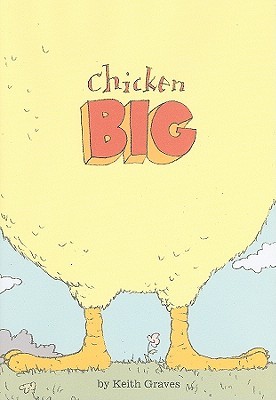
Picture Book Reviews: Chicken Big, The Gingerbread Man Loose in the School, and The Camping Trip That Changed America
I haven't reviewed picture books in a couple of months. I must fix that! Today I'll be reviewing Chicken Big by Keith Graves, The Gingerbread Man Loose in the School by Laura Murray, and The Camping Trip That Changed America by Barbara Rosenstock.
Description: On a teeny little farm, in an itty-bitty coop, a very small hen laid a big, giant egg. And out of this egg came one big, humongous . . . something. "It's big!" clucked the little rooster. "It's enormous!" clucked the small chicken. "It's an elephant!" peeped the smallest chicken. "Run for your lives!" they cried. No matter how they try, these clueless chickens can't make sense of the gigantic new member of their family until he saves the day.
Review: As you could probably tell from the title and the description of the book, Chicken Big is a hilarious spin on the classic Chicken Little story. The book features a band of not-so-bright chickens who are confused by the presence of a giant chicken who just wants to be part of the gang.
When this enormous chicken is born the others can not understand that the newly chick is really a chicken! They manage to call all the chick everything but a chicken after coming to some ridiculous conclusion as if the sky is falling or leaking, but luckily the large chicken manages to save the day by convincing them that it’s really just an acorn and that it’s just rain. The small chickens still don’t think he’s a chicken, until the day that the humongous chick rescues all the eggs from the hungry fox. Only a chicken could be so smart, kind, warm, and brave!
The illustrations and layout of this book are similar to that of a graphic novel, with lots of speech bubbles and multiple panels per page. The text is suited for preschoolers and up who are familiar with the original Chicken Little story. I think the young readers would get a kick out of the humor and the crazy band of chickens. Make sure to read the front and back of the cover, as well as the title page for more chicken-y humor.
Curriculum Connection: This would work great in a unit where students are introduced to synonyms in language arts class.
Rating: 4 stars
Words of Caution: None. Recommended for Grades K-3
If you like this book try: The King of Little Things by Bil Lepp, Letting go by Janet Morgan Stoeke
Description: When a class leaves for recess, their just-baked Gingerbread Man is left behind. But he's a smart cookie and heads out to find them. He'll run, slide, skip, and (after a mishap with a soccer ball) limp as fast as he can because: "I can catch them! I'm their Gingerbread Man!"
With help from the gym teacher, the nurse, the art teacher and even the principal, the Gingerbread Man does find his class, and he's assured they'll never leave him behind again.
Review: This is a fun story about a gingerbread man who gets left behind and then searches all over the school (with some bumps along the way) for his class. The rhyming narrative is entertaining, but it doesn't always work and sometimes reads awkward. I was also not a big fan of the illustrations, they looked too juvenile but that might be the appeal for the younger readers. The story is presented in a graphic novel-style format, with lots of cartoonish frames and dialogue bubbles.
I think this story would be great during the first week of school where kids are trying to become familiar with the school's geography. I can totally see teachers going to different parts of the school and finding 'notes' as to where the lost gingerbread man could be by making trips to the gym, library, and other rooms along the way back to their own classroom trying to find the lost gingerbread man.
Rating: 3.5 stars
Words of Caution: None. Recommended for Grades K-1
If you like this book try: The Gingerbread Man Loose on the Fire Truck by Laura Murray, My first day of school by P.K. Hallinan
Description: In 1903, President Theodore Roosevelt joined naturalist John Muir on a trip to Yosemite. Camping by themselves in the uncharted woods, the two men saw sights and held discussions that would ultimately lead to the establishment of our National Parks.
Review: Based on a true story of Roosevelt’s and Muir’s fateful camping trip, The Camping Trip That Changed America is a fun peek into a less often told history of the national park and how they came to be. I learned a lot from this book.
Told in an engaging voice, the author chooses to introduce the two famous men as they were to their families, nicknames and all. Though they are unlike in so many ways, they both share a passion for the outdoors and outspoken about their beliefs, so it is fun to see them paired together, swapping stories, getting away from the normal busy day and take time to be with nature.
The author chooses vignettes from the camping trip and the tour of Yosemite that will inspire young readers today just as it did the President and provides a nice author’s note, quotes from the men, and further reading since this brief glimpse is sure to inspire further research. The illustrations have so much energy, making the characters and the story leap off the page. While simple, they pair well with the breezy text and capture the essence of Yosemite.
Curriculum Connection: Science and History
Rating: 4 stars
Words of Caution: None. Recommended for Grades 2-4.
If you like this book try: All the water in the world by George Ella Lyon, All the world by Liz Garton Scanlon
Tuesday, December 10, 2013
Shadows of Asphodel Blog Tour Extravaganza: Guest Post, Review + Giveaway!

I'm delighted to be part of the Shadows of Asphodel blog tour hosted by CBB book promotions! Today I have a guest post from the author, Karen Kincy, on her top ten favorite words along with my review of Shadows of Asphodel. You can follow the Shadows of Asphodel tour here and be sure to check out the awesome giveaway below my review.
Karen Kincy's Top Ten Favorite Words
Karen Kincy
Since I’m a linguistics major, I’m going to have to go with my top ten favorite words. – Karen
1. Syzygy. This word is so hard to spell it’s awesome. It’s used to describe three celestial bodies in a straight line, like when you get the Sun, the Earth, and the Moon in a row during an eclipse.
2. Antediluvian. It means “before the flood” and looks appropriately epic. I used to have this word as part of a wifi password until the number of syllables drove my husband crazy.
3. Serendipity. Also has a lovely meaning. I always like happy accidents or pleasant surprises.
4. Absinthe. This one word evokes the Art Nouveau world of the Belle Époque for me. The word itself sounds smoky and slithering.
5. Lavender. Ironically, lavender makes me sneeze, but I love how this word feels in my mouth.
6. Archangel. Also brings to mind seraphim, which is another awesome word. I always loved the name Serafina Pekkala from Philip Pullman’s His Dark Materials for that reason. I believe he said he found the name in a Finnish phone book.
7. Maelstrom. This is why I love English. It borrows so many badass-sounding words from other languages. Maelstrom is basically a Viking word for a big whirlpool.
8. Chocolate. Especially when used in the same sentence with “Karen” and “eat.”
9. Evanescence. I think the band has put permanent dibs on this word for the time being. To evanesce means to disappear like vapor, the way a rainbow does eventually.
Review of Shadows of Asphodel
If a necromancer like Wendel dies, he will return as a monster--or so the rumors say. Ardis decides to play it safe and rescues him. What she doesn't expect is Wendel falling to one knee and swearing fealty. Ardis never asked for the undying loyalty of a necromancer, but it's too late now.
Ardis and Wendel forge an uneasy alliance underscored with sexual tension. Together, they confront rebels, assassins, and a conspiracy involving a military secret: robotically-enhanced soldiers for a world on the brink of war. But as Ardis starts to fall for Wendel, she realizes the scars from his past run more deeply than she ever imagined. Can Ardis stop Wendel before his thirst for revenge destroys him and everyone else around him?
Review: Shadows of Asphodel is my first dieselpunk romance, which is much like steampunk but the alternative setting is not Victorian but rather pre-World War I and the gadgets are centered on diesel instead of steam. It is clear that the author loved and did her research of this time period really well. The setting is vivid and I can imagine myself on the battlefields where we find Ardis and Wendel, the stars of the novel. Unlike some authors, Kincy doesn't dump large chunks of information on her readers, but gives us little clues as to how the society works- both on a fantasy angle as well as a social structure. Important historical figures of the time such as Francis Ferdinand and Rudolf Diesel were mentioned or even characters themselves in the story. The more I read, the book I was sucked into the world that Kincy created.
Ardis and Wendel are both very intriguing characters who have hidden scars and haunted pasts. Though they may act as if they are two very different people, they are very similar in many ways. Ardis is afraid of death though she makes no hesitation in killing someone. Wendel is afraid of his necromancy skills but yet is fascinated by it at the same time. I also loved the fact that Ardis is of mixed race, but I wish we got to unravel the mystery of Chun Yi, Ardis's sword and family heirloom and of her father. Wendel is a character that had me curious at the start. For the longest time I was ambivalent towards Wendel. He could be at times sweet and vulnerable while other times I just wasn't sure if I could trust him. I was really surprised how fast Ardis trusted him with they first met.
The romance between Ardis and Wendel started a bit too quickly for me. While I liked the sexual tension between the characters, I would have liked to see their relationship grow slowly since both have issues with trust, but I did enjoy their banter and their romance is sweet. I really appreciated that the romance of Shadows of Asphodel didn't overshadow the plot but rather enhanced it, showing how Ardis and Wendel came together to overcome their obstacles.
Besides the rushed romance, the only other problem I had with Shadows of Asphodel is that the dialogue was all in modern American voice even though the characters came a different backgrounds and they should have been a bit different considering their different nationalities. The story's timeline is also a bit inconsistent sometimes such as Ardis can stay up late through one night but really three nights have past and we don't know what happened in those days. Though the action was nonstop in the book, I didn't get my reading groove into the story for about the first 6 chapters or so which is not to say a problem of the book but me trying to wrap my head around the setting and characters. Overall, I enjoyed Shadows of Asphodel and readers looking for a fun read to cleanse their reading palates should really consider picking this one up.
Rating: 3.5 stars
Words of Caution: There is some strong violence, some language, and graphic sexual situations. Recommended for older teens and adults.
If you like this book try: The Friday Society by Adrienne Kress, Her Ladyship Curse by Lynn Viehl
GIVEAWAY
Tuesday, November 26, 2013
Love Disguised
Shakespeare in Love is one of my all time favorite movies. I've seen it at least ten times, each time discovering new connections to his wonderful plays. When I first heard of Love Disguised by Lisa Klein, I thought the book had a similar vibe to my favorite movie. I was really excited to read it and while I did enjoy it, it wasn't as satisfying as the movie.
Description: Will Shakespeare is about to meet the girl who will change his life forever. After a mixed-up courtship with the Hathaway sisters ends badly, Will jumps at the chance to go to London, where he can pursue his dream of becoming an actor. There, Will meets the unusually tall (and strong) Meg who has earned the nickname "Long Meg" for her height. She's also fleeing her own past as an orphan turned thief.
Disguised as "Mack," Meg was once a member of a band of boy thieves who betrayed her. When Will is robbed by those same villains, Meg disguises herself as "Mack" again--telling Will that Mack is her twin brother--in order to help Will recover his money. As Mack, she finds true friendship with Will. But is there more? And who is Meg really fooling with her disguise? What ensues is a tale involving love triangles, mistaken identities, and the pursuit of hapless villains, as Shakespeare becomes a key player in a lively drama that could have sprung from his own pen.
Review: Love Disguised is an innovative and ambitious imagining of young Will Shakespeare's life. Assisting his spendthrift father, a Stratford glover, Will dreams of escaping to become an actor. He gets his wish when his courtship with one of the Hathaway sisters goes awry, and his father sends him to London to negotiate a debt. Will is a hard character to like, but you can detect many similarities with the male leads in his play such as the fickle Romeo and the ambitious Macbeth. While we do see the conflicts in the Will's family, I would have to liked the author to dig deeper. Shakepeare's plays are rich in dysfunctional families and it would have been great to see where those seeds for his plays might have originated from.
Along with Will, the other major character is Meg. Left to fend for herself after her father's death in prison and her mother's suicide, young Londoner Meg survives by disguising herself as a boy and becoming a petty thief until she's offered employment by kindly innkeepers at a bar. Unlike Will, I liked Meg right away and rooted for her throughout the story. I admired Klein for describing Meg as an average yet attractive, androgynous woman who is also admired for her wits and skills. She is well aware of the restraints on her freedom due to her gender and the double standards of being a male in her society. Meg clearly wants to break out and be independent, but realizes these dreams are futile because her society refuses to see her as anything but a woman- weak, subservient, and passive. Through Meg we get the vivid portrayal of the harsh Elizabethan world.
Will and Meg eventually meet at the Inn, but Meg is too late to rescue him from thieves who prey on rubes. While Will frets about repairing his fortunes, Meg concocts schemes to make it happen. Soon, Will's career as playwright and actor takes off, and Meg, thanks to her quick wit and acting chops, serves as his muse. I'm not truly convinced that Will had any romantic feelings for Meg or vice versa. I believed they admired each other but were also envious of one another, Meg of Will's freedom as a man and Will of Meg's confidence and strength. Readers looking for a swoon inducing romance between these two characters will be disappointed.
Labored subplots based on mistaken identity and cross-dressing slow the action, but ring true to the time period and are fascinating if you are a fan of the Bard. Like some of Shakepeare's problematic and famous comedies, things aren't so easily tied together in the end and leaves the reader with many questions to think about after they begin to deconstruct it.
Overall I would recommend Love Disguised to readers who enjoy historical fiction with light romance. Fans of the Bard will definitely pick up lots of allusions to famous works while readers who are meeting Shakespeare for the first time will get a better idea of the context of his plays.
Rating: 3.5 stars
Words of Caution: There are some fade-to-black sex scenes and allusions to physical abuse. Recommended for Grades 8 and up.
If you like this book try: Loving Will Shakespeare by Carolyn Meyer, Mistress Shakespeare by Karen Harper, Kissing Shakespeare by Pamela Mingle
Tuesday, November 12, 2013
YA Mini-Reviews: The Boy on the Bridge, Madness Underneath, and Truly, Madly, Deadly
I thought I would do some mini-reviews of books that were a bit of a mixed bag. Please note that all of these reviews are based on an advanced reader's copy provided by the publishers via Netgalley.
Description: Laura Reid goes to Leningrad for a semester abroad as Cold War paranoia is peaking in 1982. She meets a young Russian artist named Alexei and soon, with Alexei as her guide, Laura immerses herself in the real Russia--a crazy world of wild parties, black-market books and music, and smuggled letters to dissidents. She must keep the relationship secret; associating with Americans is dangerous for Alexei, and if caught, Laura could be sent home and Alexei put under surveillance or worse. At the same time, she's been warned that Soviets often latch onto Americans in hopes of marrying them and thus escaping to the United States. But she knows Alexei loves her. Right?
As June approaches--when Laura must return to the United States--Alexei asks Laura to marry him. She's only nineteen and doesn't think she's ready to settle down. But what if Alexei is the love of her life? How can she leave him behind? If she has a chance to change his life, to rescue him from misery, shouldn't she take it?
Review: When I read the description of this book, I had expected a similar version of Stephanie Perkin's fabulous Anna and the French Kiss except the story is set in Cold War Russia, but The Boy on the Bridge did not meet my expectation at all. The relationship between Laura and Alexei felt contrived and lacked chemistry. As a result, I thought they were really boring characters.The setting of Russia makes up for a lot of the book, however, I wanted some background to the Cold War. My history lessons of the Cold War a bit fuzzy at best so I was hoping this book would introduce teens to this time period but it does not. We do get the sense of hysteria and the lack of privacy, but we don't get the full impact on why people like Alexei want to leave Russia and immigrant to other countries. Overall The Boy on the Bridge is a very disappointing teen romance that has a lot of potential to become a stronger story.
Rating: 2 stars
Words of Caution: There is some language, scenes of underage drinking, and allusions to sexual situations.
If you like this book try: Eva Underground by Dandi Daley Mackall, Anna and the French Kiss by Stephanie Perkins, Pardon My French by Cathy Hapka
Description: After her near-fatal run-in with the Jack the Ripper copycat, Rory Deveaux has been living in Bristol under the close watch of her parents. So when her therapist suddenly suggests she return to Wexford, Rory jumps at the chance to get back to her friends. But Rory's brush with the Ripper touched her more than she thought possible: she's become a human terminus, with the power to eliminate ghosts on contact. She soon finds out that the Shades--the city's secret ghost-fighting police--are responsible for her return. The Ripper may be gone, but now there is a string of new inexplicable deaths threatening London. Rory has evidence that the deaths are no coincidence. Something much more sinister is going on, and now she must convince the squad to listen to her before it's too late.
Review: I was really disappointed with The Name of the Star, Maureen Johnson's first venture into the paranormal/mystery genre after setting up very high expectations but I enjoyed this sequel much more. In this book I got a better understanding of Rory's quirky personality and her witty internal monologues. Her voice, in my opinion, is much stronger in the book and I began to care for her much more. The plot is relatively slow, which is common for a middle book but Johnson does pick it up when she add a new mystery angle in addition to the Jack the Ripper case: Rory is much more than a girl who can see ghosts, but now she has become a human "terminus," meaning that when she touches a ghost, it disappears for good. Hailing from a Louisiana family peppered with eccentric alleged mystics, Rory was, from the beginning, aware of the spirit world. Now she hesitates when her comrades try to persuade her to put her power to civic use, even as other suspicious deaths crop up to suggest that the Ripper's destruction may have simply unleashed more mayhem. The book ends with a lot of questions in the air especially when one of Rory's Shade comrades is in serious condition. I'm definitely hanging on to this series and am really curious to see how everything ends.
Rating: 3.5 stars
Words of Caution: There is some language, scenes of underage drinking and drug use, and mysterious deaths that may be a bit too much for younger readers. Recommended for strong Grade 7 readers and up.
If you like this book try: The Dead and Buried by Kim Harrington, Past World by Ian Beck, The Ghost and the Goth by Stacey Kade
Description: They Said It Was An Accident...
Sawyer Dodd is a star athlete, a straight-A student, and the envy of every other girl who wants to date Kevin Anderson. When Kevin dies in a tragic car crash, Sawyer is stunned. Then she opens her locker to find a note: You're welcome.
Someone saw what he did to her. Someone knows that Sawyer and Kevin weren't the perfect couple they seemed to be. And that someone—a killer—is now shadowing Sawyer's every move.
Review: Truly, Madly, Deadly is a great premise that grabbed my attention right away, however, the execution of the story was a bit shaky. Jayne has a good sense of creating teasers, but I would have liked a bit more development leading up to suspense. The death of Sawyer's boyfriend isn't used to its full potential. I was confused as to why Sawyer didn't grieve enough for her boyfriend or why she didn't seem to share the same popular opinion of Kevin like her peers. There are hints of a possible abusive relationship but it is rushed and put in the story as a check mark for plot events just like a scene where a teacher takes things too far with a student. There is also a budding romance that I would have liked to see more of in the story.
You need to suspend a lot of disbelief when reading Truly, Madly, Deadly such the delay in going to police, not sharing important information of a potential stalker with parents, but this is common for teen suspense novels. Overall Truly, Madly, Deadly is a good popcorn book that I would recommend to reluctant readers but I would suggest something more complex to my advanced teen readers.
Rating: 3 stars
Words of Caution: There is language, underage drinking, a scene of sexual advances from a teacher, and PG-13 violence. Recommended for Grades 9 and up.
If you like this book try: Acceleration by Graham McNamee, Killing Mr. Griffin or I Know What You Did Last Summer by Lois Duncan
Subscribe to:
Posts (Atom)