There are very few books that are happy without being overly sappy or saccharine. A Snicker of Magic, Natalie Lloyd's debut middle grade novel, is a book you would definitely pick up if you looking to lose yourself in a book. I absolutely loved this book and highly recommend it. Many thanks to Scholastic and Netgalley for allowing me to read an advanced reader's copy of this book.
Description: Midnight Gulch used to be a magical place, a town where people could sing up thunderstorms and dance up sunflowers. But that was long ago, before a curse drove the magic away. Twelve-year-old Felicity knows all about things like that; her nomadic mother is cursed with a wandering heart.
But when she arrives in Midnight Gulch, Felicity thinks her luck's about to change. A "word collector," Felicity sees words everywhere---shining above strangers, tucked into church eves, and tangled up her dog's floppy ears---but Midnight Gulch is the first place she's ever seen the word "home." And then there's Jonah, a mysterious, spiky-haired do-gooder who shimmers with words Felicity's never seen before, words that make Felicity's heart beat a little faster.
Felicity wants to stay in Midnight Gulch more than anything, but first, she'll need to figure out how to bring back the magic, breaking the spell that's been cast over the town . . . and her mother's broken heart.
Review: A Snicker of Magic is a delightful, inspiring, and heartwarming book. Felicity Pickle along with her mother and little sister Frannie Jo, live like nomads moving from town to town in their battered van thanks to Felicity's mother's wandering heart. For the first time, Midnight Gulch feels like home, and not just because it's where Mama grew up but because there just might be magic.
There are many things that I loved about this book. I love how the author uses words as magic and not fairy dust or the occult. The writing is magical and it easily stirs up your emotions which clearly demonstrates the love for words. I also really enjoyed the setting of Midnight Gulch, which reminded me a lot of Stars Hollow in my favorite tv show Gilmore Girls where everybody knew everybody in this quirky town. Though there is a large cast of characters, I felt as if I got to know everyone such as the gruff yet soft Aunt Cleo, Oliver and Ponder, the vendors of unusual ice cream and baked goods, respectively, which have to ability to invoke memories, Jewell Pickett, hair-stylist and auto-mechanic extraordinaire; and her son Jonah, my favorite secondary character, who has the amazing ability to make things better for anybody, despite his own difficulties. And of course there is our adorable, spunky, Felicity, who sees words everywhere and uses them in remarkable ways. She's a girl who loves deeply and openly, and who creates her own kind of magic. As if these were not enough to make me enjoy A Snicker of Magic, there are folkloric backstories about feuding brothers, intrigue, doomed romances, mysterious do-gooders, lost children, and a curse.
A Snicker of Magic is not to be missed and can be enjoyed by younger and older readers alike. I would definitely recommend this book to those who enjoy books that have magical realism or those who are a bit reluctant to try a fantasy read. This book is guaranteed to make you smile the all the way through and feel great. It's definitely one my favorites from this year.
Rating: 5 stars
Words of Caution: None. Recommended for Grades 4 and up.
If you like this book try: Savy by Ingrid Law, A Tangle of Knots by Lisa Graff
hotel sahid surabaya
Showing posts with label DAC. Show all posts
Thursday, June 5, 2014
Tuesday, May 27, 2014
A Mad, Wicked Folly
Like many readers, I've been duped before by books that feature a pretty dress on the cover. I was thrilled to read A Mad, Wicked Folly by Sharon Biggs Walker because I was really curious about the time period and the connection some reviewers have made to one of my favorite tv shows Downtown Abbey. While it doesn't feature a lot of the drama in Downton Abbey, A Mad Wicked Folly is a solid read about the women's rights movement in Britain and I thoroughly enjoyed it.
Description: Welcome to the world of the fabulously wealthy in London, 1909, where dresses and houses are overwhelmingly opulent, social class means everything, and women are taught to be nothing more than wives and mothers. Into this world comes seventeen-year-old Victoria Darling, who wants only to be an artist—a nearly impossible dream for a girl.
After Vicky poses nude for her illicit art class, she is expelled from her French finishing school. Shamed and scandalized, her parents try to marry her off to the wealthy Edmund Carrick-Humphrey. But Vicky has other things on her mind: her clandestine application to the Royal College of Art; her participation in the suffragette movement; and her growing attraction to a working-class boy who may be her muse—or may be the love of her life. As the world of debutante balls, corsets, and high society obligations closes in around her, Vicky must figure out: just how much is she willing to sacrifice to pursue her dreams?
Review: A Mad, Wicked Folly is a well written historical fiction novel that explores the women's right movement in Edwardian Britain and one girl's struggle to pursue her dream of being an artist. The title is derived from a statement ironically made by Queen Victoria in 1870 when she declared that women's rights were a "mad, wicked folly." This statement sets the stage for Victoria Darling's plight to moving beyond the set societal boundaries of her sex.
Victoria Darling is not an ordinary girl. She is affluent, pampered, beautiful, talented, passionate, and wealthy. Despite these advantages, however, Victoria still struggles with the harsh limitations imposed upon women prior to and during the Edwardian era of 1901-1910, which curtail her attempts to attend art school. While Victoria does not initially support the Suffragette Movement and thinks these women are radicals, she ultimately discovers that her fate is intertwined with the cause.
The book is written in Victoria's point of view and her earnest voice helps readers to more intimately understand the growing frustration felt by thousands of women during that time. Waller vividly describes the unbearable restrictions placed upon the women from the fashion of tight corsets to the force-feeding implemented to undermine protesters during hunger strikes, and the swift arrests of notable individuals who helped in the movement. I learned quite a lot from this book as I wasn't previously informed by the British Suffragette Movement and I found this part really interesting. Walker clearly did a lot of research about this time period and it shows.
I think teens will relate to Victoria's story of rebellion as her eyes open to the injustices around her. I admired the brave sacrifices she makes to pursue her dreams. I was worried initially that everything would tie up in a bow at the end, but thankfully, this doesn't happen as Walker stays true to the time period. There is enough detailed information throughout to make this a useful and fascinating book to pair with nonfiction resources about women's history.I would definitely recommend picking this book up if you are in the mood for a good historical fiction novel.
Rating: 4 stars
Words of Caution: There is nudity since the artist is drawing a nude model, some minor language, and underage drinking. Recommended for Grades 8 and up.
If you like this book try: A Northern Light by Jennifer Donnelly, Hattie Big Sky by Kirby Lawson
Description: Welcome to the world of the fabulously wealthy in London, 1909, where dresses and houses are overwhelmingly opulent, social class means everything, and women are taught to be nothing more than wives and mothers. Into this world comes seventeen-year-old Victoria Darling, who wants only to be an artist—a nearly impossible dream for a girl.
After Vicky poses nude for her illicit art class, she is expelled from her French finishing school. Shamed and scandalized, her parents try to marry her off to the wealthy Edmund Carrick-Humphrey. But Vicky has other things on her mind: her clandestine application to the Royal College of Art; her participation in the suffragette movement; and her growing attraction to a working-class boy who may be her muse—or may be the love of her life. As the world of debutante balls, corsets, and high society obligations closes in around her, Vicky must figure out: just how much is she willing to sacrifice to pursue her dreams?
Review: A Mad, Wicked Folly is a well written historical fiction novel that explores the women's right movement in Edwardian Britain and one girl's struggle to pursue her dream of being an artist. The title is derived from a statement ironically made by Queen Victoria in 1870 when she declared that women's rights were a "mad, wicked folly." This statement sets the stage for Victoria Darling's plight to moving beyond the set societal boundaries of her sex.
Victoria Darling is not an ordinary girl. She is affluent, pampered, beautiful, talented, passionate, and wealthy. Despite these advantages, however, Victoria still struggles with the harsh limitations imposed upon women prior to and during the Edwardian era of 1901-1910, which curtail her attempts to attend art school. While Victoria does not initially support the Suffragette Movement and thinks these women are radicals, she ultimately discovers that her fate is intertwined with the cause.
The book is written in Victoria's point of view and her earnest voice helps readers to more intimately understand the growing frustration felt by thousands of women during that time. Waller vividly describes the unbearable restrictions placed upon the women from the fashion of tight corsets to the force-feeding implemented to undermine protesters during hunger strikes, and the swift arrests of notable individuals who helped in the movement. I learned quite a lot from this book as I wasn't previously informed by the British Suffragette Movement and I found this part really interesting. Walker clearly did a lot of research about this time period and it shows.
I think teens will relate to Victoria's story of rebellion as her eyes open to the injustices around her. I admired the brave sacrifices she makes to pursue her dreams. I was worried initially that everything would tie up in a bow at the end, but thankfully, this doesn't happen as Walker stays true to the time period. There is enough detailed information throughout to make this a useful and fascinating book to pair with nonfiction resources about women's history.I would definitely recommend picking this book up if you are in the mood for a good historical fiction novel.
Rating: 4 stars
Words of Caution: There is nudity since the artist is drawing a nude model, some minor language, and underage drinking. Recommended for Grades 8 and up.
If you like this book try: A Northern Light by Jennifer Donnelly, Hattie Big Sky by Kirby Lawson
Wednesday, April 30, 2014
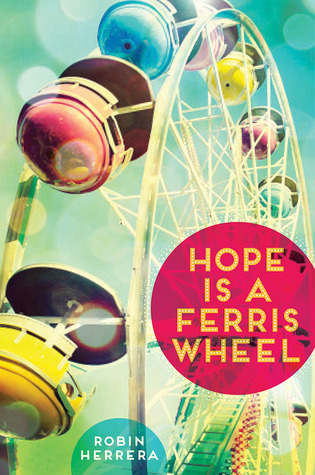
Hope is a Ferris Wheel
Hope is a Ferris Wheel is about a girl named Star who is unique, determined, and spunky who maintains her optimism and hope despite the large obstacles that she has to overcome. Please note this is a review of the advanced reader's copy of the book provided by the publisher via Netgalley.
Description: Ten-year-old Star Mackie lives in a trailer park with her flaky mom and her melancholy older sister, Winter, whom Star idolizes. Moving to a new town has made it difficult for Star to make friends, when her classmates tease her because of where she lives and because of her layered blue hair. But when Star starts a poetry club, she develops a love of Emily Dickinson and, through Dickinson’s poetry, learns some important lessons about herself and comes to terms with her hopes for the future.
Review: Star Mackie is a quirky fifth-grader overflowing with hope. She really wants to make friends, but that seems like an impossible goal to achieve at her new school since she is teased for living in a pink trailer and having strangely layered blue hair. Her goth sister and closest ally, Winter, fuels Star’s hope of one day connecting with the father she has yet to meet.
Inspired by her Winter, Star starts a school club in order to make friends, and along the way she develops a fascination with Emily Dickinson’s poetry and declares that to be the club’s focus. Star does everything she can to make the club work, and slowly her club develops an audience. When Star learns the shocking truth about her own family, Dickinson’s poetry helps her understand her crazy world and accept who she is.
I had a hard time getting into Star's story. The plot meandered quite a bit and I was wondering where the story was going after finishing the first of the book. Star is adorable and delightful narrator, but quite often the secondary characters, particularly those who are vocal at her after school club steal the spotlight. I like how the inclusion of poetry added depth to the story, but Star sometimes come across as too naive as readers grasp her epiphanies two steps before she does.I also liked how Star's family's financial and domestic situations are not commonly found in most children books and are handled sensitively. Though Star faces many obstacles, the author never resolves to cloak her story into sadness but always shows Star being optimistic.
Rating: 3 stars
Words of Caution: There is mention of teen pregnancy in the novel, but it is not explicit in detail. Recommended for Grades 4 and up.
If you like this book try: Almost Home by Joan Bauer, The Higher Power of Lucky by Susan Patron, Because of Win-Dixie by Kate DiCamillo
Description: Ten-year-old Star Mackie lives in a trailer park with her flaky mom and her melancholy older sister, Winter, whom Star idolizes. Moving to a new town has made it difficult for Star to make friends, when her classmates tease her because of where she lives and because of her layered blue hair. But when Star starts a poetry club, she develops a love of Emily Dickinson and, through Dickinson’s poetry, learns some important lessons about herself and comes to terms with her hopes for the future.
Review: Star Mackie is a quirky fifth-grader overflowing with hope. She really wants to make friends, but that seems like an impossible goal to achieve at her new school since she is teased for living in a pink trailer and having strangely layered blue hair. Her goth sister and closest ally, Winter, fuels Star’s hope of one day connecting with the father she has yet to meet.
Inspired by her Winter, Star starts a school club in order to make friends, and along the way she develops a fascination with Emily Dickinson’s poetry and declares that to be the club’s focus. Star does everything she can to make the club work, and slowly her club develops an audience. When Star learns the shocking truth about her own family, Dickinson’s poetry helps her understand her crazy world and accept who she is.
I had a hard time getting into Star's story. The plot meandered quite a bit and I was wondering where the story was going after finishing the first of the book. Star is adorable and delightful narrator, but quite often the secondary characters, particularly those who are vocal at her after school club steal the spotlight. I like how the inclusion of poetry added depth to the story, but Star sometimes come across as too naive as readers grasp her epiphanies two steps before she does.I also liked how Star's family's financial and domestic situations are not commonly found in most children books and are handled sensitively. Though Star faces many obstacles, the author never resolves to cloak her story into sadness but always shows Star being optimistic.
Rating: 3 stars
Words of Caution: There is mention of teen pregnancy in the novel, but it is not explicit in detail. Recommended for Grades 4 and up.
If you like this book try: Almost Home by Joan Bauer, The Higher Power of Lucky by Susan Patron, Because of Win-Dixie by Kate DiCamillo
Tuesday, April 29, 2014
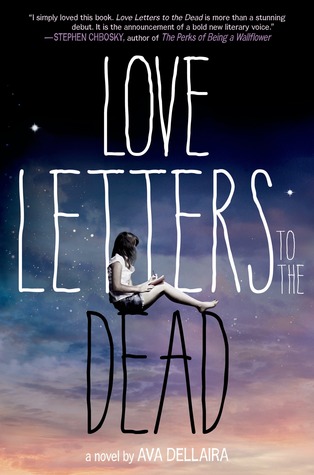
Love Letters to the Dead
Love Letters to the Dead is a book that may not be enjoyed by everyone due to its different, stylistic structure. The book is entirely comprised of letters written to dead celebrities. Personally, I never felt I had a close connection to celebrities so the letters in this book didn't really work for me, but I still felt the emotions the book's protagonist, Laurel, was trying to portray. Please note that this review is based on the advanced reader's copy I received from the publisher via Netgalley. Love Letters to the Dead will be pushed on May 5th, 2014 by Farrar Straus Giroux.
Description: It begins as an assignment for English class: Write a letter to a dead person. Laurel chooses Kurt Cobain because her sister, May, loved him. And he died young, just like May did. Soon, Laurel has a notebook full of letters to people like Janis Joplin, Amy Winehouse, Amelia Earhart, Heath Ledger, and more—though she never gives a single one of them to her teacher. She writes about starting high school, navigating new friendships, falling in love for the first time, learning to live with her splintering family. And, finally, about the abuse she suffered while May was supposed to be looking out for her. Only then, once Laurel has written down the truth about what happened to herself, can she truly begin to accept what happened to May. And only when Laurel has begun to see her sister as the person she was—lovely and amazing and deeply flawed—can she begin to discover her own path.
Review: Laurel loved and admired her older sister May. Everything Laurel knows about high school, she learned from her older sister, who tragically died at a very young age. Laurel has to start freshman year on her own. After getting an assignment to write to someone who's died in her English class, Laurel doesn't hand her letter in but keeps going. The book is structured as a journal in letters to famous dead celebrities such as Kurt Cobain, Amy Winehouse, River Phoenix, Judy Garland, and others. Laurel uses the letters to talk about both the past and the unfolding present, confide in her own mixed feelings of anger, hurt, and grief, as well as focusing on the friends she makes, who are also struggling with the problems that played a role in May's life and death.
Although Dellaria writes beautifully, the letters at first seem a fresh and unique idea, I felt it got repetitive. Laurel's pervading melancholy feels one-note at times, and the letter format can get wearying, especially when Laurel tells the recipients about their own careers, the epistolary equivalent of expository dialogue. Actually after the fifth or sixth letter, it didn't really matter to whom Laurel addressed her letters to and the letters seemed more like journal entries which dragged the book in the middle for me. I also felt that the secondary characters weren't fleshed out as I would like them to be. There is a second story line featuring a same sex romance, while nicely handled didn't really hold relevance to the story.
While the book has a strong ending and features an event that is both shocking and heartbreaking as we get to relive the night Amy died, I felt it was too rushed. Overall, Laurel and her friends' struggles and hard-won successes are poignant, and seeing Laurel begin to forgive herself and May is extremely moving. Fans of Perks of Being a Wallflower will be drawn to this frank story about loss, grief, and forgiveness.
Rating: 3 stars
Words of Caution: There is strong language and underage drinking and drug use throughout the novel as well as allusions to sexual abuse and attempted rape. Recommended for Grades 9 and up.
If you like this book try: Perks of Being a Wallflower by Stephen Chobosky, Without Tess by Marcella Pixley, All rivers flow to the sea by Alison McGhee
Description: It begins as an assignment for English class: Write a letter to a dead person. Laurel chooses Kurt Cobain because her sister, May, loved him. And he died young, just like May did. Soon, Laurel has a notebook full of letters to people like Janis Joplin, Amy Winehouse, Amelia Earhart, Heath Ledger, and more—though she never gives a single one of them to her teacher. She writes about starting high school, navigating new friendships, falling in love for the first time, learning to live with her splintering family. And, finally, about the abuse she suffered while May was supposed to be looking out for her. Only then, once Laurel has written down the truth about what happened to herself, can she truly begin to accept what happened to May. And only when Laurel has begun to see her sister as the person she was—lovely and amazing and deeply flawed—can she begin to discover her own path.
Review: Laurel loved and admired her older sister May. Everything Laurel knows about high school, she learned from her older sister, who tragically died at a very young age. Laurel has to start freshman year on her own. After getting an assignment to write to someone who's died in her English class, Laurel doesn't hand her letter in but keeps going. The book is structured as a journal in letters to famous dead celebrities such as Kurt Cobain, Amy Winehouse, River Phoenix, Judy Garland, and others. Laurel uses the letters to talk about both the past and the unfolding present, confide in her own mixed feelings of anger, hurt, and grief, as well as focusing on the friends she makes, who are also struggling with the problems that played a role in May's life and death.
Although Dellaria writes beautifully, the letters at first seem a fresh and unique idea, I felt it got repetitive. Laurel's pervading melancholy feels one-note at times, and the letter format can get wearying, especially when Laurel tells the recipients about their own careers, the epistolary equivalent of expository dialogue. Actually after the fifth or sixth letter, it didn't really matter to whom Laurel addressed her letters to and the letters seemed more like journal entries which dragged the book in the middle for me. I also felt that the secondary characters weren't fleshed out as I would like them to be. There is a second story line featuring a same sex romance, while nicely handled didn't really hold relevance to the story.
While the book has a strong ending and features an event that is both shocking and heartbreaking as we get to relive the night Amy died, I felt it was too rushed. Overall, Laurel and her friends' struggles and hard-won successes are poignant, and seeing Laurel begin to forgive herself and May is extremely moving. Fans of Perks of Being a Wallflower will be drawn to this frank story about loss, grief, and forgiveness.
Rating: 3 stars
Words of Caution: There is strong language and underage drinking and drug use throughout the novel as well as allusions to sexual abuse and attempted rape. Recommended for Grades 9 and up.
If you like this book try: Perks of Being a Wallflower by Stephen Chobosky, Without Tess by Marcella Pixley, All rivers flow to the sea by Alison McGhee
Tuesday, April 22, 2014
Waiting on Wednesday: Snow Like Ashes + The Cure for Dreaming
Waiting on Wednesday is a meme hosted by Jill of Breaking the Spine! I've got two YA books that I can't wait to get my hands on!
Cat Winter's In The Shadows of Blackbirds was one of my favorite debut novels of 2013. I can't wait to see what she does next with a new time period.
Olivia Mead is a headstrong, independent girl—a suffragist—in an age that prefers its girls to be docile. It’s 1900 in Oregon, and Olivia’s father, concerned that she’s headed for trouble, convinces a stage mesmerist to try to hypnotize the rebellion out of her. But the hypnotist, an intriguing young man named Henri Reverie, gives her a terrible gift instead: she’s able to see people’s true natures, manifesting as visions of darkness and goodness, while also unable to speak her true thoughts out loud. These supernatural challenges only make Olivia more determined to speak her mind, and so she’s drawn into a dangerous relationship with the hypnotist and his mysterious motives, all while secretly fighting for the rights of women. Winters breathes new life into history once again with an atmospheric, vividly real story, including archival photos and art from the period throughout.
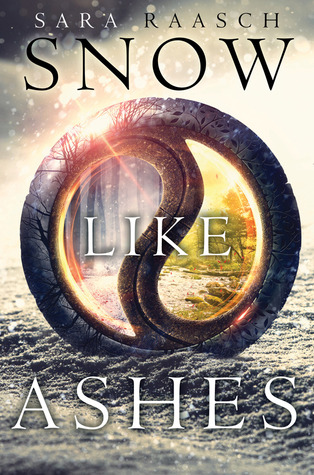
Snow Like Ashes by Sara Raasch
Publish Date: October 14, 2014
Publisher: Balzer + Bray
I love the premise of this fantasy book and it reminds me a bit of Graceling by Kristin Cashore which is one of my all time favorite YA reads.
A heartbroken girl. A fierce warrior. A hero in the making.
Sixteen years ago the Kingdom of Winter was conquered and its citizens enslaved, leaving them without magic or a monarch. Now, the Winterians’ only hope for freedom is the eight survivors who managed to escape, and who have been waiting for the opportunity to steal back Winter’s magic and rebuild the kingdom ever since.
Orphaned as an infant during Winter’s defeat, Meira has lived her whole life as a refugee, raised by the Winterians’ general, Sir. Training to be a warrior—and desperately in love with her best friend, and future king, Mather — she would do anything to help her kingdom rise to power again.
So when scouts discover the location of the ancient locket that can restore Winter’s magic, Meira decides to go after it herself. Finally, she’s scaling towers, fighting enemy soldiers, and serving her kingdom just as she’s always dreamed she would. But the mission doesn’t go as planned, and Meira soon finds herself thrust into a world of evil magic and dangerous politics – and ultimately comes to realize that her destiny is not, never has been, her own.
Sixteen years ago the Kingdom of Winter was conquered and its citizens enslaved, leaving them without magic or a monarch. Now, the Winterians’ only hope for freedom is the eight survivors who managed to escape, and who have been waiting for the opportunity to steal back Winter’s magic and rebuild the kingdom ever since.
Orphaned as an infant during Winter’s defeat, Meira has lived her whole life as a refugee, raised by the Winterians’ general, Sir. Training to be a warrior—and desperately in love with her best friend, and future king, Mather — she would do anything to help her kingdom rise to power again.
So when scouts discover the location of the ancient locket that can restore Winter’s magic, Meira decides to go after it herself. Finally, she’s scaling towers, fighting enemy soldiers, and serving her kingdom just as she’s always dreamed she would. But the mission doesn’t go as planned, and Meira soon finds herself thrust into a world of evil magic and dangerous politics – and ultimately comes to realize that her destiny is not, never has been, her own.
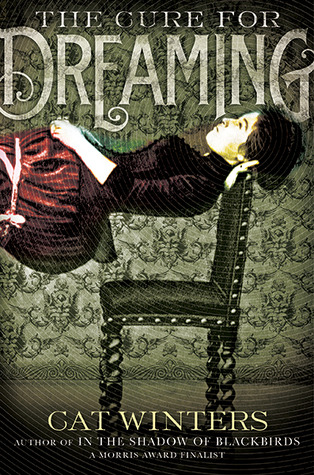
The Cure for Dreaming by Cat Winters
Publish Date: October 14, 2014
Publisher: Amulet Books
Cat Winter's In The Shadows of Blackbirds was one of my favorite debut novels of 2013. I can't wait to see what she does next with a new time period.
Olivia Mead is a headstrong, independent girl—a suffragist—in an age that prefers its girls to be docile. It’s 1900 in Oregon, and Olivia’s father, concerned that she’s headed for trouble, convinces a stage mesmerist to try to hypnotize the rebellion out of her. But the hypnotist, an intriguing young man named Henri Reverie, gives her a terrible gift instead: she’s able to see people’s true natures, manifesting as visions of darkness and goodness, while also unable to speak her true thoughts out loud. These supernatural challenges only make Olivia more determined to speak her mind, and so she’s drawn into a dangerous relationship with the hypnotist and his mysterious motives, all while secretly fighting for the rights of women. Winters breathes new life into history once again with an atmospheric, vividly real story, including archival photos and art from the period throughout.
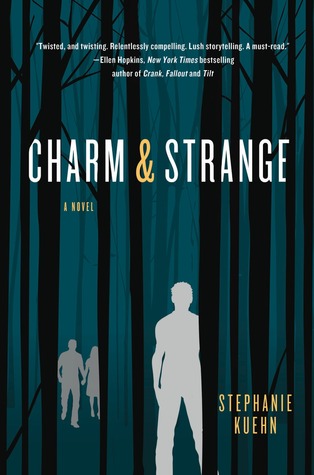
Charm and Strange
Stephanie Kuehn's Charm and Strange won the William C. Morris Award for the Best Debut YA Novel last year. I haven't heard much of this book before it won the award, but I wanted to check it out and see what I missed. Charm and Strange may appear to be a slim and quick read, but it packs an emotional punch that will you leave you emotionally bruised for quite some time.
Description: No one really knows who Andrew Winston Winters is. Least of all himself. He is part Win, a lonely teenager exiled to a remote boarding school in the wake of a family tragedy. The guy who shuts the whole world out, no matter the cost, because his darkest fear is of himself. But he's also part Drew, the angry boy with violent impulses that control him. The boy who, one fateful summer, was part of something so terrible it came close to destroying him.
Review: Charm and Strange is a taut, dark, and disturbing psychological tale that grabs you by the throat and doesn't let go until the shocking ending. Andrew Winston Winters is not okay. He is estranged from his family, withdrawn from his boarding-school classmates, and a little too curious about the ravaged body of a hiker just discovered in the nearby Vermont woods. The book has two story lines that slowly and shockingly converge into one. In present-tense narration, Win says he is a werewolf, condemned to change at the full moon and endanger others. Readers are left to wonder if he really did kill the hiker and whether or not to believe in Win's animal like impulses. Alternating past-tense chapters flash back to Win’s childhood as volatile Drew. Normally I would have a hard time with the narration switching back and forth in time, but the author masterfully focuses her to capture the minute details of one brief but life-changing moment: a single night during an outdoor party for Win; a visit to his grandparents during his tenth summer for Drew. The different narrations allows the reader to ponder what happened to Win/Drew that made them act this way. As the novel progresses, the carefully constructed boundaries between Win’s and Drew’s separate and distinct personas and memories begin to blur. My mind went to the dark place as I guessed at the terrible reality behind the unreliable narratives before Kuehn’s final reveal in hopes that I would be wrong, but the truth Andrew has been hiding from his classmates, readers, and—most importantly—himself is shattering, heartbreaking and gut wrenching. Kuehn tackles brutal issues of sexual and psychological abuse (as well as its aftermath head-on without softening the blow, but it also gives us a glimmer of hope that Andrew Winston Winters is a survivor and will be okay. Though this is a difficult read, Charm and Strange is hard to put down.
Rating: 4 stars
Words of Caution: There is some strong language, underage drinking and drug use as well as allusion to sexual abuse. Recommended for Grades 9 and up.
If you like this book try: Identical by Ellen Hopkins, Bait by Alex Sanchez
Description: No one really knows who Andrew Winston Winters is. Least of all himself. He is part Win, a lonely teenager exiled to a remote boarding school in the wake of a family tragedy. The guy who shuts the whole world out, no matter the cost, because his darkest fear is of himself. But he's also part Drew, the angry boy with violent impulses that control him. The boy who, one fateful summer, was part of something so terrible it came close to destroying him.
Review: Charm and Strange is a taut, dark, and disturbing psychological tale that grabs you by the throat and doesn't let go until the shocking ending. Andrew Winston Winters is not okay. He is estranged from his family, withdrawn from his boarding-school classmates, and a little too curious about the ravaged body of a hiker just discovered in the nearby Vermont woods. The book has two story lines that slowly and shockingly converge into one. In present-tense narration, Win says he is a werewolf, condemned to change at the full moon and endanger others. Readers are left to wonder if he really did kill the hiker and whether or not to believe in Win's animal like impulses. Alternating past-tense chapters flash back to Win’s childhood as volatile Drew. Normally I would have a hard time with the narration switching back and forth in time, but the author masterfully focuses her to capture the minute details of one brief but life-changing moment: a single night during an outdoor party for Win; a visit to his grandparents during his tenth summer for Drew. The different narrations allows the reader to ponder what happened to Win/Drew that made them act this way. As the novel progresses, the carefully constructed boundaries between Win’s and Drew’s separate and distinct personas and memories begin to blur. My mind went to the dark place as I guessed at the terrible reality behind the unreliable narratives before Kuehn’s final reveal in hopes that I would be wrong, but the truth Andrew has been hiding from his classmates, readers, and—most importantly—himself is shattering, heartbreaking and gut wrenching. Kuehn tackles brutal issues of sexual and psychological abuse (as well as its aftermath head-on without softening the blow, but it also gives us a glimmer of hope that Andrew Winston Winters is a survivor and will be okay. Though this is a difficult read, Charm and Strange is hard to put down.
Rating: 4 stars
Words of Caution: There is some strong language, underage drinking and drug use as well as allusion to sexual abuse. Recommended for Grades 9 and up.
If you like this book try: Identical by Ellen Hopkins, Bait by Alex Sanchez
Thursday, April 3, 2014
Panopticon
"As specimens go, they always get excited about me. I'm a good one. A show-stopper. I'm the kind of kid they'll still enquire about ten years later. Fifty-one placements, drug problems, violence, dead adopted mum, no biological links, constant offending. Tick, tick, tick. I lure them in to being with. Cultivate my specimen face. They like that."
Description: Anais Hendricks, fifteen, is in the back of a police car. She is headed for the Panopticon, a home for chronic young offenders. She can't remember what’s happened, but across town a policewoman lies in a coma and Anais’s school uniform is covered in blood. Raised in foster care from birth and moved through twenty-three placements before she even turned seven, Anais has been let down by just about every adult she has ever met. Now a counter-culture outlaw, she knows that she can only rely on herself. And yet despite the parade of horrors visited upon her early life, she greets the world with the witty, fierce insight of a survivor.
Anais finds a sense of belonging among the residents of the Panopticon – they form intense bonds, and she soon becomes part of an ad hoc family. Together, they struggle against the adults that keep them confined. When she looks up at the watchtower that looms over the residents though, Anais knows her fate: she is an anonymous part of an experiment, and she always was. Now it seems that the experiment is closing in.
Review: Jenni Fagan's Panopticon is not for the faint of heart, especially if you don't like books that are gritty, dark, and you are offended by strong language and drug usage. The Panopticon is centered on the philosophical institution of corrective behavior created by an English philosopher in the 18th century.
The concept of the circular and open design prison is to allow a single watchman to observe
inmates of an institution without them being able to tell whether they are being watched or not. Although it is physically impossible for the single watchman to observe all cells at once, the fact that the inmates cannot know when they are being watched means that all inmates must act as though they are watched at all times, effectively controlling their own behavior constantly. In Fagan's book the Panopticon is a reference to Scotland's temporary holding pen for foster children who are waiting for their next foster home.
Anais Hendricks is unlike any character I've met before. She is full of contradictions and her story broke my heart into tiny shards. Anais has been a foster child since she was a toddler. She doesn't remember her parents and comes up with her own birth stories, fantasizing that she is a lost rich heir waiting to be found or a child of French artists who met a tragic end. The blurb of the book is a bit misleading, leading readers to believe it's more of a mystery of what occurred the night that Anais was found bloodied and hauled off the police after her foster mother is found stabbed to death and a police officer has been brutally assaulted. Though we are given clues about that night and there is an ongoing investigation, things are left hazy either due to Anais's high on drugs and eventual blackouts or maybe she just doesn't want to talk about it. I'm not really sure, but honestly I found myself less intrigued by the mysterious night and more enraptured by Anais's ad hoc family of lost children, who come alive in Fagan's story and their own heartbreaking back stories are revealed. The book is really a slice of Anais's life in the foster care system in all its messy and ugly pieces from children committing suicide when they reach adulthood and can no longer be in the system, dying from AIDS after working as a prostitute to earn wages, etc.
It took me a while to get into The Panopticon, for two reasons. One reason is that the book is written in a Scottish dialect. I didn't always understand the slang and I had to read the dialogue aloud the first few times just to get adjusted to the dialect. I wish there was an audiobook available for the book, but I couldn't find one. The second reason is that I could only take the intense subject matter for only a few pages but then I had to put it down. I did find the book well written and eye opening, but I'm honestly not sure who I would recommend it to perhaps readers who enjoy intense stories and like stories set outside of the U.S.
Rating: 3.5 stars
Words of Caution: Strong language and drug usage throughout the book. Sexual situations and violence including rape. Recommended for adults only.
If you like this book try: Language of Flowers by Vanessa Diffenbaugh , White Oleander by Janet Fitch, Brewster by Mark Slouka
Jenni Fagan's Panopticon is a book completely out of my comfort zone, but thoroughly intrigued me with quotes such as the one above. I knew when I picked this book up that I would face some of these issues:
- This book isn't appealing, entertaining, fun read.
- This book isn't going to be about a girl who beats, stands up to the system.
- This book wouldn't have a happy ending or even closure.
- This book wouldn't have characters that I would like or could even support.
Description: Anais Hendricks, fifteen, is in the back of a police car. She is headed for the Panopticon, a home for chronic young offenders. She can't remember what’s happened, but across town a policewoman lies in a coma and Anais’s school uniform is covered in blood. Raised in foster care from birth and moved through twenty-three placements before she even turned seven, Anais has been let down by just about every adult she has ever met. Now a counter-culture outlaw, she knows that she can only rely on herself. And yet despite the parade of horrors visited upon her early life, she greets the world with the witty, fierce insight of a survivor.
Anais finds a sense of belonging among the residents of the Panopticon – they form intense bonds, and she soon becomes part of an ad hoc family. Together, they struggle against the adults that keep them confined. When she looks up at the watchtower that looms over the residents though, Anais knows her fate: she is an anonymous part of an experiment, and she always was. Now it seems that the experiment is closing in.
Review: Jenni Fagan's Panopticon is not for the faint of heart, especially if you don't like books that are gritty, dark, and you are offended by strong language and drug usage. The Panopticon is centered on the philosophical institution of corrective behavior created by an English philosopher in the 18th century.
The concept of the circular and open design prison is to allow a single watchman to observe
inmates of an institution without them being able to tell whether they are being watched or not. Although it is physically impossible for the single watchman to observe all cells at once, the fact that the inmates cannot know when they are being watched means that all inmates must act as though they are watched at all times, effectively controlling their own behavior constantly. In Fagan's book the Panopticon is a reference to Scotland's temporary holding pen for foster children who are waiting for their next foster home.
Anais Hendricks is unlike any character I've met before. She is full of contradictions and her story broke my heart into tiny shards. Anais has been a foster child since she was a toddler. She doesn't remember her parents and comes up with her own birth stories, fantasizing that she is a lost rich heir waiting to be found or a child of French artists who met a tragic end. The blurb of the book is a bit misleading, leading readers to believe it's more of a mystery of what occurred the night that Anais was found bloodied and hauled off the police after her foster mother is found stabbed to death and a police officer has been brutally assaulted. Though we are given clues about that night and there is an ongoing investigation, things are left hazy either due to Anais's high on drugs and eventual blackouts or maybe she just doesn't want to talk about it. I'm not really sure, but honestly I found myself less intrigued by the mysterious night and more enraptured by Anais's ad hoc family of lost children, who come alive in Fagan's story and their own heartbreaking back stories are revealed. The book is really a slice of Anais's life in the foster care system in all its messy and ugly pieces from children committing suicide when they reach adulthood and can no longer be in the system, dying from AIDS after working as a prostitute to earn wages, etc.
It took me a while to get into The Panopticon, for two reasons. One reason is that the book is written in a Scottish dialect. I didn't always understand the slang and I had to read the dialogue aloud the first few times just to get adjusted to the dialect. I wish there was an audiobook available for the book, but I couldn't find one. The second reason is that I could only take the intense subject matter for only a few pages but then I had to put it down. I did find the book well written and eye opening, but I'm honestly not sure who I would recommend it to perhaps readers who enjoy intense stories and like stories set outside of the U.S.
Rating: 3.5 stars
Words of Caution: Strong language and drug usage throughout the book. Sexual situations and violence including rape. Recommended for adults only.
If you like this book try: Language of Flowers by Vanessa Diffenbaugh , White Oleander by Janet Fitch, Brewster by Mark Slouka
Tuesday, February 4, 2014
Counting to D + Giveaway!
I've been very selective of author's and publisher's request for book reviews mainly because of time constraints. When I was given the blurb to Counting D, I knew I couldn't pass the opportunity to read it and I'm so glad that I took a chance on this book. I learned a lot from Counting D and I think readers will too.
Description: The kids at Sam’s school never knew if they should make fun of her for being too smart or too dumb. That’s what it means to be dyslexic, smart, and illiterate. Sam is sick of it. So when her mom gets a job in a faraway city, Sam decides not to tell anyone about her little illiteracy problem. Without her paradox of a reputation, she falls in with a new group of highly competitive friends who call themselves the Brain Trust. When she meets Nate, her charming valedictorian lab partner, she declares her new reality perfect. But in order to keep it that way, she has to keep her learning disability a secret. The books are stacked against her and so are the lies. Sam’s got to get the grades, get the guy, and get it straight—without being able to read.
Review: Counting to D is a refreshingly original realistic fiction novel for YA. I've read many YA books and I can only count on my hands on which feature a character is who struggling with learning. Many of us have heard of learning "disabilities", but I would strongly urge all of us to take out the word disability and replace it with the world difference. It is not a matter that the person can't complete the task of reading, which is the case of our narrator Sam, but she does it differently than the majority of the kids in her class.
Sam is a compelling character and I loved her from the start. She's fifteen and counts by prime numbers or exponents of seven in her head when she's stressed, hides her dyslexia in fear of being labeled dumb by relying on her astonishing audio-graphic memory. Sam breaks the stereotype of those who those typically labeled with learning difference: she is not lazy, is passionate about learning, and is the top student in her class. She is the only sophomore who is taking four AP classes and doing wonderfully in all of them. Sam is also an ordinary teen who is trying to be comfortable in her own skin and tries to make new friends for the first time when her mom gets a job in Oregon and they move miles away from her two best friends. She even falls in love for the first time which I thought was adorable and was thrilled to find that the romance didn't overshadow her self realization.
I learned a lot about dyslexia in Counting to D. I still believed in the old myth that dyslexia had to do with the order of the letters switched around. Sam explains that it is "the inability to comprehend the symbolic representation of sound" and "that makes it hard for my ears and my eyes to communicate." I never knew that and I didn't feel like explanations such as this one were info dumped. I actually began looking for more information The book also mentions some famous people who had dyslexia like Edgar Allan Poe, Walt Disney and Agatha Christie, all of whom I never knew had dyslexia. The issue is handled with sensitivity and seriousness.
Counting to D is a quick, enjoyable, and enlightening read about self discovery. It reminds all of us to look beyond the labels we place upon ourselves as well as others and questions are commonly held definition of "being smart".
Rating: 4 stars
Words of Caution: There is some minor language. Recommended for strong Grade 8 readers and up.
If you like this book try: Rules by Cynthia Lord, Anything but Typical by Nora Raleigh Baskin, The Sound of Letting Go by Stasia Ward Kehoe
Description: The kids at Sam’s school never knew if they should make fun of her for being too smart or too dumb. That’s what it means to be dyslexic, smart, and illiterate. Sam is sick of it. So when her mom gets a job in a faraway city, Sam decides not to tell anyone about her little illiteracy problem. Without her paradox of a reputation, she falls in with a new group of highly competitive friends who call themselves the Brain Trust. When she meets Nate, her charming valedictorian lab partner, she declares her new reality perfect. But in order to keep it that way, she has to keep her learning disability a secret. The books are stacked against her and so are the lies. Sam’s got to get the grades, get the guy, and get it straight—without being able to read.
Review: Counting to D is a refreshingly original realistic fiction novel for YA. I've read many YA books and I can only count on my hands on which feature a character is who struggling with learning. Many of us have heard of learning "disabilities", but I would strongly urge all of us to take out the word disability and replace it with the world difference. It is not a matter that the person can't complete the task of reading, which is the case of our narrator Sam, but she does it differently than the majority of the kids in her class.
Sam is a compelling character and I loved her from the start. She's fifteen and counts by prime numbers or exponents of seven in her head when she's stressed, hides her dyslexia in fear of being labeled dumb by relying on her astonishing audio-graphic memory. Sam breaks the stereotype of those who those typically labeled with learning difference: she is not lazy, is passionate about learning, and is the top student in her class. She is the only sophomore who is taking four AP classes and doing wonderfully in all of them. Sam is also an ordinary teen who is trying to be comfortable in her own skin and tries to make new friends for the first time when her mom gets a job in Oregon and they move miles away from her two best friends. She even falls in love for the first time which I thought was adorable and was thrilled to find that the romance didn't overshadow her self realization.
I learned a lot about dyslexia in Counting to D. I still believed in the old myth that dyslexia had to do with the order of the letters switched around. Sam explains that it is "the inability to comprehend the symbolic representation of sound" and "that makes it hard for my ears and my eyes to communicate." I never knew that and I didn't feel like explanations such as this one were info dumped. I actually began looking for more information The book also mentions some famous people who had dyslexia like Edgar Allan Poe, Walt Disney and Agatha Christie, all of whom I never knew had dyslexia. The issue is handled with sensitivity and seriousness.
Counting to D is a quick, enjoyable, and enlightening read about self discovery. It reminds all of us to look beyond the labels we place upon ourselves as well as others and questions are commonly held definition of "being smart".
Rating: 4 stars
Words of Caution: There is some minor language. Recommended for strong Grade 8 readers and up.
If you like this book try: Rules by Cynthia Lord, Anything but Typical by Nora Raleigh Baskin, The Sound of Letting Go by Stasia Ward Kehoe
GIVEAWAY
Since I enjoyed Counting to D so much. I would like to giveaway my ARC copy of the book to one (1) lucky reader! To enter the giveaway, simply leave a comment with your name and an email address so I can contact you if you win. The winner will be drawn randomly via Random.org. The giveaway is open to US and Canada only and will end Friday, February 21st, 2014 at 10 PM EST and the winner will be announced on Monday, February 24th.
Tuesday, January 14, 2014
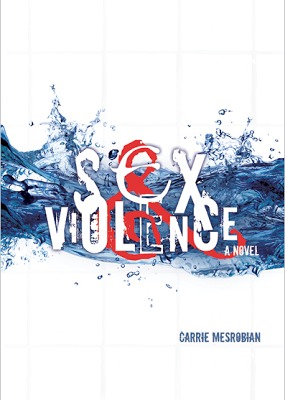
Sex and Violence
Carrie Mesrobian's debut novel and Morris Award Nominee, Sex and Violence, is not a book that will suit everyone's tastes. Crass, crude, yet an accurate portrayal of language of teens coupled with a balance of harsh moments and sensitive character transformations make Sex and Violence a very interesting book to discuss with mature teens and adults, but I would not be surprised to see this title grace the list of books for Banned Book Week.
Description: Sex has always come without consequences for seventeen-year-old Evan. Until he hooks up with the wrong girl and finds himself in the wrong place at very much the wrong time. After an assault that leaves Evan scarred inside and out, he and his father retreat to the family cabin in rural Minnesota—which, ironically, turns out to be the one place where Evan can't escape other people. Including himself. It may also offer him his best shot at making sense of his life again.
Review: Evan has been the perpetual new guy for far too long. He relocates constantly with his unsettled, non-communicative widower father, hence never making any real friends or lasting connections. Evan, however, he has no problem scoping out "easy girls" to add to his growing and alarming list of conquests in whatever town they happen to land.
At his last school, a boarding school in North Carolina while his father is working overseas, Evan hooks up with the wrong girl, a schoolmate Collette who comes on to him faster than you can say her full name, which leads to two dangerous and violent encounters: Evan severely beaten outside the group showers by two stereotypical big jocks and Collette viciously rape by the same boys. Although Evan's badly scarred body heals, needless to say that his wounded spirit struggles with post-traumatic stress disorder. He completely alters his looks by avoiding the shower at all costs, avoid looking at man who have strong physiques, cutting his hair completely short, and dramatically decrease his flirtatious behavior.
In an effort to become a good parent, his father moves them to the family's lake house in rural Minnesota and enlists a helpful therapist. Evan slowly works through his fears and awkwardness to gradually connect with a whole new cast of teens who offer friendship, partying, sexual, and even romantic potential; gets a job and a car; and slowly begins to resolve his feelings about the assault against him and Collette by writing therapy-prescribed unmailed letters to her.
Evan is a very hard character to like, especially in the callous ways he sizes up, uses, and disposes females. His viewpoints of women are disgusting. I wouldn't want to be in the same building as him but I also couldn't help but see how wry and intelligent he is. He knows he is first class jerk (that's an understatement) and he doesn't hide it. It's a fact. To Evan women are seen as trophies to showcase his masculinity and victories, but these are the themes that Mesrobian expertly weaves into the story without being heavy-handed. Stripped from a mother's love and only shown affection and intimacy through sex, Evan is not sure what it is to be a man and above all what it means to be loved.
Evan's character growth seemed realistic to me. While he was persistent in his negative behavior and once again found himself in trouble, he does finally have an epiphany and might finally learn a genuine lesson. He even develops a somewhat healthy relationship which I wished was a bit more fleshed out but I think it does give readers some comfort in knowing things are bright in Evan's future. Though readers may have a low tolerance for Evan initially, after witnessing his horrifying ordeal he transforms into someone with and for whom readers will eventually sympathize, want to shake into sensibility, and feel hope. Evan is a character that is unlike anyone that I've met in 2013 and very unlikely to forget.
Rating: 3.5 stars
Words of Caution: Strong language, violence (Evan's assault and Collette's rape happen off the page though we are given vivid flashbacks), sexual content and teen drug usage throughout the book. Recommended for mature teens and adults only.
If you like this book try: Uses for Boys by Erica Lorraine Scheidt, Tales of the Madman Underground by John Barnes, Jellicoe Road by Melina Marchetta
Description: Sex has always come without consequences for seventeen-year-old Evan. Until he hooks up with the wrong girl and finds himself in the wrong place at very much the wrong time. After an assault that leaves Evan scarred inside and out, he and his father retreat to the family cabin in rural Minnesota—which, ironically, turns out to be the one place where Evan can't escape other people. Including himself. It may also offer him his best shot at making sense of his life again.
Review: Evan has been the perpetual new guy for far too long. He relocates constantly with his unsettled, non-communicative widower father, hence never making any real friends or lasting connections. Evan, however, he has no problem scoping out "easy girls" to add to his growing and alarming list of conquests in whatever town they happen to land.
At his last school, a boarding school in North Carolina while his father is working overseas, Evan hooks up with the wrong girl, a schoolmate Collette who comes on to him faster than you can say her full name, which leads to two dangerous and violent encounters: Evan severely beaten outside the group showers by two stereotypical big jocks and Collette viciously rape by the same boys. Although Evan's badly scarred body heals, needless to say that his wounded spirit struggles with post-traumatic stress disorder. He completely alters his looks by avoiding the shower at all costs, avoid looking at man who have strong physiques, cutting his hair completely short, and dramatically decrease his flirtatious behavior.
In an effort to become a good parent, his father moves them to the family's lake house in rural Minnesota and enlists a helpful therapist. Evan slowly works through his fears and awkwardness to gradually connect with a whole new cast of teens who offer friendship, partying, sexual, and even romantic potential; gets a job and a car; and slowly begins to resolve his feelings about the assault against him and Collette by writing therapy-prescribed unmailed letters to her.
Evan is a very hard character to like, especially in the callous ways he sizes up, uses, and disposes females. His viewpoints of women are disgusting. I wouldn't want to be in the same building as him but I also couldn't help but see how wry and intelligent he is. He knows he is first class jerk (that's an understatement) and he doesn't hide it. It's a fact. To Evan women are seen as trophies to showcase his masculinity and victories, but these are the themes that Mesrobian expertly weaves into the story without being heavy-handed. Stripped from a mother's love and only shown affection and intimacy through sex, Evan is not sure what it is to be a man and above all what it means to be loved.
Evan's character growth seemed realistic to me. While he was persistent in his negative behavior and once again found himself in trouble, he does finally have an epiphany and might finally learn a genuine lesson. He even develops a somewhat healthy relationship which I wished was a bit more fleshed out but I think it does give readers some comfort in knowing things are bright in Evan's future. Though readers may have a low tolerance for Evan initially, after witnessing his horrifying ordeal he transforms into someone with and for whom readers will eventually sympathize, want to shake into sensibility, and feel hope. Evan is a character that is unlike anyone that I've met in 2013 and very unlikely to forget.
Rating: 3.5 stars
Words of Caution: Strong language, violence (Evan's assault and Collette's rape happen off the page though we are given vivid flashbacks), sexual content and teen drug usage throughout the book. Recommended for mature teens and adults only.
If you like this book try: Uses for Boys by Erica Lorraine Scheidt, Tales of the Madman Underground by John Barnes, Jellicoe Road by Melina Marchetta
Tuesday, October 29, 2013
The Madman's Daughter (The Madman's Daughter #1)
I'm really enjoying the Classics Double Challenge hosted by One's Librarian Book Reviews. The object of this challenge is to read a classic (the term is used loosely to include fairy tales, mythologies, classics, any kind of original story) and couple it with a retelling (the original and the newer book have to relate in some way that you can define; it doesn't have to be a straight-forward retelling). My objective with this challenge is to read some classics and discover new authors that I've haven't read yet.
Description (from book's panel): Juliet Moreau has built a life for herself in London—working as a maid, attending church on Sundays, and trying not to think about the scandal that ruined her life. After all, no one ever proved the rumors about her father's gruesome experiments. But when she learns he is alive and continuing his work on a remote tropical island, she is determined to find out if the accusations are true.
Accompanied by her father's handsome young assistant, Montgomery, and an enigmatic castaway, Edward—both of whom she is deeply drawn to—Juliet travels to the island, only to discover the depths of her father's madness: He has experimented on animals so that they resemble, speak, and behave as humans. And worse, one of the creatures has turned violent and is killing the island's inhabitants. Torn between horror and scientific curiosity, Juliet knows she must end her father's dangerous experiments and escape her jungle prison before it's too late. Yet as the island falls into chaos, she discovers the extent of her father's genius—and madness—in her own blood.
Review: The Madman's Daughter is a retelling of H.G. Wells's often overlooked science fiction/horror novel The Island of Dr. Moreau and is told from the point of view of the mad doctor's teenage daughter. While Shepherd takes many liberties with the original story, this dark novel blends the basic premise of the original with new insights, characters, and terror. despite some flaws, it succeeds as a horror novel.
In an excellent rendition of the dark, desolate Victorian England, we meet Juliet who has a taint on her reputation. Her father, Dr. Moreau, an infamous scientist who has been banished out of London due to his outlandish and shocking experiments, has left his wife and daughter destitute. When her mother dies, Juliet has just enough money to survive until she is fired from her hospital cleaning job for rebuffing the advances of one of the doctors. Terrified that she has to resort to prostitution as a means for survival, she runs into her old friend, childhood crush, and her father's assistant, Montgomery, and learns that her father is actually alive on an remote island. Montgomery fails to deter Juliet from seeing her father after several logical explanations, Juliet convinces Montgomery to take her to her father's island. The perilous trip on a pirate ship and the rescue of Edward, a castaway, naturally foreshadows the dangers and horrors that they will all see once they reach to their destination.
I liked how Shepherd tries to give contexts to a very bizarre story. Dr. Moreau, while thoroughly detestable and selfish, comes off as a charismatic madman who in his twisted ways make his horrific experiments of mixing genes of animals and human a rather brilliant experiment. By making him a father (both literally and figuratively) to his subservient human-like creatures who obey him as if he was god, we get to see Dr. Moreau as a human which cleverly touches upon the colonial mindset of the times and brings up a really interesting issue of religion. Unlike her father, Juliet comes off as a character who is inconsistent; her mannerisms are thoroughly Victorian though her dialogue seems to be too forthright to be a Victorian girl. She is incredibly uptight and prissy, but I did welcome her take charge personality though her indecisiveness and impulsive nature irritated me, it didn't deter me from enjoying the disturbing aspects of the story.
The pace of the story reflects upon the traditional Gothic horror stories by always having something lurking in the background. The tapping of windows, the screams coming far away yet somehow close to the characters all build suspense quite well. I even liked the slow discovery of the Moreau's experiments. Though we are horrified to see what these creatures are, we do grow a relationship to some of them and sympathize with them.
While Shepherd does a good job in evoking the settings and giving a new spin of the characters, the love triangle in The Madman's Daughter is the weakest point of the story and drags the book down. While Montgomery and Juliet have a natural chemistry that has been built over time, Juliet's attraction to Edward is just too convenient and contrived. Though we are expected to pit our affections for Montgomery and Edward against each other, only one of them comes out as a clear winner and makes us wonder if the other love interest was a superfluous invention. Though Montgomery and Edward are equally charismatic characters, I would have liked to learn more about them as individuals without Juliet swooning about their good looks. I do, however, have a theory about Edward and I'm waiting to see if I'm right or wrong in the next book of this series.
Though I read The Island of Dr. Moreau before reading this book, there were a few surprises that were a welcoming addition to the story such as how the book ends. While knowledge of Wells's novel would perhaps lead to a more satisfying reading experience, The Madman's Daughter whets the appetite for the original story and tackles some of the essential themes with some good old fashion scares. I'm looking forward to where Shepherd takes her characters next as the series continues.
Rating: 4 stars
Words of Caution: There is a scene of attempted rape, some gore, and violence which mostly takes place off the page. Recommended for Grades 9 and up.
If you like this book try: The Island of Dr. Moreau by H.G. Wells, His Dark Endeavors series by Kenneth Oppel, The Great and Terrible Beauty by Libba Bray
Description (from book's panel): Juliet Moreau has built a life for herself in London—working as a maid, attending church on Sundays, and trying not to think about the scandal that ruined her life. After all, no one ever proved the rumors about her father's gruesome experiments. But when she learns he is alive and continuing his work on a remote tropical island, she is determined to find out if the accusations are true.
Accompanied by her father's handsome young assistant, Montgomery, and an enigmatic castaway, Edward—both of whom she is deeply drawn to—Juliet travels to the island, only to discover the depths of her father's madness: He has experimented on animals so that they resemble, speak, and behave as humans. And worse, one of the creatures has turned violent and is killing the island's inhabitants. Torn between horror and scientific curiosity, Juliet knows she must end her father's dangerous experiments and escape her jungle prison before it's too late. Yet as the island falls into chaos, she discovers the extent of her father's genius—and madness—in her own blood.
Review: The Madman's Daughter is a retelling of H.G. Wells's often overlooked science fiction/horror novel The Island of Dr. Moreau and is told from the point of view of the mad doctor's teenage daughter. While Shepherd takes many liberties with the original story, this dark novel blends the basic premise of the original with new insights, characters, and terror. despite some flaws, it succeeds as a horror novel.
In an excellent rendition of the dark, desolate Victorian England, we meet Juliet who has a taint on her reputation. Her father, Dr. Moreau, an infamous scientist who has been banished out of London due to his outlandish and shocking experiments, has left his wife and daughter destitute. When her mother dies, Juliet has just enough money to survive until she is fired from her hospital cleaning job for rebuffing the advances of one of the doctors. Terrified that she has to resort to prostitution as a means for survival, she runs into her old friend, childhood crush, and her father's assistant, Montgomery, and learns that her father is actually alive on an remote island. Montgomery fails to deter Juliet from seeing her father after several logical explanations, Juliet convinces Montgomery to take her to her father's island. The perilous trip on a pirate ship and the rescue of Edward, a castaway, naturally foreshadows the dangers and horrors that they will all see once they reach to their destination.
I liked how Shepherd tries to give contexts to a very bizarre story. Dr. Moreau, while thoroughly detestable and selfish, comes off as a charismatic madman who in his twisted ways make his horrific experiments of mixing genes of animals and human a rather brilliant experiment. By making him a father (both literally and figuratively) to his subservient human-like creatures who obey him as if he was god, we get to see Dr. Moreau as a human which cleverly touches upon the colonial mindset of the times and brings up a really interesting issue of religion. Unlike her father, Juliet comes off as a character who is inconsistent; her mannerisms are thoroughly Victorian though her dialogue seems to be too forthright to be a Victorian girl. She is incredibly uptight and prissy, but I did welcome her take charge personality though her indecisiveness and impulsive nature irritated me, it didn't deter me from enjoying the disturbing aspects of the story.
The pace of the story reflects upon the traditional Gothic horror stories by always having something lurking in the background. The tapping of windows, the screams coming far away yet somehow close to the characters all build suspense quite well. I even liked the slow discovery of the Moreau's experiments. Though we are horrified to see what these creatures are, we do grow a relationship to some of them and sympathize with them.
While Shepherd does a good job in evoking the settings and giving a new spin of the characters, the love triangle in The Madman's Daughter is the weakest point of the story and drags the book down. While Montgomery and Juliet have a natural chemistry that has been built over time, Juliet's attraction to Edward is just too convenient and contrived. Though we are expected to pit our affections for Montgomery and Edward against each other, only one of them comes out as a clear winner and makes us wonder if the other love interest was a superfluous invention. Though Montgomery and Edward are equally charismatic characters, I would have liked to learn more about them as individuals without Juliet swooning about their good looks. I do, however, have a theory about Edward and I'm waiting to see if I'm right or wrong in the next book of this series.
Though I read The Island of Dr. Moreau before reading this book, there were a few surprises that were a welcoming addition to the story such as how the book ends. While knowledge of Wells's novel would perhaps lead to a more satisfying reading experience, The Madman's Daughter whets the appetite for the original story and tackles some of the essential themes with some good old fashion scares. I'm looking forward to where Shepherd takes her characters next as the series continues.
Rating: 4 stars
Words of Caution: There is a scene of attempted rape, some gore, and violence which mostly takes place off the page. Recommended for Grades 9 and up.
If you like this book try: The Island of Dr. Moreau by H.G. Wells, His Dark Endeavors series by Kenneth Oppel, The Great and Terrible Beauty by Libba Bray
Tuesday, October 22, 2013
All Our Pretty Songs (All Our Pretty Songs #1)
As many of you already know I'm a huge fan of Greek Mythology. I can never get enough of mythological retellings and learning about lesser known deities, which is what drew me to Sarah McCarry's debut novel, All Our Pretty Songs. This review is based on the advanced reader's copy that I received from the publisher via Netgalley.
Description: Set against the lush, magical backdrop of the Pacific Northwest, two inseparable best friends who have grown up like sisters—the charismatic, mercurial, and beautiful Aurora and the devoted, soulful, watchful narrator—find their bond challenged for the first time ever when a mysterious and gifted musician named Jack comes between them. Suddenly, each girl must decide what matters most: friendship, or love. What both girls don’t know is that the stakes are even higher than either of them could have imagined. They’re not the only ones who have noticed Jack’s gift; his music has awakened an ancient evil—and a world both above and below which may not be mythical at all. The real and the mystical; the romantic and the heartbreaking all begin to swirl together, carrying the two on journey that is both enthralling and terrifying. And it’s up to the narrator to protect the people she loves—if she can.
Review: An enigmatic, nameless narrator and her best friend, Aurora, have known each other since birth and are close like sisters though they may not share the same bloodline. Their mothers lived together, were best friends, carrying on their intoxicated party lifestyle full of sex, drugs, and rock and roll. Their mother's friendship ended when Cass, the narrator’s mother, decided to give it all up when the girls were young and raise her daughter soberly, making a small living as a fortune-telling witch and taking in Aurora whenever the teen’s junkie mom wasn't sober enough to keep her safe.
As teens, the narrator and Aurora mirror and compliment each other. Aurora is flighty, sweet, life of the party compared to the narrator's dark, unwelcoming, and goth style. Aurora is trying to fill the void of her dead father who use to be a rock star by taking enough drugs to see if she can feel him on the "other side". The narrator has always assumed the role of Aurora's caretaker, being her rock to anchor her and stabilize her as much as she can. The narrator and Aurora have a unique relationship, one that fringes on familial love and quite possibly something else which is brought to the spotlight when Jack, a mysterious adult guitarist, comes into their lives and the girls' differences come to a head.
Before you groan and say "not another love triangle?!" let me assure you that this triangle is not the type we have generally seen thus far. Yes, Jack and the narrator fall in to lust and then eventually love within a matter of days, Aurora doesn't have any interest in Jack but rather is jealousy of the narrator's devoted attention towards him. Aurora has her eye son Jack’s scary boss, a man named Minos, who has an otherworldly air about him that the narrator immediately recognizes. Minos convinces Aurora and Jack that can pursue their dreams and desires if they the small Northwest town for fame in California.
For the longest time, I wasn't not sure where the mythology kicked in until about three fourths into the story where Minos is introduced. The myth that McCarry alludes to is not loosely based and hard to grasp. In contrast her narrative is smooth and seductive, peppered with references from authors and philosophers from Rousseau to Block. Though I did have issues with the insta-lust/love between the unnamed narrator and Jack, I do see a running theme of impulsion throughout the story. I wish I got to know Jack a bit more as a character, he never really solidified for me. All Our Pretty Songs is the first book in a planned trilogy which will tell the outcomes of the girls, Jack, and the other secondary characters in this usual paranormal romance story. I would recommend this book to readers who like dark stories featuring the fey, fans of Greek mythology, and those who are looking for a more sophisticated paranormal romance story.
Rating: 3.5 stars
Words of Caution: There is strong sexual content, drug use, and language throughout the novel. Recommended for Grades 10 and up.
If you like this book try: Dirty Wings (All Our Pretty Songs #2) *Released in 2014, Tithe by Holly Black, Wicked Lovely by Melissa Marr, or Everneath by Brodi Ashton (Everneath #1)
Description: Set against the lush, magical backdrop of the Pacific Northwest, two inseparable best friends who have grown up like sisters—the charismatic, mercurial, and beautiful Aurora and the devoted, soulful, watchful narrator—find their bond challenged for the first time ever when a mysterious and gifted musician named Jack comes between them. Suddenly, each girl must decide what matters most: friendship, or love. What both girls don’t know is that the stakes are even higher than either of them could have imagined. They’re not the only ones who have noticed Jack’s gift; his music has awakened an ancient evil—and a world both above and below which may not be mythical at all. The real and the mystical; the romantic and the heartbreaking all begin to swirl together, carrying the two on journey that is both enthralling and terrifying. And it’s up to the narrator to protect the people she loves—if she can.
Review: An enigmatic, nameless narrator and her best friend, Aurora, have known each other since birth and are close like sisters though they may not share the same bloodline. Their mothers lived together, were best friends, carrying on their intoxicated party lifestyle full of sex, drugs, and rock and roll. Their mother's friendship ended when Cass, the narrator’s mother, decided to give it all up when the girls were young and raise her daughter soberly, making a small living as a fortune-telling witch and taking in Aurora whenever the teen’s junkie mom wasn't sober enough to keep her safe.
As teens, the narrator and Aurora mirror and compliment each other. Aurora is flighty, sweet, life of the party compared to the narrator's dark, unwelcoming, and goth style. Aurora is trying to fill the void of her dead father who use to be a rock star by taking enough drugs to see if she can feel him on the "other side". The narrator has always assumed the role of Aurora's caretaker, being her rock to anchor her and stabilize her as much as she can. The narrator and Aurora have a unique relationship, one that fringes on familial love and quite possibly something else which is brought to the spotlight when Jack, a mysterious adult guitarist, comes into their lives and the girls' differences come to a head.
Before you groan and say "not another love triangle?!" let me assure you that this triangle is not the type we have generally seen thus far. Yes, Jack and the narrator fall in to lust and then eventually love within a matter of days, Aurora doesn't have any interest in Jack but rather is jealousy of the narrator's devoted attention towards him. Aurora has her eye son Jack’s scary boss, a man named Minos, who has an otherworldly air about him that the narrator immediately recognizes. Minos convinces Aurora and Jack that can pursue their dreams and desires if they the small Northwest town for fame in California.
For the longest time, I wasn't not sure where the mythology kicked in until about three fourths into the story where Minos is introduced. The myth that McCarry alludes to is not loosely based and hard to grasp. In contrast her narrative is smooth and seductive, peppered with references from authors and philosophers from Rousseau to Block. Though I did have issues with the insta-lust/love between the unnamed narrator and Jack, I do see a running theme of impulsion throughout the story. I wish I got to know Jack a bit more as a character, he never really solidified for me. All Our Pretty Songs is the first book in a planned trilogy which will tell the outcomes of the girls, Jack, and the other secondary characters in this usual paranormal romance story. I would recommend this book to readers who like dark stories featuring the fey, fans of Greek mythology, and those who are looking for a more sophisticated paranormal romance story.
Rating: 3.5 stars
Words of Caution: There is strong sexual content, drug use, and language throughout the novel. Recommended for Grades 10 and up.
If you like this book try: Dirty Wings (All Our Pretty Songs #2) *Released in 2014, Tithe by Holly Black, Wicked Lovely by Melissa Marr, or Everneath by Brodi Ashton (Everneath #1)
Wednesday, October 2, 2013
Gated
Gated by Amy Christine Parker is a good choice if you are in the mood for a psychological thriller that is somewhat rooted in real life events, the bizarre world of religious cults. This review is based on the advanced reader's copy of the book provided by the publisher via Netgalley.
Description: Do the gates keep the unchosen out or the chosen in?
In Mandrodage Meadows, life seems perfect. The members of this isolated suburban community have thrived under Pioneer, the charismatic leader who saved them from their sad, damaged lives. Lyla Hamilton and her parents are original members of the flock. They moved here following the 9/11 terrorist attacks, looking to escape the evil in the world. Now seventeen, Lyla knows certain facts are not to be questioned: Pioneer is her leader. Will is her Intended. The end of the world is near.
Like Noah before him, Pioneer has been told of the imminent destruction of humanity. He says his chosen must arm themselves to fight off the unchosen people, who will surely seek refuge in the compound's underground fortress--the Silo.
Lyla loves her family and friends, but given the choice, she prefers painting to target practice. And lately she'd rather think about a certain boy outside the compound than plan for married life in the Silo with Will. But with the end of days drawing near, she will have to pick up a gun, take a side, and let everyone know where she stands.
Review: Gated is an absorbing, chilling, and extremely disturbing read that examines a religious cult through the eyes of a teenage girl who begins to doubt their leader. Lyla's little sister was kidnapped in New York City twelve years ago. Her inconsolable parents fell prey to a charismatic man calling himself Pioneer, who promised to keep them safe in the coming apocalypse thanks to knowledge received from aliens. The Pioneer receives messages from up above and delivers them to his followers. He relentlessly shows movies that has the apocalypse as its themes such as The Day After Tomorrow, Terminator, 2012, etc. The members are the community are told how to dress, eat, and socialize. Pioneer controls his people with an iron fists, assigning the adolescents into marriages (Will is Lyla's Intended) and insisting that everyone in the Community learn to shoot to kill, as he's sure Outsiders will eventually attack them. Comprised of about 20 other families in a walled-in agricultural community, they hide a secret: They have dug a five-story-deep silo into the ground in which they intend to live for five years before the aliens come to rescue them.
Parker convincingly portrays the dynamics of a cult from the inside out, quoting from the Pioneer's bible along with real cult leaders such as Jim Jones and Charles Manson that gave me goosebumps. The contriving events that will allow Lyla to learn the truth about Pioneer fits nicely with Lyla's adolescent rebellion. I only had wished the the author didn't include a flat love interest to let Lyla open her eyes. I think she was on the road to discovery love before the "cute boy" showed up.
Though the pacing of the book is quite slow, the suspense increases the further you read. Parker doesn't pull punches, indicating a level of brutality that will appropriately disturb even as it successfully conveys Lyla's complete entrapment in the Community. There are moments that shocked me particularly during the book's climax. The quick chapters and gritty subject matter might attract reluctant readers.
Rating: 4 stars
Words of Caution: Due to strong violence, including the harm of animals, and the book's subject matter, I would feel comfortable in recommending this book to teens who are Grades 10 and up.
If you like this book try: Perfect Ruin by Lauren DeStefano, Chosen Ones by Tiffany Truitt
Description: Do the gates keep the unchosen out or the chosen in?
In Mandrodage Meadows, life seems perfect. The members of this isolated suburban community have thrived under Pioneer, the charismatic leader who saved them from their sad, damaged lives. Lyla Hamilton and her parents are original members of the flock. They moved here following the 9/11 terrorist attacks, looking to escape the evil in the world. Now seventeen, Lyla knows certain facts are not to be questioned: Pioneer is her leader. Will is her Intended. The end of the world is near.
Like Noah before him, Pioneer has been told of the imminent destruction of humanity. He says his chosen must arm themselves to fight off the unchosen people, who will surely seek refuge in the compound's underground fortress--the Silo.
Lyla loves her family and friends, but given the choice, she prefers painting to target practice. And lately she'd rather think about a certain boy outside the compound than plan for married life in the Silo with Will. But with the end of days drawing near, she will have to pick up a gun, take a side, and let everyone know where she stands.
Review: Gated is an absorbing, chilling, and extremely disturbing read that examines a religious cult through the eyes of a teenage girl who begins to doubt their leader. Lyla's little sister was kidnapped in New York City twelve years ago. Her inconsolable parents fell prey to a charismatic man calling himself Pioneer, who promised to keep them safe in the coming apocalypse thanks to knowledge received from aliens. The Pioneer receives messages from up above and delivers them to his followers. He relentlessly shows movies that has the apocalypse as its themes such as The Day After Tomorrow, Terminator, 2012, etc. The members are the community are told how to dress, eat, and socialize. Pioneer controls his people with an iron fists, assigning the adolescents into marriages (Will is Lyla's Intended) and insisting that everyone in the Community learn to shoot to kill, as he's sure Outsiders will eventually attack them. Comprised of about 20 other families in a walled-in agricultural community, they hide a secret: They have dug a five-story-deep silo into the ground in which they intend to live for five years before the aliens come to rescue them.
Parker convincingly portrays the dynamics of a cult from the inside out, quoting from the Pioneer's bible along with real cult leaders such as Jim Jones and Charles Manson that gave me goosebumps. The contriving events that will allow Lyla to learn the truth about Pioneer fits nicely with Lyla's adolescent rebellion. I only had wished the the author didn't include a flat love interest to let Lyla open her eyes. I think she was on the road to discovery love before the "cute boy" showed up.
Though the pacing of the book is quite slow, the suspense increases the further you read. Parker doesn't pull punches, indicating a level of brutality that will appropriately disturb even as it successfully conveys Lyla's complete entrapment in the Community. There are moments that shocked me particularly during the book's climax. The quick chapters and gritty subject matter might attract reluctant readers.
Rating: 4 stars
Words of Caution: Due to strong violence, including the harm of animals, and the book's subject matter, I would feel comfortable in recommending this book to teens who are Grades 10 and up.
If you like this book try: Perfect Ruin by Lauren DeStefano, Chosen Ones by Tiffany Truitt
Wednesday, September 18, 2013
Wonder Show
Wonder Show was nominated for the William Morris award, an award given to debut authors, last year. I haven't heard much about the book until the book awards last year and decided to check it out.
Description: Ladies and gentlemen, boys and girls, step inside Mosco’s Traveling Wonder Show, a menagerie of human curiosities and misfits guaranteed to astound and amaze! But perhaps the strangest act of Mosco’s display is Portia Remini, a normal among the freaks, on the run from McGreavy’s Home for Wayward Girls, where Mister watches and waits. He said he would always find Portia, that she could never leave. Free at last, Portia begins a new life on the bally, seeking answers about her father’s disappearance. Will she find him before Mister finds her? It’s a story for the ages, and like everyone who enters the Wonder Show, Portia will never be the same.
Review: It's difficult to call Wonder Show a novel as it is more like vinettes showing the slices of Portia's life. The story takes place during the Great Depression. Portia is burdened with guilt over the sudden death of her friend. She escapes from the McGreavey Home for Wayward Girls to search for Max, her father. Portia believes her father escaped from their Gypsy camp and followed the circus in hopes of finding a job and getting enough money to come back for her. With this hope in her heart, Portia escapes on a stolen bicycle and joins a carnival and finds a family of sorts in Mosco's Traveling Wonder Show.
The story moves rather slowly in a sort of dreamlike fashion due to the predominately third person narration, making the reader an observer rather an active participant in the story. The pace picks up when Portia is introduced to the various characters of the circus. She shares a trailer with Violet, a restless teenager whose parents and brother are albinos; trains for the ballyhoo under Jackal, who lures spectators to the sideshow of "freaks"; and enjoys the protection of Gideon, a young man whose father was impoverished by the stock-market crash. Portia has an unique place in the circus, while she is shunned for and constantly reminded of being 'normal' amongst the freaks, she is protected when her safety is threatened by the incredibly creepy and smarmy "Mister," who runs McGreavey's, comes to the circus in search of Portia. There is plenty of melodrama in Wonder Show, but author balances this with the book's vivid setting and wide variety of secondary characters which Portia learns some of their back stories. The author also adds some nice information and insights about the circus life to give her story some context especially in some of the steamy aspects of the circus. I'm not exactly sure how popular this book will be with teens or if it's a book for everyone, but it's certainly worth checking out if you're curious about circuses.
Rating: 3 stars
Words of Caution: There are dark themes including the inferences of molestation, abandonment, animal cruelty as well as a sideshow act where beautiful conjoined sisters do a naked dance which gives enough detail to know what is going on. There is also a handful of strong language in the book too. With these reservations, I would recommended the book to strong Grade 7 readers and up.
If you like this book try: August Acrobat by Ron Roy, Circus Galacticus by Deva Fagan, Henrietta Hornbuckle's Circus of Life by Michael De Guzman or for older readers Water for Elephants by Sara Gruen, Night Circus by Erin Morgenstern,
Review: It's difficult to call Wonder Show a novel as it is more like vinettes showing the slices of Portia's life. The story takes place during the Great Depression. Portia is burdened with guilt over the sudden death of her friend. She escapes from the McGreavey Home for Wayward Girls to search for Max, her father. Portia believes her father escaped from their Gypsy camp and followed the circus in hopes of finding a job and getting enough money to come back for her. With this hope in her heart, Portia escapes on a stolen bicycle and joins a carnival and finds a family of sorts in Mosco's Traveling Wonder Show.
The story moves rather slowly in a sort of dreamlike fashion due to the predominately third person narration, making the reader an observer rather an active participant in the story. The pace picks up when Portia is introduced to the various characters of the circus. She shares a trailer with Violet, a restless teenager whose parents and brother are albinos; trains for the ballyhoo under Jackal, who lures spectators to the sideshow of "freaks"; and enjoys the protection of Gideon, a young man whose father was impoverished by the stock-market crash. Portia has an unique place in the circus, while she is shunned for and constantly reminded of being 'normal' amongst the freaks, she is protected when her safety is threatened by the incredibly creepy and smarmy "Mister," who runs McGreavey's, comes to the circus in search of Portia. There is plenty of melodrama in Wonder Show, but author balances this with the book's vivid setting and wide variety of secondary characters which Portia learns some of their back stories. The author also adds some nice information and insights about the circus life to give her story some context especially in some of the steamy aspects of the circus. I'm not exactly sure how popular this book will be with teens or if it's a book for everyone, but it's certainly worth checking out if you're curious about circuses.
Rating: 3 stars
Words of Caution: There are dark themes including the inferences of molestation, abandonment, animal cruelty as well as a sideshow act where beautiful conjoined sisters do a naked dance which gives enough detail to know what is going on. There is also a handful of strong language in the book too. With these reservations, I would recommended the book to strong Grade 7 readers and up.
If you like this book try: August Acrobat by Ron Roy, Circus Galacticus by Deva Fagan, Henrietta Hornbuckle's Circus of Life by Michael De Guzman or for older readers Water for Elephants by Sara Gruen, Night Circus by Erin Morgenstern,
Tuesday, April 30, 2013
Strands of Bronze and Gold
I haven't heard of the Bluebeard fairy tale until I ran across the name when I read the best-selling graphic novel series, Fables by Bill Willingham. From the context in which he appeared and after doing a little bit of research, I couldn't believe I'd never heard of it before. Jane Nickerson's debut novel, Strands of Bronze and Gold revisits the Bluebeard story and sets it against the backdrop of Pre-Civil War Mississippi. Please note that this review is based on the advanced reader's copy provided by the publisher through Netgalley (Thank you!)
Description (from the Publisher): When seventeen-year-old Sophia Petheram’s beloved father dies, she receives an unexpected letter. An invitation—on fine ivory paper, in bold black handwriting—from the mysterious Monsieur Bernard de Cressac, her godfather. With no money and fewer options, Sophie accepts, leaving her humble childhood home for the astonishingly lavish Wyndriven Abbey, in the heart of Mississippi.
Sophie has always longed for a comfortable life, and she finds herself both attracted to and shocked by the charm and easy manners of her overgenerous guardian. But as she begins to piece together the mystery of his past, it’s as if, thread by thread, a silken net is tightening around her. And as she gathers stories and catches whispers of his former wives—all with hair as red as her own—in the forgotten corners of the abbey, Sophie knows she’s trapped in the passion and danger of de Cressac’s intoxicating world.
Review: Strands of Bronze and Gold is a Gothic retelling of the Bluebeard fairy tale set in Pre-Civil Mississippi. When Sophia’s father dies, she is sent from Boston to Wyndriven Abbey, the Mississippi plantation of her godfather, Monsieur Bernard de Cressac. At first Sophia is caught up with her new luxurious lifestyle- beautiful gowns, jewelry, and extravagant dinners all made simply for her. Slowly, she finds herself being attracted to Bernard as he makes her the center of his world. Soon Bernard's attention becomes claustrophobic as he refuses to let her go outside the mansion. She becomes more and more suspicious of the plantation slaves’ living and working conditions, the vine-shrouded outbuildings she is not allowed to explore, and the various treasures belonging to Bernard’s former wives, all dead, that she finds in the attic. She even feels like there are ghosts following her and trying to deliver a message which she can't unravel until it is too late. In spite of her uneasy attraction to Bernard’s increasingly romantic intentions, Sophia finds herself falling for Gideon Stone, the local minister who also has the quiet reputation among the slaves of assisting in escapes to the North and who is much more aware about Bernard's sinister background.
Strands of Bronze and Gold is a decent read that has some strengths and weaknesses, however some of the weaknesses are hard to ignore. Nickerson does a good job in slowly building up the suspense and uneasiness surrounding Sophie. Though we can forgive her of being so swept up when she first attends Wyndriven Abbey, it really takes our heroine quite some time to figure out that there is something truly disturbing about her godfather Bernard. As our protagonist, Sophia isn't all that remarkable. Similarly, Bernard doesn't stray very far from the Bluebeard caricature. Nickerson definitely captured his wild mood swings and his lecherous looks made me shudder, but there is really no explanation of why he is a psychotic killer. I would have liked a bit more exploration with his character as well as more time spent with Sophia learning about Bernard's previous wives. Sophia's discovery along with meeting a new and dull love interest, Reverend Stone, happen all too quickly and conveniently.
Despite all these flaws, I was truly disappointed on how the topic of slavery was addressed in the book. I can see how the author tried to draw parallels between Sophia's caged life to those of Bernard's slaves, but it didn't quite make it there. It touched the surface just like how it touched the surface about the fairy tale's theme of the fatal effects of feminine curiosity.
Strands of Bronze and Gold is a book that is an entertaining read as long as you don't really think too much about it. Readers interested in fairy tales, a historical setting, and mystery would enjoy the book.
Rating: 3.5 stars
Words of Caution: There is some language, sexual innuendo, allusions to domestic abuse and rape, and disturbing images. Recommended for Grades 8 and up.
If you like this book try: Bluebeard's Egg by Margaret Atwood, The Rose and The Beast: Fairy Tales Retold by Francesca Lia Block
Sophie has always longed for a comfortable life, and she finds herself both attracted to and shocked by the charm and easy manners of her overgenerous guardian. But as she begins to piece together the mystery of his past, it’s as if, thread by thread, a silken net is tightening around her. And as she gathers stories and catches whispers of his former wives—all with hair as red as her own—in the forgotten corners of the abbey, Sophie knows she’s trapped in the passion and danger of de Cressac’s intoxicating world.
Review: Strands of Bronze and Gold is a Gothic retelling of the Bluebeard fairy tale set in Pre-Civil Mississippi. When Sophia’s father dies, she is sent from Boston to Wyndriven Abbey, the Mississippi plantation of her godfather, Monsieur Bernard de Cressac. At first Sophia is caught up with her new luxurious lifestyle- beautiful gowns, jewelry, and extravagant dinners all made simply for her. Slowly, she finds herself being attracted to Bernard as he makes her the center of his world. Soon Bernard's attention becomes claustrophobic as he refuses to let her go outside the mansion. She becomes more and more suspicious of the plantation slaves’ living and working conditions, the vine-shrouded outbuildings she is not allowed to explore, and the various treasures belonging to Bernard’s former wives, all dead, that she finds in the attic. She even feels like there are ghosts following her and trying to deliver a message which she can't unravel until it is too late. In spite of her uneasy attraction to Bernard’s increasingly romantic intentions, Sophia finds herself falling for Gideon Stone, the local minister who also has the quiet reputation among the slaves of assisting in escapes to the North and who is much more aware about Bernard's sinister background.
Strands of Bronze and Gold is a decent read that has some strengths and weaknesses, however some of the weaknesses are hard to ignore. Nickerson does a good job in slowly building up the suspense and uneasiness surrounding Sophie. Though we can forgive her of being so swept up when she first attends Wyndriven Abbey, it really takes our heroine quite some time to figure out that there is something truly disturbing about her godfather Bernard. As our protagonist, Sophia isn't all that remarkable. Similarly, Bernard doesn't stray very far from the Bluebeard caricature. Nickerson definitely captured his wild mood swings and his lecherous looks made me shudder, but there is really no explanation of why he is a psychotic killer. I would have liked a bit more exploration with his character as well as more time spent with Sophia learning about Bernard's previous wives. Sophia's discovery along with meeting a new and dull love interest, Reverend Stone, happen all too quickly and conveniently.
Despite all these flaws, I was truly disappointed on how the topic of slavery was addressed in the book. I can see how the author tried to draw parallels between Sophia's caged life to those of Bernard's slaves, but it didn't quite make it there. It touched the surface just like how it touched the surface about the fairy tale's theme of the fatal effects of feminine curiosity.
Strands of Bronze and Gold is a book that is an entertaining read as long as you don't really think too much about it. Readers interested in fairy tales, a historical setting, and mystery would enjoy the book.
Rating: 3.5 stars
Words of Caution: There is some language, sexual innuendo, allusions to domestic abuse and rape, and disturbing images. Recommended for Grades 8 and up.
If you like this book try: Bluebeard's Egg by Margaret Atwood, The Rose and The Beast: Fairy Tales Retold by Francesca Lia Block
Tuesday, April 23, 2013
In the Shadow of Blackbirds
I know very little about the Spanish flu except that it killed millions of people and that it occurred during World War I. I also remember that the deadly disease killed the once human Edward Cullen and served as the climax for the second season of Downton Abbey. Cat Winter's great debut novel ties together the Spanish flu pandemic of 1918, WWI shell shock, national prejudice, and spirit photography to show just how far people will believe and do almost anything in the time of desperation. This review is based on an advanced reader's copy of the book provided by the publishers and Netgalley. Thank you!
Description: In 1918, the world seems on the verge of apocalypse. Americans roam the streets in gauze masks to ward off the deadly Spanish influenza, and the government ships young men to the front lines of a brutal war, creating an atmosphere of fear and confusion. Sixteen-year-old Mary Shelley Black watches as desperate mourners flock to séances and spirit photographers for comfort, but she herself has never believed in ghosts. During her bleakest moment, however, she’s forced to rethink her entire way of looking at life and death, for her first love—a boy who died in battle—returns in spirit form. But what does he want from her?
Review: As soon as the book opens, we are immersed in a world cloaked with darkness and paranoia. Mary Shelly Black, named after the author of Frankenstein, is an extremely bright and likable young woman who is caught between science and spiritualism in her quest to make sense of a world overcome with war and disease in 1918 California.
Mary Shelley's life has not been easy. She lost her mother as an infant and her father was recently arrested for alleged treason at their home in Portland, Ore. World War I is underway and those those who speak out against it, like her father, find themselves persecuted and arrested for high crimes. Mary Shelley flees to her Aunt Eva in San Diego to avoid possible fallout from the arrest and since it might be a better place to wait out the influenza epidemic that is sweeping the country. Her new home allows her to reconnect with the family of her first love, Stephen, now a soldier fighting in the war.
I loved the relationship, though short-lived, between Mary Shelly and Stephen. Winters does a great job in showing how much they cared for one another in their brief moments together from exchanging letters, sweet memories, as well as the horror and anxiety when Stephen suddenly begins to haunt Mary Shelley.
Winters' impeccable research is evidently shown from the popularity of spiritualism in which anxiety and fear increases as the toll from war and disease climb and sends families grasping at anything to alleviate their pain. Some readers have commented that the plot of the book seems to mutate into different genres, but I disagree. Winters strikes just the right balance between history and ghost story, neatly capturing the period of the times, as growing scientific inquiry collided with heightened spiritualist curiosity. The pacing of the book moves quite nicely and I kept turning the pages because I had to find out why Stephen haunts Mary Shelly and whether or not he truly died under the usual circumstances. I'd definitely recommend this book to readers who enjoy historical fiction as well as a murder mystery with a hint of a romance.
Rating: 4 stars
Words of Caution: There is some language, disturbing war images, and mentions of opium use. Recommended for Grades 8 and up.
If you like this book try: Haunting Violet by Alyxandra Harvey, Captivity by Deborah Noyes, We hear the dead by Dianne K. Salerni
Review: As soon as the book opens, we are immersed in a world cloaked with darkness and paranoia. Mary Shelly Black, named after the author of Frankenstein, is an extremely bright and likable young woman who is caught between science and spiritualism in her quest to make sense of a world overcome with war and disease in 1918 California.
Mary Shelley's life has not been easy. She lost her mother as an infant and her father was recently arrested for alleged treason at their home in Portland, Ore. World War I is underway and those those who speak out against it, like her father, find themselves persecuted and arrested for high crimes. Mary Shelley flees to her Aunt Eva in San Diego to avoid possible fallout from the arrest and since it might be a better place to wait out the influenza epidemic that is sweeping the country. Her new home allows her to reconnect with the family of her first love, Stephen, now a soldier fighting in the war.
I loved the relationship, though short-lived, between Mary Shelly and Stephen. Winters does a great job in showing how much they cared for one another in their brief moments together from exchanging letters, sweet memories, as well as the horror and anxiety when Stephen suddenly begins to haunt Mary Shelley.
Winters' impeccable research is evidently shown from the popularity of spiritualism in which anxiety and fear increases as the toll from war and disease climb and sends families grasping at anything to alleviate their pain. Some readers have commented that the plot of the book seems to mutate into different genres, but I disagree. Winters strikes just the right balance between history and ghost story, neatly capturing the period of the times, as growing scientific inquiry collided with heightened spiritualist curiosity. The pacing of the book moves quite nicely and I kept turning the pages because I had to find out why Stephen haunts Mary Shelly and whether or not he truly died under the usual circumstances. I'd definitely recommend this book to readers who enjoy historical fiction as well as a murder mystery with a hint of a romance.
Rating: 4 stars
Words of Caution: There is some language, disturbing war images, and mentions of opium use. Recommended for Grades 8 and up.
If you like this book try: Haunting Violet by Alyxandra Harvey, Captivity by Deborah Noyes, We hear the dead by Dianne K. Salerni
Tuesday, March 12, 2013
Uses for Boys
Erica Lorraine Scheidt's debut novel, Uses for Boys, is not a book that everyone will like, but I think it is important to know about. With a deceiving book cover and synopsis, book is much more serious than it appears. This review is based on the advanced readers copy provided by the publisher via Netgalley (Thank you!).
Description: Anna remembers a time before boys, when she was little and everything made sense. When she and her mom were a family, just the two of them against the world. But now her mom is gone most of the time, chasing the next marriage, bringing home the next stepfather. Anna is left on her own—until she discovers that she can make boys her family. From Desmond to Joey, Todd to Sam, Anna learns that if you give boys what they want, you can get what you need. But the price is high—the other kids make fun of her; the girls call her a slut. Anna's new friend, Toy, seems to have found a way around the loneliness, but Toy has her own secrets that even Anna can't know.
Then comes Sam. When Anna actually meets a boy who is more than just useful, whose family eats dinner together, laughs, and tells stories, the truth about love becomes clear. And she finally learns how it feels to have something to lose—and something to offer.
Review: Uses for Boys is a haunting, unflinching, dark, and honest portrayal of a young girl's silent call for help. Anna Bloom and her mother are everything to each other, for a limited time. Anna observes her mother falling for one man after the next, leaving young Anna alone for extended periods of time and marrying and divorcing in a vicious cycle. Without any parental or adult guidance and observing her mother's appalling behavior, Anna begins to understand what she seems to be missing can be solved with getting boy's attention. She starts to look to boys in order to define her own self-worth, and she mistakenly equates sex with love and intimacy.
Anna loses her virginity at age 14, and by 16, she has dropped from school and moved in with Joey, a boy she feels who take care of her and she of him. Many readers have noted their levels of uneasiness while reading the book since it has a very strong sexual content, but I think that's the very point of the book. In Uses for Boys, sex is treated without any romantic notions but it's mechanical. For Anna, having sex is equivalent to a hug or even having a deeply shared discussion. There is desperation in Anna's need for sex and in her need to mold boyfriends into the family she never had. Her loneliness is palpable and she is without a doubt lost in every sense of the word.
Anna's voice is very clear throughout the book. She wears her emotions like piece of clothing, which she is ready to take off at the drop of a hat. Our heart aches as Anna is abandoned again and again throughout the story. We can finally breathe a sigh of relief when she does finally find her first friend and a boy who seems to really take care of her.
Scheidt could have easily spiraled into preachy territory many times in the book especially where teen pregnancy and sexual assault are brought up, but she never does. Though the issues are serious to us, readers, they don't hold importance in the novel because Anna either can't understand their significance nor has anyone to share her concerns with.
Though short in pages, Uses for Boys is an emotionally exhausted but hopeful read. Scheidt's spare, honest and poetic debut offers up pretty images for some decidedly ugly situation. The prose seems to be more heavy on the lyrical side yet it doesn't detract much from Anna's journey which is unfortunately very common. Uses for Boys is a book that I think most readers would enjoy reading due to its frank discussion of teen sexuality, but I found it worthwhile and it gave me lots to think about. I would recommend this book to readers who enjoy hard hitting realistic fiction.
Rating: 3.5 stars
Words of Caution: There is strong sexual content, explicit at times, throughout the novel. There is also a scene of sexual assault. Strong language as well as underage drinking and drug use are also found in the book. Recommended for mature teens and adults only.
If you like this book try: Tilt by Ellen Hopkins, Story of a Girl by Sara Zarr, Loose Girl by Kerry Cohen
Then comes Sam. When Anna actually meets a boy who is more than just useful, whose family eats dinner together, laughs, and tells stories, the truth about love becomes clear. And she finally learns how it feels to have something to lose—and something to offer.
Review: Uses for Boys is a haunting, unflinching, dark, and honest portrayal of a young girl's silent call for help. Anna Bloom and her mother are everything to each other, for a limited time. Anna observes her mother falling for one man after the next, leaving young Anna alone for extended periods of time and marrying and divorcing in a vicious cycle. Without any parental or adult guidance and observing her mother's appalling behavior, Anna begins to understand what she seems to be missing can be solved with getting boy's attention. She starts to look to boys in order to define her own self-worth, and she mistakenly equates sex with love and intimacy.
Anna loses her virginity at age 14, and by 16, she has dropped from school and moved in with Joey, a boy she feels who take care of her and she of him. Many readers have noted their levels of uneasiness while reading the book since it has a very strong sexual content, but I think that's the very point of the book. In Uses for Boys, sex is treated without any romantic notions but it's mechanical. For Anna, having sex is equivalent to a hug or even having a deeply shared discussion. There is desperation in Anna's need for sex and in her need to mold boyfriends into the family she never had. Her loneliness is palpable and she is without a doubt lost in every sense of the word.
Anna's voice is very clear throughout the book. She wears her emotions like piece of clothing, which she is ready to take off at the drop of a hat. Our heart aches as Anna is abandoned again and again throughout the story. We can finally breathe a sigh of relief when she does finally find her first friend and a boy who seems to really take care of her.
Scheidt could have easily spiraled into preachy territory many times in the book especially where teen pregnancy and sexual assault are brought up, but she never does. Though the issues are serious to us, readers, they don't hold importance in the novel because Anna either can't understand their significance nor has anyone to share her concerns with.
Though short in pages, Uses for Boys is an emotionally exhausted but hopeful read. Scheidt's spare, honest and poetic debut offers up pretty images for some decidedly ugly situation. The prose seems to be more heavy on the lyrical side yet it doesn't detract much from Anna's journey which is unfortunately very common. Uses for Boys is a book that I think most readers would enjoy reading due to its frank discussion of teen sexuality, but I found it worthwhile and it gave me lots to think about. I would recommend this book to readers who enjoy hard hitting realistic fiction.
Rating: 3.5 stars
Words of Caution: There is strong sexual content, explicit at times, throughout the novel. There is also a scene of sexual assault. Strong language as well as underage drinking and drug use are also found in the book. Recommended for mature teens and adults only.
If you like this book try: Tilt by Ellen Hopkins, Story of a Girl by Sara Zarr, Loose Girl by Kerry Cohen
Tuesday, March 5, 2013
Legend (Legend #1)
Once again I was swept away with high recommendations and hype over a book. In this case the book is Marie Lu's Legend. I know many people who really enjoyed or loved this book, but I thought the book was just okay and really didn't offer anything new or exciting since the last YA dystopian book published.
Description (from Goodreads): What was once the western United States is now home to the Republic, a nation perpetually at war with its neighbors. Born into an elite family in one of the Republic’s wealthiest districts, fifteen-year-old June is a prodigy being groomed for success in the Republic’s highest military circles. Born into the slums, fifteen-year-old Day is the country’s most wanted criminal. But his motives may not be as malicious as they seem.
From very different worlds, June and Day have no reason to cross paths—until the day June’s brother, Metias, is murdered and Day becomes the prime suspect. Caught in the ultimate game of cat and mouse, Day is in a race for his family’s survival, while June seeks to avenge Metias’s death. But in a shocking turn of events, the two uncover the truth of what has really brought them together, and the sinister lengths their country will go to keep its secrets.
Review: Legend is your usual concoction of YA dystopian tropes along with a dash of forbidden romance, some adventure and intrigue. Just avoid my big mistake in reading the inner panel of the book where the virtually the entire plot is written out and spoiled for you.
Our heroine is named June, an exceptionally gifted prodigy who is being groomed to become a military star a la Ender in Enders Game by Orson Scott Card. When her brother is mysteriously and senselessly murdered, she embarks on a mission to find his killer. All signs point to one person, a boy named Day, a notrious criminal who is already wanted by the Republic.
While I thought both both June and Day were likable characters, I didn't really find anything that would set them apart from the other numerous YA dystopian characters that I've met. Sure, they had moments that made me smile and root for them, but ultimately I thought their cat and mouse chase as well as their insta-romance happened just a little too conveniently for me. I actually wanted to learn more about the big mystery behind why the government is so interested in Day's brother. While there are some great action scenes in the book and the pace moves rather quickly, I grew bored with the book since the plot was incredibly predictable. There is absolutely no fun in seeing where the plot goes where you already know what will happen before the characters do. Legend reads like a first book since there really aren't enough answers found and the world building is very weak.
Though Legend is probably one of the better YA dystopians released and it does have its entertaining moments, I wanted something with a bit more depth and originality. Since I didn't feel compelled to see where these characters go in the story, I don't plan on continuing with the series. I would, however, recommend this series to readers who are looking for another series to tie them over to the film release of Catching Fire.
Rating: 3 stars
Words of Caution: There is some language and violence. Recommended for Grades 8 and up.
If you like this book try: Prodigy (Legend #2) by Marie Lu, Article 5 by Kristen Summons, Divergent by Veronica Roth, The Roar by Emma Clayton
From very different worlds, June and Day have no reason to cross paths—until the day June’s brother, Metias, is murdered and Day becomes the prime suspect. Caught in the ultimate game of cat and mouse, Day is in a race for his family’s survival, while June seeks to avenge Metias’s death. But in a shocking turn of events, the two uncover the truth of what has really brought them together, and the sinister lengths their country will go to keep its secrets.
Review: Legend is your usual concoction of YA dystopian tropes along with a dash of forbidden romance, some adventure and intrigue. Just avoid my big mistake in reading the inner panel of the book where the virtually the entire plot is written out and spoiled for you.
Our heroine is named June, an exceptionally gifted prodigy who is being groomed to become a military star a la Ender in Enders Game by Orson Scott Card. When her brother is mysteriously and senselessly murdered, she embarks on a mission to find his killer. All signs point to one person, a boy named Day, a notrious criminal who is already wanted by the Republic.
While I thought both both June and Day were likable characters, I didn't really find anything that would set them apart from the other numerous YA dystopian characters that I've met. Sure, they had moments that made me smile and root for them, but ultimately I thought their cat and mouse chase as well as their insta-romance happened just a little too conveniently for me. I actually wanted to learn more about the big mystery behind why the government is so interested in Day's brother. While there are some great action scenes in the book and the pace moves rather quickly, I grew bored with the book since the plot was incredibly predictable. There is absolutely no fun in seeing where the plot goes where you already know what will happen before the characters do. Legend reads like a first book since there really aren't enough answers found and the world building is very weak.
Though Legend is probably one of the better YA dystopians released and it does have its entertaining moments, I wanted something with a bit more depth and originality. Since I didn't feel compelled to see where these characters go in the story, I don't plan on continuing with the series. I would, however, recommend this series to readers who are looking for another series to tie them over to the film release of Catching Fire.
Rating: 3 stars
Words of Caution: There is some language and violence. Recommended for Grades 8 and up.
If you like this book try: Prodigy (Legend #2) by Marie Lu, Article 5 by Kristen Summons, Divergent by Veronica Roth, The Roar by Emma Clayton
Wednesday, February 27, 2013
The Near Witch
The next night, the children of Near start disappearing from their beds, and the mysterious boy falls under suspicion. Still, he insists on helping Lexi search for them. Something tells her she can trust him.
As the hunt for the children intensifies, so does Lexi's need to know--about the witch that just might be more than a bedtime story, about the wind that seems to speak through the walls at night, and about the history of this nameless boy.
Review: The Near Witch is Victoria Schwab's debut novel, but I couldn't help but wonder if it would have more of a lasting impression if it was written in the novel in verse format. My curiosity of the format change is based on the fact that The Near Witch has great, beautiful passages dedicated to the moors, the night, and the wind but it lacks in plot. Lexi Harris is our heroine. She wants to be "of" the moor, but she is unsure how to obtain her dreams. Her father, who she thought held the secret, is dead, her mother has withdrawn, and her brutish uncle Otto is unsympathetic to Lexi's aspirations. The only one that seems to be on Lexi's side is her sister Wren, but she's too young to fully comprehend Lexi's struggles. Uncle Otto comes across as mean and strict uncle who would like Lexi to be nothing more than a "proper" girl in learning ways around the house and to be responsive to the advances of Tyler Ward so she could be a suitable wife. Lexi, however, would rather buckle on her father's hunting knife and visit the shunned and dangerous witch sisters, Magda and Dreska Thorne.
The plot of the book takes form when a mysterious, handsome stranger that Lexi seems to only see, comes to the village of Near, and children begin vanishing from their beds. Lexi is of course intrigued by the stranger and after a few encounters with him, they develop a friendship that quickly turns into a romance. Lexi is determined to solve the mystery, but not for the sake of the children, but more so because she feels her love interest is innocent. Schwab puts more emphasis on mood and atmosphere than on plot. As a result, I grew restless with the story and began to skim parts of the description just to get the story going. I didn't really feel any connection to any of the characters as I found them to fit neat into character tropes, while some of them are intriguingly sketched they are underdeveloped and don't really fully realize into three dimensional characters.
Given the time dedicated to the descriptions surrounding the setting of the village/city of Near, I was amazed on how little world building details we are given. For example, The village has guns, but no other technology, while the fear of witches suggests a medieval time. The presence of actual witchcraft suggests a whole other world from today's, but further world-building is neatly side-stepped by making the town isolated. Schwab's use of present-tense, first-person narration heightens the sense of unreality, as though Lexi is less a fully realized person than a character the reader inhabits in a dream. Overall, The Near Witch is a decent debut that isn't very memorable. Though marketed as young adult, I think older elementary and middle schoolers who aren't ready for the popular paranormal romances such as Twilight and the like would enjoy this story. I would recommend this story to young readers who like a light paranormal mystery story. Schwab has talent and I'm looking forward to reading more of her books.
Rating: 3 stars
Words of Caution: There are some disturbing images. Recommended for strong Grades 5 readers and up.
If you like this book try: The Revenant by Sonia Gensler, We Hear the Dead by Dianne K. Salerni, The Old Willis Place by Mary Downing Hahn
Tuesday, February 26, 2013
The Lost Girl
Sangu Mandanna's debut novel, The Lost Girl, is a provocative and page-turning thriller/romance that gets at the heart of what it means to be human. Using similar themes of Mary Shelly's Frankenstein, the story is wholly original and one that is not easy to forget.
Description (from the publisher): Eva's life is not her own. She is a creation, an abomination—an echo. She was made by the Weavers as a copy of someone else, expected to replace a girl named Amarra, her "other," if she ever died. Eva spends every day studying that girl from far away, learning what Amarra does, what she eats, what it's like to kiss her boyfriend, Ray. So when Amarra is killed in a car crash, Eva should be ready. But sixteen years of studying never prepared her for this.
Now she must abandon everything and everyone she's ever known—the guardians who raised her, the boy she's forbidden to love—to move to India and convince the world that Amarra is still alive. What Eva finds is a grief-stricken family; parents unsure how to handle this echo they thought they wanted; and Ray, who knew every detail, every contour of Amarra. And when Eva is unexpectedly dealt a fatal blow that will change her existence forever, she is forced to choose: Stay and live out her years as a copy or leave and risk it all for the freedom to be an original. To be Eva.
Review: Eva doesn't have a right to her own life. She is an echo, a carbon copy of a girl named Amarra who lives halfway across the world. Eva is created as a back-up plan for Amarra's parents in case Amarra dies. Eva mimics Amarra's life, she learns everything that Amarra learns and is even nearly forced to suffer the same physical injuries as her other. Though the concept of clones isn't breaking new ground, what makes The Lost Girl stand out is the exploration of the psychological aspect to Eva's character, since it's not just Eva's organs that are being harvested, but her entire entity and identity.
The Lost Girl is a novel that sits uneasily along the genre lines of dystopia, science fiction, and speculative fiction. While it contains elements of each of these genres, the world of echoes and their creators called Weavers take on a somewhat mystical and mysterious manner. The book never really delves into how the world came to exist. Like some of Bradbury's stories, we are shown human beings who find themselves in extraordinary futuristic circumstances instead of a technology driven setting that drives humans. I know some readers may be disappointed in not knowing much about Weavers and the utterly creepy setting of the Loom, but this didn't bother me at all. I was thoroughly captivated by the characters of this story and it didn't deter me from enjoying the story.
Mandanna's writing is exceptional, thoughtful, and beautifully descriptive, deftly balancing seriousness and humor, just like her characters. Eva is a heroine that I loved from the start. She finds herself in a horrible circumstance, but makes the best of it without losing her dignity and constant persistence. Unlike many heroines that fill our pages with noble self-sacrifice, Eva refuses to give up her inalienable rights to have a life and a place in society regardless of how he kind is perceived. She is rightfully selfish, but also aware of the dangers she puts her loved ones while she goes an incredible journey.
Rating: 4.5 stars
Words of Caution: There are some disturbing scenes and a scene of underage drinking. Recommended for strong Grade 8 readers and up.
If you like this book try: Afterschool Charisma manga series by Kumiko Suekane, Unwind series by Neal Shusterman, The Adoration of Jenna Fox by Mary E. Pearson, Never Let Me Go by Kazuo Ishiguro, The Children of Men by P.D. James
Now she must abandon everything and everyone she's ever known—the guardians who raised her, the boy she's forbidden to love—to move to India and convince the world that Amarra is still alive. What Eva finds is a grief-stricken family; parents unsure how to handle this echo they thought they wanted; and Ray, who knew every detail, every contour of Amarra. And when Eva is unexpectedly dealt a fatal blow that will change her existence forever, she is forced to choose: Stay and live out her years as a copy or leave and risk it all for the freedom to be an original. To be Eva.
Review: Eva doesn't have a right to her own life. She is an echo, a carbon copy of a girl named Amarra who lives halfway across the world. Eva is created as a back-up plan for Amarra's parents in case Amarra dies. Eva mimics Amarra's life, she learns everything that Amarra learns and is even nearly forced to suffer the same physical injuries as her other. Though the concept of clones isn't breaking new ground, what makes The Lost Girl stand out is the exploration of the psychological aspect to Eva's character, since it's not just Eva's organs that are being harvested, but her entire entity and identity.
The Lost Girl is a novel that sits uneasily along the genre lines of dystopia, science fiction, and speculative fiction. While it contains elements of each of these genres, the world of echoes and their creators called Weavers take on a somewhat mystical and mysterious manner. The book never really delves into how the world came to exist. Like some of Bradbury's stories, we are shown human beings who find themselves in extraordinary futuristic circumstances instead of a technology driven setting that drives humans. I know some readers may be disappointed in not knowing much about Weavers and the utterly creepy setting of the Loom, but this didn't bother me at all. I was thoroughly captivated by the characters of this story and it didn't deter me from enjoying the story.
Mandanna's writing is exceptional, thoughtful, and beautifully descriptive, deftly balancing seriousness and humor, just like her characters. Eva is a heroine that I loved from the start. She finds herself in a horrible circumstance, but makes the best of it without losing her dignity and constant persistence. Unlike many heroines that fill our pages with noble self-sacrifice, Eva refuses to give up her inalienable rights to have a life and a place in society regardless of how he kind is perceived. She is rightfully selfish, but also aware of the dangers she puts her loved ones while she goes an incredible journey.
Though the plot of The Lost Girl is a bit of a slow starter as it is divided into three sections. The first section introduces us Eva as Eva without any strings attached. In this section, we see Eva as a reflection of our humanity. Her connection to her family, a collection of people who are not bound to her by blood but by their concern and love for her, and her guardian/best friend/love interest Sean are explored. Each of these members reflect a different aspect of Eva's personality. The pace of the book quickly picks up in the second and third part of the book, where we see Eva on display and acting out her duties as an echo. Our hearts ache with her struggle and we are horrified at all the hurdles she must jump and conquer. I completely admire Eva's tenacity, her drive, and in this very rare instance her impulsiveness to not stay quiet.
I hadn't expected to enjoy The Lost Girl as much as I did because I've been on a dystopian burn-put lately where all the book seem the same. There are a few aspects that I wish were given more time to develop such as the settings of London and Bangalore as well as further development of some really intriguing secondary characters. The Lost Girl gave me much to think about while being cathartic. The characters and premise asks us unsettling questions, but ultimately it is a story about love, grief, death, and above all what makes us human. I'm very eager to see if Eva's story continues and what else Mandanna plans on writing.
Rating: 4.5 stars
Words of Caution: There are some disturbing scenes and a scene of underage drinking. Recommended for strong Grade 8 readers and up.
If you like this book try: Afterschool Charisma manga series by Kumiko Suekane, Unwind series by Neal Shusterman, The Adoration of Jenna Fox by Mary E. Pearson, Never Let Me Go by Kazuo Ishiguro, The Children of Men by P.D. James
Tuesday, January 29, 2013
The Friday Society
After a stressful week at work and finishing a heavy yet thrilling book, I needed a time-out. I wanted my next read to be fun and light. The Friday Society by Adrienne Kress fit the bill exactly. Please note that this review is based on the advanced reader's copy of the book which I received through the publisher via Netgalley (thank you!).
Description (from Goodreads): Set in turn of the century London, The Friday Society follows the stories of three very intelligent and talented young women, all of whom are assistants to powerful men: Cora, lab assistant; Michiko, Japanese fight assistant; and Nellie, magician's assistant. The three young women's lives become inexorably intertwined after a chance meeting at a ball that ends with the discovery of a murdered mystery man. It's up to these three, in their own charming but bold way, to solve the murder–and the crimes they believe may be connected to it–without calling too much attention to themselves.
Review: The Friday Society is a book that celebrates girl power and highlights three strong, spunky, and charismatic characters. Each heroine has her own set of problems and back stories, which are well paced and told in some anachronistic language in the narrative voice to get to the core of the character's personality. I adored each one, but if I had to choose a favorite it would be Cora. Cora is driven by her intelligence and her passion to prove others that she is just more than a pretty face. Logical and her wonderful snarky comments continuously made me smile. To balance Cora's personality, we have Michiko--a fiercely focused samurai in training, and Nellie--the blunt, cheery, and deceptively talented, glamorous magician's apprentice. Each girl brings about a wide variety of uniqueness to the group with their special skills and talents. What I loved most about these girls is their ability to continuously disprove that they are merely stereotypical caricatures of women of their time, which is a constant theme running throughout the entire book. Ultimately, Cora, Nellie, and Michiko team up to try to free London of its newest murderer as a string of events lead them to one another. Their chemistry really flows perfectly and shines in this book.
I'm still a newbie when it comes to the steampunk genre so I'm always have a bit trepidation when it comes to the technological details, worried that I'd get lost in the details. I appreciated that Kress blended the steampunk flair with gadgets, corsets, etc., but it also maintains a modern feel as well as the historical setting of Edwarian England.
Like the book itself, the plot is simple yet highly entertaining. Bomb threats, a mysterious society, a man obsessed with eyes, the murders of people surrounding the girls-there is always something happening and I never got a chance to get bored. I especially loved how the girls randomly teamed up once their realized that they all shared the same goal. I also really appreciated that Kress took the time for each girl to have her spotlight in figuring out the murder mystery which allowed them to use their special skills and talent. While the resolution to mysterious may be a tad predictable and the villains to be flatter than I would have liked, I enjoyed the journey. I know past readers have commented on the lack of romance in the book and yes, it is not quite developed but it really didn't bother me because I was more focused on the girl power.
The Friday Society is not without its flaws, but if you're in the mood for an amusing, enlivening read, this is exactly the kind of book I would recommend picking up. Although all the plot threads wrap up in the end, the book leaves with a possibility for a sequel or a promise of a series. I really hope there is one as I loved these characters and I'm more than willing to spend more time with them.
Rating: 4 stars
Words of Caution: There is some language, underage drinking, a visit to an opium den, and some disturbing images. Recommended for strong Grade 8 readers and up.
If you like this book try: Gallagher Girls series by Ally Carter, Etiquette and Espionage by Gail Carriger, The Dark Unwinding by Sharon Cameron
Review: The Friday Society is a book that celebrates girl power and highlights three strong, spunky, and charismatic characters. Each heroine has her own set of problems and back stories, which are well paced and told in some anachronistic language in the narrative voice to get to the core of the character's personality. I adored each one, but if I had to choose a favorite it would be Cora. Cora is driven by her intelligence and her passion to prove others that she is just more than a pretty face. Logical and her wonderful snarky comments continuously made me smile. To balance Cora's personality, we have Michiko--a fiercely focused samurai in training, and Nellie--the blunt, cheery, and deceptively talented, glamorous magician's apprentice. Each girl brings about a wide variety of uniqueness to the group with their special skills and talents. What I loved most about these girls is their ability to continuously disprove that they are merely stereotypical caricatures of women of their time, which is a constant theme running throughout the entire book. Ultimately, Cora, Nellie, and Michiko team up to try to free London of its newest murderer as a string of events lead them to one another. Their chemistry really flows perfectly and shines in this book.
I'm still a newbie when it comes to the steampunk genre so I'm always have a bit trepidation when it comes to the technological details, worried that I'd get lost in the details. I appreciated that Kress blended the steampunk flair with gadgets, corsets, etc., but it also maintains a modern feel as well as the historical setting of Edwarian England.
Like the book itself, the plot is simple yet highly entertaining. Bomb threats, a mysterious society, a man obsessed with eyes, the murders of people surrounding the girls-there is always something happening and I never got a chance to get bored. I especially loved how the girls randomly teamed up once their realized that they all shared the same goal. I also really appreciated that Kress took the time for each girl to have her spotlight in figuring out the murder mystery which allowed them to use their special skills and talent. While the resolution to mysterious may be a tad predictable and the villains to be flatter than I would have liked, I enjoyed the journey. I know past readers have commented on the lack of romance in the book and yes, it is not quite developed but it really didn't bother me because I was more focused on the girl power.
The Friday Society is not without its flaws, but if you're in the mood for an amusing, enlivening read, this is exactly the kind of book I would recommend picking up. Although all the plot threads wrap up in the end, the book leaves with a possibility for a sequel or a promise of a series. I really hope there is one as I loved these characters and I'm more than willing to spend more time with them.
Rating: 4 stars
Words of Caution: There is some language, underage drinking, a visit to an opium den, and some disturbing images. Recommended for strong Grade 8 readers and up.
If you like this book try: Gallagher Girls series by Ally Carter, Etiquette and Espionage by Gail Carriger, The Dark Unwinding by Sharon Cameron
Subscribe to:
Posts (Atom)