hotel sahid surabaya

Showing posts with label Historical Fiction. Show all posts

Friday, June 20, 2014

GIVEAWAY: Aizai the Forgotten

 Readers, I would like to introduce you to a brand new YA author, Mary Jean Harris, whose debut historical fantasy novel, Aizai the Forgotten, is being released today!

About Aizai the Forgotten:

With an otherworldly horse borrowed from an astrologer, and armed with a strange magical device, seventeen-year-old Wolfdon Pellegrin sets off through seventeenth-century France and Spain to fulfill his dream of finding the forgotten realm of Aizai.
 
   One obscure book, by the philosopher Paulo de la Costa Santamiguero, has given him a lead to start his journey—go to the northern coast of Spain, where a portal to Aizai supposedly exists.
Though death and danger loom ever near, nothing can dim the longing for Aizai kindling within Wolfdon’s heart. Yet even as he strives to discover the mysterious realm’s secrets and fate, a frightening truth becomes clear—one that may cost Wolfdon everything, including the future.

About the Author (from her Goodreads page):

I write and read fantasy and historical fiction, both novels and short stories. I'm interested in most fantasy, historical, and esoteric books, and I love old books too. I love reading lots of books at once, though I usually only write one story at a time.
I am also a student at Carleton University studying theoretical physics with a minor in philosophy. I love ancient philosophy, especially Plato, Plotinus, and Lao-Tzu.


 GIVEAWAY

In honor of releasing her debut novel, Ms. Harris has generously offered to giveaway one (1) ebook copy of her book to a lucky reader. This giveaway is open internationally and will run through Saturday JULY 5th. To enter, simply leave your name along with an email address in the comments so I can direct the winner to Ms. Harris. Good luck!

Thursday, June 19, 2014

Savage Girl

  Savage Girl by Jean Zimmerman has an attention grabbing premise: What would happen if a wealthy couple with everything they could possibly imagine came across a so-called "feral child" in a tawdry Nevada sideshow and decides to bring her back to New York and convert her into a society belle? Though light on the suspense, Savage Girl is an intriguing historical fiction.

Description: Bronwyn, a very smart eighteen year-old girl raised in the wild by wolves in Nevada, is adopted in 1875 by the Delegates a wealthy Manhattan couple, and taken back East to be civilized and introduced into high society, but the men who seek to be her suitors start turning up dead.

Review: Savage Girl is marketed as a historical fiction/murder mystery and its blurb grabbed my attention right away. Set in the 1870s post-Civil War America, the book's plot centers around a serial killer whose rampage ranges from a rough mining community in Nevada to upper-class Manhattan. Our narrator Hugo Delegate, Harvard-educated son of one of New York's wealthiest and most socially connected families, is locked up for the gruesome murder of another New York dandy. He willingly claims his guilt, but we can easily tell that he is taking the blame for someone else who has committed the real crime. Sensing a story folded in a Hugo's confession, Hugo's expensive lawyers demand he tell them the true story from the beginning.
  Hugo starts with his family's visit to Virginia City, Nev., home of his father Freddy's silver mine. Soon, Hugo's parents, eccentric liberals interested in the nurture/nature debate raised by Darwin, are eager to adopt a young girl they have discovered in a Virginia City freak show, the girl's owner of which claims she was raised by wolves. Of unknown origins, she speaks Comanche as well as a smattering of English, and her performance involves a set of mechanical claws and a swimming tank.
 The unknown girl, whose name turns out to be Bronwyn, travels on the Delegates' private train to New York, where the Delegates plan to give her a makeover a la My Fair Lady and show her off as their prized possession and a symbol of compassion and philanthropy. Bronwyn captivates her audiences, particularly males and never manages to shake off her mysterious aura. Soon one grisly murder after another seems to follow in Bronwyn's wake, the victim always a man who has shown his attraction to Bronwyn's considerable charms. Is Bronwyn, with her animal-like instincts, the killer? Or is it Hugo, with his past mental problems, his capacity to black out and his love for Bronwyn that borders on jealous insanity?
  I really enjoyed the historical aspects of this book. Zimmerman zeroes in the the mannerisms and social issues of the late 1800s much like Edith Wharton did, which for me, was the highlight of this book. I was shocked to find out that cases of feral children being sold and "trained for society" was common especially when a bloody Civil War about slavery was recently over. Unfortunately, the mystery surrounding the serial killer is not as prominent in this book and it felt underdeveloped with new clues and a hurried solution appearing at the end of the book, which made me disappointed. I would still recommend it to those who enjoy a well written historical fiction and are interested in learning the social, political, and philosophical issues that are the driving issues of post Civil War America.

Rating: 3.5 stars

Words of Caution: There are allusions to sexual assault and sexual situations though never explicit. There are some disturbing images such as mutilated body parts in the book and some language. Recommended for adults.

If you like this book try: The Wife, the Maid, and the Mistress by Ariel Lawson, The Ghost of Mary Celeste by Valerie Martin

Tuesday, May 27, 2014

A Mad, Wicked Folly

 Like many readers, I've been duped before by books that feature a pretty dress on the cover. I was thrilled to read A Mad, Wicked Folly by Sharon Biggs Walker because I was really curious about the time period and the connection some reviewers have made to one of my favorite tv shows Downtown Abbey. While it doesn't feature a lot of the drama in Downton Abbey, A Mad Wicked Folly is a solid read about the women's rights movement in Britain and I thoroughly enjoyed it.


Description: Welcome to the world of the fabulously wealthy in London, 1909, where dresses and houses are overwhelmingly opulent, social class means everything, and women are taught to be nothing more than wives and mothers. Into this world comes seventeen-year-old Victoria Darling, who wants only to be an artist—a nearly impossible dream for a girl.
   After Vicky poses nude for her illicit art class, she is expelled from her French finishing school. Shamed and scandalized, her parents try to marry her off to the wealthy Edmund Carrick-Humphrey. But Vicky has other things on her mind: her clandestine application to the Royal College of Art; her participation in the suffragette movement; and her growing attraction to a working-class boy who may be her muse—or may be the love of her life. As the world of debutante balls, corsets, and high society obligations closes in around her, Vicky must figure out: just how much is she willing to sacrifice to pursue her dreams?

Review: A Mad, Wicked Folly is a well written historical fiction novel that explores the women's right movement in Edwardian Britain and one girl's struggle to pursue her dream of being an artist. The title is derived from a statement ironically made by Queen Victoria in 1870 when she declared that women's rights were a "mad, wicked folly." This statement sets the stage for Victoria Darling's plight to moving beyond the set societal boundaries of her sex.
  Victoria Darling is not an ordinary girl. She is affluent, pampered, beautiful, talented, passionate, and wealthy.  Despite these advantages, however, Victoria still struggles with the harsh limitations imposed upon women prior to and during the Edwardian era of 1901-1910, which curtail her attempts to attend art school. While Victoria does not initially support the Suffragette Movement and thinks these women are radicals, she ultimately discovers that her fate is intertwined with the cause.
 The book is written in Victoria's point of view and her earnest voice helps readers to more intimately understand the growing frustration felt by thousands of women during that time. Waller vividly describes the unbearable restrictions placed upon the women from the fashion of tight corsets to the force-feeding implemented to undermine protesters during hunger strikes, and the swift arrests of notable individuals who helped in the movement. I learned quite a lot from this book as I wasn't previously informed by the British Suffragette Movement and I found this part really interesting. Walker clearly did a lot of research about this time period and it shows.
 I think teens will relate to Victoria's story of rebellion as her eyes open to the injustices around her. I admired the brave sacrifices she makes to pursue her dreams. I was worried initially that everything would tie up in a bow at the end, but thankfully, this doesn't happen as Walker stays true to the time period. There is enough detailed information throughout to make this a useful and fascinating book to pair with nonfiction resources about women's history.I would definitely recommend picking this book up if you are in the mood for a good historical fiction novel.

Rating: 4 stars

Words of Caution: There is nudity since the artist is drawing a nude model, some minor language, and underage drinking. Recommended for Grades 8 and up.

If you like this book try: A Northern Light by Jennifer Donnelly, Hattie Big Sky by Kirby Lawson

Tuesday, April 22, 2014

Waiting on Wednesday: Snow Like Ashes + The Cure for Dreaming

Waiting on Wednesday is a meme hosted by Jill of Breaking the Spine! I've got two YA books that I can't wait to get my hands on!


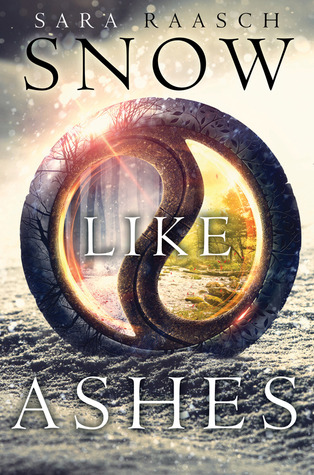
  Snow Like Ashes by Sara Raasch

Publish Date: October 14, 2014
Publisher:  Balzer + Bray

I love the premise of this fantasy book and it reminds me a bit of Graceling by Kristin Cashore which is one of my all time favorite YA reads.

A heartbroken girl. A fierce warrior. A hero in the making.

Sixteen years ago the Kingdom of Winter was conquered and its citizens enslaved, leaving them without magic or a monarch. Now, the Winterians’ only hope for freedom is the eight survivors who managed to escape, and who have been waiting for the opportunity to steal back Winter’s magic and rebuild the kingdom ever since.

Orphaned as an infant during Winter’s defeat, Meira has lived her whole life as a refugee, raised by the Winterians’ general, Sir. Training to be a warrior—and desperately in love with her best friend, and future king, Mather — she would do anything to help her kingdom rise to power again.

So when scouts discover the location of the ancient locket that can restore Winter’s magic, Meira decides to go after it herself. Finally, she’s scaling towers, fighting enemy soldiers, and serving her kingdom just as she’s always dreamed she would. But the mission doesn’t go as planned, and Meira soon finds herself thrust into a world of evil magic and dangerous politics – and ultimately comes to realize that her destiny is not, never has been, her own.


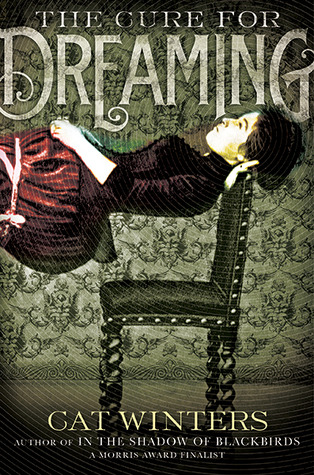
 The Cure for Dreaming by Cat Winters

Publish Date: October 14, 2014
Publisher: Amulet Books

Cat Winter's In The Shadows of Blackbirds was one of my favorite debut novels of 2013. I can't wait to see what she does next with a new time period.  

Olivia Mead is a headstrong, independent girl—a suffragist—in an age that prefers its girls to be docile. It’s 1900 in Oregon, and Olivia’s father, concerned that she’s headed for trouble, convinces a stage mesmerist to try to hypnotize the rebellion out of her. But the hypnotist, an intriguing young man named Henri Reverie, gives her a terrible gift instead: she’s able to see people’s true natures, manifesting as visions of darkness and goodness, while also unable to speak her true thoughts out loud. These supernatural challenges only make Olivia more determined to speak her mind, and so she’s drawn into a dangerous relationship with the hypnotist and his mysterious motives, all while secretly fighting for the rights of women. Winters breathes new life into history once again with an atmospheric, vividly real story, including archival photos and art from the period throughout.


Wednesday, March 26, 2014

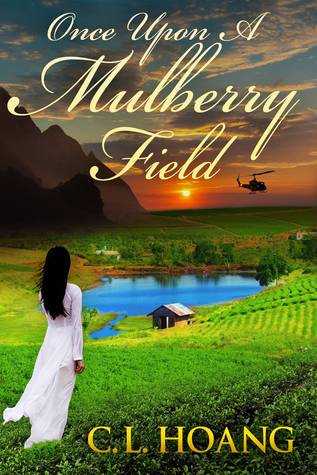
Author Interview with One Upon a Mulberry Field Author C.L. Hoang‏

  I'm delighted to today to introduce you all to C.L. Hoang, who just released his new book today called Once Upon a Mulberry Field which is about a multicultural love story set during the Vietnam War. If you are a fan of historical fiction and/more mixed race romance, do take a look at the book.


What inspired you to write Once Upon a Mulberry Field?

I started the book as a nostalgia project for my father so that we could capture memories of our family’s earlier life in Saigon, Vietnam, during the war. As I researched that time period to ensure accuracy, I discovered another perspective of the war—as experienced by American service people who fought over there and by their families in the States. I ended up merging these two contrasting points of view, in hopes of providing a more complete picture of that turbulent chapter in the history of both countries. But rather than being a “war book,” Once Upon a Mulberry Field is first and foremost a love story—an ode to the old and the new homelands, and a celebration of the human spirit and the redemptive power of love.

In Once Upon a Mulberry Field, the main character, Roger Connors, is a U.S. Air Force physician sent to Vietnam during the height of the war. Why did you decide to tell the story from an American point of view?

In an attempt to be objective and to view things from a different perspective from the one I had known growing up, I chose to recount the events through the voice of an American soldier. Needless to say, it was an eye-opening experience.

Roger and his fellow USAF buddies have differing views about the war in Vietnam. What can you tell us about the atmosphere surrounding the war and the way it was viewed in both America and South Vietnam?

In South Vietnam, the war was about preventing communism from destroying the budding and fragile democracy—a matter of crucial survival. In America, it was a controversial and misunderstood war, with the unpopular draft and the constant drumbeat of violence and gore shown nightly on TV news heightening the tension and anxiety among the public. There was widespread misinformation and confusion, fanned by undeniable passions on all sides.

There are two women in Roger’s life: the beautiful Vietnamese widow, Lien, and his fiancĂ©e at home, Debbie. How would you characterize his relationship with each of these women? In your view, does he feel differently toward one or the other?

The two women symbolize the clashing worlds confronting Roger. Debbie represents the familiar, secure home setting where things are as they seem—tangible, comforting, as lovely and dependable as the sunny California weather. Lien, on the other hand, is the daughter of an exotic tropical land, beautiful and tragic, who appears and vanishes without warning, like a monsoon thundershower. Roger thus finds himself constantly in the grips of a struggle between stormy passion and lifelong friendship.

You interviewed a number of Vietnamese and American civilians and veterans as part of your research for this novel. What did you learn in these interviews and how did they influence the story you tell in Once Upon a Mulberry Field?

I learned that nothing is ever as black-and-white as we like to assume, and that truth is often inconvenient and blinded by the passions of the time. This insight gave me a more compassionate understanding of the characters and what they went through, no matter what their feelings about the war.

Are you working on another novel? If so, what can you tell us about it?

Vietnam is a beautiful country with a rich cultural heritage. I’d like to capture in writing some of that heritage as I still remember it—ancient folklore that highlights the universal human condition and spirit. It may come in the form of a new novel, or a collection of short stories.


About the book:


A mesmerizing debut novel, Once Upon a Mulberry Field tells a heartrending tale of American and South Vietnamese love at a time when both countries were torn apart by war. Set at Bien-Hoa Air Force Base near Saigon in 1967, at the height of the war and the Tet Offensive, the novel explores the blossoming romance between a U.S. Air Force doctor, Roger Connors, and Lien, a young Vietnamese widow working as a hostess at a Saigon club. As the war progresses and political offensives set the country in turmoil, Roger and Lien are forced into circumstances that tear them apart. Many years later, Roger receives a cryptic note from a long-lost Air Force buddy announcing the visit of an acquaintance from Vietnam. The startling news resurrects ghosts of fallen comrades and haunting memories of a decades-old secret that Roger and Lien once shared.


About the Author:


C. L. Hoang was born and raised in South Viet-Nam and came to the United States in the 1970s. He graduated from the University of California, Berkeley, and earns his living as an electronic engineer, with eleven patents to his name to date. Books, history, and travel are his hobbies, and "Once upon a Mulberry Field," a love story set at the height of the Vietnam War, is his first novel, a project from the heart that took six years to complete. For more information on C. L. Hoang or Once Upon a Mulberry Field, please visit: www.mulberryfieldsforever.comor www.amazon.com.

Thursday, February 20, 2014

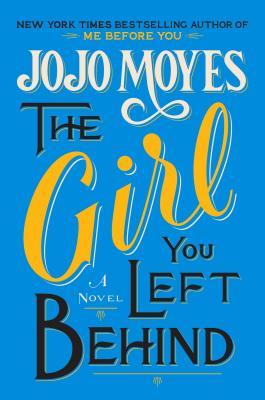
The Girl You Left Behind

  Jojo Moyes is quickly becoming of the many authors that is constantly checked out at my library. Although she has been writing for quite some time, just recently she has appeared in the spotlight in the United States. I think what draws readers to her books are the wonderful relationships that she creates between her characters and the extra care she gives to her female protagonists. Though I didn't enjoy The Girl You Left Behind as much as I did Me Before You, I thought it was a decent read.

Description: In 1916, French artist Edouard Lefevre leaves his wife Sophie to fight at the Front. When her town falls into German hands, his portrait of Sophie stirs the heart of the local Kommandant and causes her to risk everything - her family, reputation and life - in the hope of seeing her true love one last time.
  Nearly a century later and Sophie's portrait is given to Liv by her young husband shortly before his sudden death. Its beauty speaks of their short life together, but when the painting's dark and passion-torn history is revealed, Liv discovers that the first spark of love she has felt since she lost him is threatened.

Review: The title of Moyes' latest book is the name of a fictional painting that serves as catalyst in linking two loves stories, one set in occupied France during World War I, the other in 21st-century London. In occupied France, Sophie is helping the family while her husband, an artist who studied with Matisse, is off fighting. I liked Sophie right away and admired her tenacity in standing up to the German occupiers and to her suspicious neighbors who believe she is a German sympathizer. Sophie's vibrant personality draws the interest of the new German kommandant in the village. It turns out that the German kommandant is also an art lover and notices the portrait of Sophie, drawn by her husband, which captures her essence and her husband's adoration. Arranging to dine regularly at Sophie's inn with his men, the German kommandant begins a cat-and-mouse courtship trying to lure Sophie in by providing her more food for her family and security, but Sophie resists. In what could be described as emotional blackmail, Sophie learns that her husband is being held in a particularly harsh "reprisal" camp and she must decide what will sacrifice for his freedom: "The Girl You Left Behind" or herself.
  Jumping to 2006, we are faced with a different moral puzzle also entangled in a relationship. Liv is a young widow who has been struggling financially and emotionally since her husband David's sudden death. In an attempt to move on, she meets Paul in a bar after her purse is stolen. The two have chemistry and he is the first man she's been drawn to since she was widowed. They spend time together and their relationship blooms but things turn tumultuous when Paul notices that the "Girl You Left Behind" portrait on Liv's wall and rushes away with no explanation. There is no doubt that Paul is as smitten as Liv, but his career is finding and returning stolen art to the rightful owners specifically Liv's portrait is what threatens them apart. Liv and Paul soon find themselves on opposite sides of a legal battle.
  My issue with this book lies with the under-developed and the off-pace of the story lines. While I found Sophie's story heartbreaking in the depictions of a squalled occupied France and was drawn to the details of this story, I found it to be slow. I couldn't tell if the German kommandant was actually drawn to Sophie as a person or how she was represented in the portrait. I would have liked to have a bit more moments shared between Sophie and her husband which would give the portrait a more prominent role.
 Interestingly enough I found Liv's story line had a better pace and I was able to support the romance between Liv and Paul, who were adorable together, the legal battle went on much longer than needed. I grew restless towards the end and found myself skimming some sections just to see what would happen to Liv and Paul's relationship.
  If you are looking for a book that has a bit more emotional intensity, I would suggest reading Moyes' Me Before You instead of this book. If you're interested in art and World War I history without having your heart ripped out, you might enjoy this one a bit more.

Rating: 3 stars

Words of Caution: There is some strong language, allusion to rape, and sexual situations. Recommended for older teens and adults only.

If you like this book try: Birdsong by Sebastian Faulks, The Eight by Katherine Neville

Tuesday, February 18, 2014

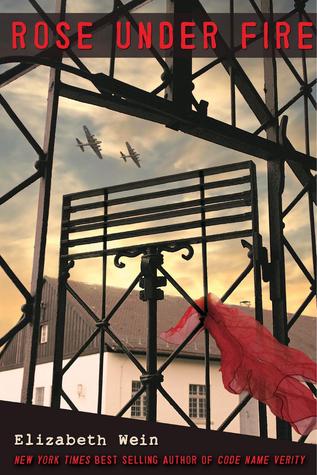
YA Minireviews: Code Name Verity + Rose Under Fire

  There are a plethora of books written about World War II and much of them tell the same exact story. Elizabeth Wein's Code Name Verity and Rose Under Fire takes a look into the female soldiers of World War II and brings their stories to life by focusing on friendship, loyalty, and defining what it means to be brave.

Description: Oct. 11th, 1943-A British spy plane crashes in Nazi-occupied France. Its pilot and passenger are best friends. One of the girls has a chance at survival. The other has lost the game before it's barely begun.
 When "Verity" is arrested by the Gestapo, she's sure she doesn't stand a chance. As a secret agent captured in enemy territory, she's living a spy's worst nightmare. Her Nazi interrogators give her a simple choice: reveal her mission or face a grisly execution.
  As she intricately weaves her confession, Verity uncovers her past, how she became friends with the pilot Maddie, and why she left Maddie in the wrecked fuselage of their plane. On each new scrap of paper, Verity battles for her life, confronting her views on courage, failure and her desperate hope to make it home. But will trading her secrets be enough to save her from the enemy?
Review: Code Name Verity is historical fiction at its best from a seemingly unreliable narrator, a strong friendship and wonderful historical detail at its core. When the story begins, Julia is an unnamed prisoner, who is formerly a wireless operator for the British and held captive in France by a seemingly sadistic Nazi interrogator. In exchange for small bits of freedom, she "sold her soul" and is giving pieces of code in exchange for her life. While most readers can predict the outcome of Julia, we do have flickers of hope that she will be freed as we see small glimpses of humanity of her enemies.
  Wein excels in making a war story feel human. Interspersed with the story of Julia's fierce fight for survival is a different tale: that of how she came to be in France and of her friendship with Maddie Brodatt, a British civilian pilot. The friendship between these two women are unlikely as they are from two different social classes and it happens very quickly. As Julia tells their story, she also reveals small bits of her attempts at survival and escape. In the second half of the book, Maddie narrates, telling of her desperate attempts to rescue her friend and revealing both the truth of what happened to each of them, and the truth of Julia's bravery.
 Code Name Verity is a hard book to review in that I personally liked it and can appreciate the complex layers of the story and its characters, however, I didn't love it. The military jargon and the abrupt insertion of the author's voice made me lose my focus and concentration of the book and distanced myself emotionally. I'm almost embarrassed to say that I didn't cry at all while reading this book when I know others have. Perhaps I should have tried listening this one on audiobook instead of reading it and my opinions might have changed. Nonetheless I highly recommend this book to readers who enjoy historical fiction and especially learning about World War II. I think it would make a wonderful bookclub book and discussion.

Rating: 4 stars

Words of Caution: Scenes of torture, war violence, and language. Recommended for Grades 9 and up.

If you like this book try: Chains by Laurie Halse Anderson, Daniel half human by David Chotjewitz, Soldier X by Don Wulffson,


Description: While flying an Allied fighter plane from Paris to England, American ATA pilot and amateur poet, Rose Justice, is captured by the Nazis and sent to RavensbrĂĽck, the notorious women's concentration camp. Trapped in horrific circumstances, Rose finds hope in the impossible through the loyalty, bravery and friendship of her fellow prisoners. But will that be enough to endure the fate that's in store for her?

Review: Rose Under Fire is a companion to Code Name Verity and could easily be read as a standalone. Our protagonist this time is an American female pilot named Rose Justice, who ferries Allied planes from England to Paris. The first quarter of the book, which begins in 1944, describes Rose’s work, both its dangers and its highs. We also get to meet characters from Code Name Verity, especially the fiery Maddie. Unlike the other soldiers who know first hand how horrific war is, Rosie is very naive and idealistic. Her perspective and her flowery descriptions change drastically when she is captured and quickly shipped off to RavensbrĂĽck, the notorious women’s concentration camp in Northern Germany. The horror of the camp, with its medical experimentation on Polish women who called themselves rabbits is ably captured and gut wrenching. Yet, along with the misery, Wein also reveals the humanity that can surface, even in the worst of circumstances. Unlike some readers, I didn't have a problem with the diary format though it does get a bit clunky in places. I thought this one was much more introspective and personal than Code Name Verity because we are only following Rose. I also appreciated the fact that Rose isn't a perfect character but frail and may not always do the right thing in dire situations. Though the tension is different than in Code Name Verity, it is still palpable and highly readable.

Rating: 4 stars

Words of Caution: Torture scenes, strong war violence, and some language. Recommended for Grades 9 and up.

If you like this book try: The Boy in Striped Pajamas by John Boyne, Flygirl by Sherri Smith

Thursday, February 6, 2014

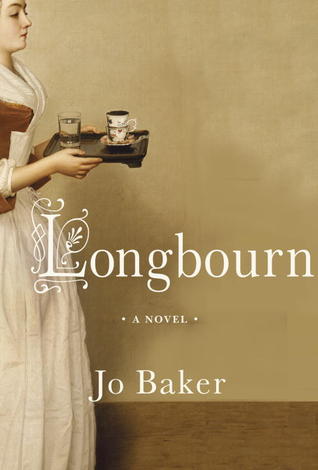
Longbourn

  I've had a terrible run of adult reads lately. Books that had lots of potential for being a great read have crashed and burned. I'm afraid I am in a reading slump with these reads. Does anyone have any great adult fiction or even nonfiction reads that you can't put down and have been recommending nonstop? If so, please let me know!

Description: Pride and Prejudice was only half the story...
 In this irresistibly imagined below stairs answer to Pride and Prejudice,the servants take center stage. Sarah, the orphaned housemaid, spends her days scrubbing the laundry, polishing the floors, and emptying the chamber pots for the Bennet household. But there is just as much romance, heartbreak, and intrigue downstairs at Longbourn as there is upstairs. When a mysterious new footman arrives, the orderly realm of the servants’ hall threatens to be completely, perhaps irrevocably, upended.

Review: I had very high expectations for Longbourn. It was the coveted ARC at ALA this spent summer and has received several starred reviews from journals such as Booklist, Kirkus, and Publishers Weekly. Unfortunately, for me, I couldn't match my enthusiasm for this book like the other reviewers.
  Longbourn is marketed as Pride and Prejudice meets Downton Abbey story. While the Bennets do appear in the story, their lives unfold in the background much like the grown ups in the Peanuts comics and when one of the rare times they do appear it is to berate the servants. The light, comedic tone of Pride and Prejudice quickly turns to somber and bleak with very little bright moments. The spotlight of Longbourn is firmly fixed on the small servant staff that the Bennets employ and their own personal plights and herein lies the fatal flaw of the novel for me.
  While the novel is well written, Baker fails to make the servants interesting characters and come alive. Baker spends more time in creating horrible situations for her characters and ways that they could suffer than actually fleshing them out. While I did sympathize with a few, I wasn't attached to them as I should be and I really didn't care all that much for what was happening to the servants. I was also taken aback on how negatively the Bennets are portrayed. While I understand there has to be a difference stated between the employer and employee, there was a bitterness that is usually associated with a wealthier employer. If you recall, the Bennets are only a middle class family and they only employ a very small serving staff. I had a hard time believing that progressive thinkers such as Mr. Bennett and Elizabeth Bennett would rebuff their servants so severely.
  Readers who haven't read Pride and Prejudice will not feel lost with this story as it follows a skeletal outline of the original novel's plot, however, I think they will fail to realize the impact of the scandalous ways of the smarmy Mr. Wickham. Due to my disinterest, I thought the pacing was quite slow but perhaps someone who is more invested into the story would not find fault with the pacing. Would I recommend Longbourn? Well, that's a difficult question to answer. If you're looking for a happy spin off of Austen's classic, look somewhere. If you enjoy melodrama and are okay with lack luster characters, give Longbourn a try.

Rating: 3 stars

Words of Caution: There are inferences of sexual situations and attempted rape. There is are also some graphic war violence descriptions along with punishment of slaves. Recommended for older teens and adults only.

If you like this book try: An assembly such as this by Pamela Aidan, The Colour of Milk by Nell Leyshon,

Tuesday, December 31, 2013

Top 10 Tuesday: Favorite Books of 2013

 Sorry for the white noise on the blog. I'm wrapping up a few left over reads for this year and will be participating in a few reading challenges for next year. Today's topic for Top 10 Tuesday, an awesome feature hosted by The Broke and the Bookish, is discussing our favorite reads from 2013. Here are mine, in alphabetical order, along with a link to my review. I still have to write a couple of reviews for a couple of them and hope to do that in the next few days. 


Favorite Books Read in 2013


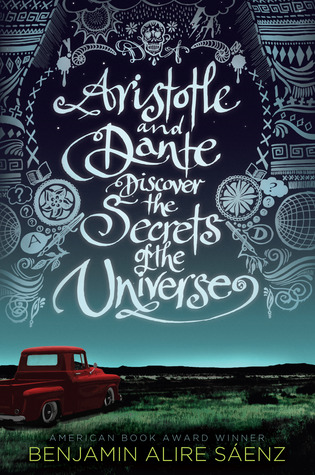
 Aristotle and Dante Discover the Secrets of the Universe by Benjamin Alire Saenz - Brilliant, simple, poetic, and profound. Aristotle and Dante are two memorable teens who try to unveil all aspects of our identity from our socially constructed roles of being a man or a woman to our cultural identity which may embrace or ignore. I can't believe I wanted this long to pick up this book!


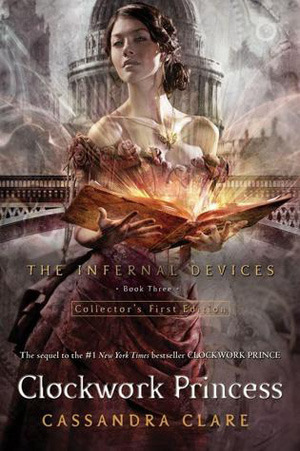
Clockwork Princess (Infernal Devices #3) by Cassandra Clare- a fantastic conclusion to the Infernal Devices trilogy and it pulls at your heartstrings from beginning to end. Politics, clockworks, heartache, hope, and a very cruel love triangle are the focus of the book.  I know there has been a love/hate relationship with the epilogue but I for one loved it.


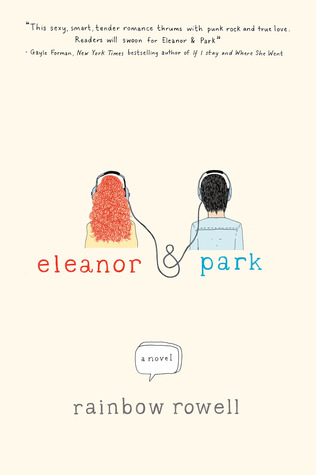
Eleanor & Park by Rainbow Rowell- I stayed away from this book because of all the glowing reviews in the YA community, but when it became the center of controversy during Banned Book Week I was too curious to not read this one. Now I see what the fuss is all about. Exceptional writing and lovable characters transcend this book from your ordinary YA romance. After reading this book, I want to go back and read everything that Rainbow Rowell wrote.


The Fault in Our Stars by John Green- Amazing. I'm still trying to form coherent sentences to describe what makes this book incredible. You will smile, laugh, think, and yes, ultimately cry while reading this book but I can assure you it's worth the investment. I think to really grasp why Green is so popular amongst critics and readers, you really need to read this book. 


Grandpa Green by Lane Smith- A fabulous picture book that tells the story so effortlessly and seamlessly with illustrations and text.


The House of Hades by Rick Riordan- Quite possibly my favorite book in the Heroes of Olympus series.The stakes are higher as our band of demigods fight demons-both literally and metaphorically.


The Lost Girl by Sangu Mandanna- A character driven science fiction/speculative fiction/dystopian book that sucked me right in. The Lost Girl gave me much to think about while being cathartic. The characters and premise asks us unsettling questions, but ultimately it is a story about love, grief, death, and above all what makes us human.


Love and Other Perishable Items by Laura Buzo- A fantastic, refreshing contemporary YA read previously released in Australia under the title Good Oil. Compelling characters and realistic slice of life plot, that made me realize that we don't always get the things we want, or what we think we want. Sometimes there's really no happy ending or a bad one. Sometimes, life is just...well, life.

The Song of Achilles by Madeline Miller- With language both evocative and lyrical of her predecessors and fresh outlook on familiar scenes that explore new territory, Miller is clearly a lover of ancient Greece. While I will always be a fan of Hector and have my heart broken by his death, Miller did make me pause and see Achilles and Patroculus in a new light. If you are a fan of Greek mythology, do pick this book up.


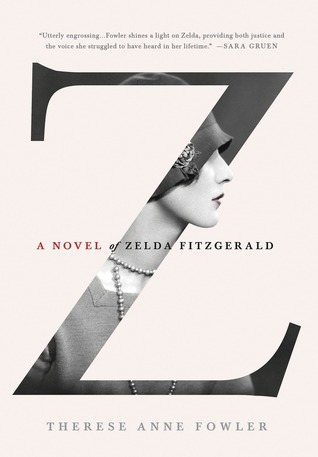
Z: A Novel of Zelda Fitzgerald by Therese Fowler- A lovely, sad and compulsively readable book. It is a common misconception that Zelda Fitzgerald was the reason for F. Scott Fitzgerald's ruin, but Fowler does a great job in making Zelda a three dimensional character and a woman who is struggling to make her own identity outside of her husband's shadow. Beautiful descriptions vividly recreate the 1920s.


What are your favorites from this year?

Wednesday, December 4, 2013

Listening for Lucca

  I've been meaning to pick up a book by Suzanne LaFluer for quite sometime now. I eyed Love, Ruby but I wasn't ready for a melancholic tone after reading some heavy books before it. I decided to try her latest, Listening for Lucca, which had a higher potential to be an uplifting read and it definitely hit the mark.

Description: "I'm obsessed with abandoned things." Siena's obsession began a year and a half ago, around the time her two-year-old brother Lucca stopped talking. Now Mom and Dad are moving the family from Brooklyn to Maine hoping that it will mean a whole new start for Lucca and Siena. She soon realizes that their wonderful old house on the beach holds secrets. When Siena writes in her diary with an old pen she found in her closet, the pen writes its own story, of Sarah and Joshua, a brother and sister who lived in the same house during World War II. As the two stories unfold, amazing parallels begin to appear, and Siena senses that Sarah and Joshua's story might contain the key to unlocking Lucca's voice.


Review: Listening for Lucca is an enticing story that effectively blends history, mystery, paranormal, and family in an enjoyable and quiet story. As the story begins, Siena moves from New York City to a Maine coastal town before she starts eighth grade. The move, which would irritate many her age, springs a new hope for Sienna and the the possibility of resolving her problem of connecting to people and curing her brother Lucca's mutism.
  Siena is unlike most teens. She is prone to have strange visions of the past in which transport her not only into another person's life and but also in a different time period. Afraid to mention her visions and being forever marked a weirdo, Siena keeps things to herself and hopes that a new home and atmosphere will maker her visions go away. She also harbors a deep guilt that she is responsible for Lucca's silence and spends lots of time with him and hoping that he will talk. She also collects all sorts of found items that she deems abandoned. 
  In Maine, she sees and hears members of the family who lived in her house during World War II. When she writes with an old pen found in the house, it produces not her handwriting, but that of Sarah, a girl from the earlier period. Even more astonishing, she seems to actually enter Sarah's mind, seeing and feeling everything along with her. Siena finds a lot of commonalities between herself and Sarah: the yearning to connect to someone, the love for a sibling, etc. She also is able to share Sarah's brother Joshua's war experiences, which send him home psychologically damaged and like Lucca completely removed from his family. 
  Through a compassionate act of courage, Siena's gift ultimately provides satisfying solutions for Sarah's family and her own. LaFleur deftly handles the tale's many layers, never allowing readers to get lost nor bored. Events and characters are fully developed and are completely believable, without making it feel contrived. 
  The paranormal aspect of Listening Lucca is very subdued, not meant to scare its readers but are suspenseful and draw you closer to the story. I also think this device serves a more complex purpose-allowing the reader to get a glimpse into Siena's psyche- her fears, vulnerabilities, guilt, and desires. Her visions bring her a renewed confidence and allows her to make new friendships who find her visions interesting and cool, even a budding new romance. Her ability to see, interact with, and even alter the past eventually provides her with the insight to help her brother regain his desire to speak and to reestablish their shaking sibling relationship. 
 Though the secondary characters are also well written and fleshed out, the story belongs to Siena and her journey to self acceptance. The first half of the book is a bit slow but soon picks up when the visions are introduced. Listening for Lucca is a heartwarming experience. I think readers will forgive its slow start and enjoy its satisfying conclusion. 

Rating: 4 stars

Words of Caution: There are glimpses of the battlefields of World War II but they are tastefully done, not too graphic or overwhelming for young readers. Recommended for Grades 5 and up.

If you like this book try: When You Reach Me by Rebecca Stead, Across the Reach by Cynthia Furlong Reynolds, or Flip-Flop Girl by Katherine Paterson

Tuesday, November 26, 2013

Love Disguised

  Shakespeare in Love is one of my all time favorite movies. I've seen it at least ten times, each time discovering new connections to his wonderful plays. When I first heard of Love Disguised by Lisa Klein, I thought the book had a similar vibe to my favorite movie. I was really excited to read it and while I did enjoy it, it wasn't as satisfying as the movie.

Description: Will Shakespeare is about to meet the girl who will change his life forever. After a mixed-up courtship with the Hathaway sisters ends badly, Will jumps at the chance to go to London, where he can pursue his dream of becoming an actor. There, Will meets the unusually tall (and strong) Meg who has earned the nickname "Long Meg" for her height. She's also fleeing her own past as an orphan turned thief.    
  Disguised as "Mack," Meg was once a member of a band of boy thieves who betrayed her. When Will is robbed by those same villains, Meg disguises herself as "Mack" again--telling Will that Mack is her twin brother--in order to help Will recover his money. As Mack, she finds true friendship with Will. But is there more? And who is Meg really fooling with her disguise? What ensues is a tale involving love triangles, mistaken identities, and the pursuit of hapless villains, as Shakespeare becomes a key player in a lively drama that could have sprung from his own pen.

Review: Love Disguised is an innovative and ambitious imagining of young Will Shakespeare's life. Assisting his spendthrift father, a Stratford glover, Will dreams of escaping to become an actor. He gets his wish when his courtship with one of the Hathaway sisters goes awry, and his father sends him to London to negotiate a debt. Will is a hard character to like, but you can detect many similarities with the male leads in his play such as the fickle Romeo and the ambitious Macbeth. While we do see the conflicts in the Will's family, I would have to liked the author to dig deeper. Shakepeare's plays are rich in dysfunctional families and it would have been great to see where those seeds for his plays might have originated from.
  Along with Will, the other major character is Meg. Left to fend for herself after her father's death in prison and her mother's suicide, young Londoner Meg survives by disguising herself as a boy and becoming a petty thief until she's offered employment by kindly innkeepers at a bar. Unlike Will, I liked Meg right away and rooted for her throughout the story. I admired Klein for describing Meg as an average yet attractive, androgynous woman who is also admired for her wits and skills. She is well aware of the restraints on her freedom due to her gender and the double standards of being a male in her society. Meg clearly wants to break out and be independent, but realizes these dreams are futile because her society refuses to see her as anything but a woman- weak, subservient, and passive. Through Meg we get the vivid portrayal of the harsh Elizabethan world. 
  Will and Meg eventually meet at the Inn, but Meg is too late to rescue him from thieves who prey on rubes. While Will frets about repairing his fortunes, Meg concocts schemes to make it happen. Soon, Will's career as playwright and actor takes off, and Meg, thanks to her quick wit and acting chops, serves as his muse. I'm not truly convinced that Will had any romantic feelings for Meg or vice versa. I believed they admired each other but were also envious of one another, Meg of Will's freedom as a man and Will of Meg's confidence and strength. Readers looking for a swoon inducing romance between these two characters will be disappointed. 
  Labored subplots based on mistaken identity and cross-dressing slow the action, but ring true to the time period and are fascinating if you are a fan of the Bard. Like some of Shakepeare's problematic and famous comedies, things aren't so easily tied together in the end and leaves the reader with many questions to think about after they begin to deconstruct it. 
  Overall I would recommend Love Disguised to readers who enjoy historical fiction with light romance. Fans of the Bard will definitely pick up lots of allusions to famous works while readers who are meeting Shakespeare for the first time will get a better idea of the context of his plays.

Rating: 3.5 stars

Words of Caution: There are some fade-to-black sex scenes and allusions to physical abuse. Recommended for Grades 8 and up.

If you like this book try: Loving Will Shakespeare by Carolyn Meyer, Mistress Shakespeare by Karen Harper, Kissing Shakespeare by Pamela Mingle

Thursday, November 21, 2013

Life After Life

 Has anyone had a day, month, or a even a year in which they wished for a do-over? I know I have and this very feeling is what drew me to Kate Atkinson's much talked about novel, Life After Life, in which she explores the possibility of living again and again until you got it right.

Description: On a cold and snowy night in 1910, Ursula Todd is born to an English banker and his wife. She dies before she can draw her first breath. On that same cold and snowy night, Ursula Todd is born, lets out a lusty wail, and embarks upon a life that will be, to say the least, unusual. For as she grows, she also dies, repeatedly, in a variety of ways, while the young century marches on towards its second cataclysmic world war. Does Ursula's apparently infinite number of lives give her the power to save the world from its inevitable destiny? And if she can -- will she?

Review: Life After Life reminded me a lot of the old children series Choose Your Own Adventure in which it was up to the reader to decide where to take the story. As a child I hated those books because the ending I always chose no matter what either ended abruptly or the main character had died (which now thinking back on it- what does that say about me? Hmm..), but Atkinson thankfully takes a more interesting and ambitious route to explore in her latest novel. Her protagonist, Ursula, makes all the decisions: she can die at birth, or she can flourish and blossom; she can be wealthy, or she can be a fugitive; she can be the victim of rape, or she can choose her sexual destiny. 
  What makes Life After Life work as an engaging story is that all these possibilities arise, and all take the story in different directions, making us wonder if we would make the same decisions as she knowing the outcomes that has lead up to this critical point. As they say, hindsight is twenty-twenty, but we all know that the choices we make do have consequences some of which we can predict and others we can't. As you may suspect that all of these possibilities sometimes entwine, near to the point of confusion as characters take up more than one role but that is what's expected of in alternate realities. Atkinson suggests that all of these lifetime events can be folded up into one lifetime so that all are equally real. 
  My reactions to Ursula varied which each of her lives. There were times that I admired her for her tenacity, other times where I grew frustrated with her when she making a horrible, obvious mistake. Each life of Ursula added a new layer of complexity to her character and those surrounding her. I really enjoyed getting to know her family from various points of views. I also think I had an advantage in not getting disoriented by the book's nonlinear storytelling by reading other reviews. I knew when to expect Ursula to die and come back so I was more engaged as to what happened in each lifetime. I grew bored during Ursula's adolescence but I was immediately sucked right back in to the story during the beginnings of World War II and Ursula's journey to Nazi Germany. I will be honest and say that the book does become tedious after a while and I'm not sure if it needed to be over 500 pages but I'm glad I stuck with it. 
Provocative, entertaining, and beautifully written. Life After Life is a speculative fiction that would be enjoyed by fans of historical fiction and literary fiction alike. 

Rating: 4 stars

Words of Caution: There is some language, underage drinking, sexual situations including rape, and war violence. Recommended for mature teens and adults only.

If you like this book try: The Age of Miracles by Karen Thompson Walker, The Returned by Jason Mott, The Impossible Lives of Greta Wells by Andrew Sean Greer, Blackout by Connie Willis, for a YA book try Before I Fall by Lauren Oliver, Memoirs of a  Teenage Amnesiac by Gabrielle Zevin

Tuesday, November 12, 2013

YA Mini-Reviews: The Boy on the Bridge, Madness Underneath, and Truly, Madly, Deadly

I thought I would do some mini-reviews of books that were a bit of a mixed bag. Please note that all of these reviews are based on an advanced reader's copy provided by the publishers via Netgalley.

Description: Laura Reid goes to Leningrad for a semester abroad as Cold War paranoia is peaking in 1982. She meets a young Russian artist named Alexei and soon, with Alexei as her guide, Laura immerses herself in the real Russia--a crazy world of wild parties, black-market books and music, and smuggled letters to dissidents. She must keep the relationship secret; associating with Americans is dangerous for Alexei, and if caught, Laura could be sent home and Alexei put under surveillance or worse. At the same time, she's been warned that Soviets often latch onto Americans in hopes of marrying them and thus escaping to the United States. But she knows Alexei loves her. Right?
  As June approaches--when Laura must return to the United States--Alexei asks Laura to marry him. She's only nineteen and doesn't think she's ready to settle down. But what if Alexei is the love of her life? How can she leave him behind? If she has a chance to change his life, to rescue him from misery, shouldn't she take it?

Review: When I read the description of this book, I had expected a similar version of Stephanie Perkin's fabulous Anna and the French Kiss except the story is set in Cold War Russia, but The Boy on the Bridge did not meet my expectation at all. The relationship between Laura and Alexei felt contrived and lacked chemistry. As a result, I thought they were really boring characters.The setting of Russia makes up for a lot of the book, however, I wanted some background to the Cold War. My history lessons of the Cold War a bit fuzzy at best so I was hoping this book would introduce teens to this time period but it does not. We do get the sense of hysteria and the lack of privacy, but we don't get the full impact on why people like Alexei want to leave Russia and immigrant to other countries. Overall The Boy on the Bridge is a very disappointing teen romance that has a lot of potential to become a stronger story.

Rating: 2 stars

Words of Caution: There is some language, scenes of underage drinking, and allusions to sexual situations.

If you like this book try: Eva Underground by Dandi Daley Mackall, Anna and the French Kiss by Stephanie Perkins, Pardon My French by Cathy Hapka


Description: After her near-fatal run-in with the Jack the Ripper copycat, Rory Deveaux has been living in Bristol under the close watch of her parents. So when her therapist suddenly suggests she return to Wexford, Rory jumps at the chance to get back to her friends. But Rory's brush with the Ripper touched her more than she thought possible: she's become a human terminus, with the power to eliminate ghosts on contact. She soon finds out that the Shades--the city's secret ghost-fighting police--are responsible for her return. The Ripper may be gone, but now there is a string of new inexplicable deaths threatening London. Rory has evidence that the deaths are no coincidence. Something much more sinister is going on, and now she must convince the squad to listen to her before it's too late.


Review: I was really disappointed with The Name of the Star, Maureen Johnson's first venture into the paranormal/mystery genre after setting up very high expectations but I enjoyed this sequel much more. In this book I got a better understanding of Rory's quirky personality and her witty internal monologues. Her voice, in my opinion, is much stronger in the book and I began to care for her much more. The plot is relatively slow, which is common for a middle book but Johnson does pick it up when she add a new mystery angle in addition to the Jack the Ripper case: Rory is much more than a girl who can see ghosts, but now she has become a human "terminus," meaning that when she touches a ghost, it disappears for good. Hailing from a Louisiana family peppered with eccentric alleged mystics, Rory was, from the beginning, aware of the spirit world. Now she hesitates when her comrades try to persuade her to put her power to civic use, even as other suspicious deaths crop up to suggest that the Ripper's destruction may have simply unleashed more mayhem. The book ends with a lot of questions in the air especially when one of Rory's Shade comrades is in serious condition. I'm definitely hanging on to this series and am really curious to see how everything ends.

Rating: 3.5 stars

Words of Caution: There is some language, scenes of underage drinking and drug use, and mysterious deaths that may be a bit too much for younger readers. Recommended for strong Grade 7 readers and up.

If you like this book try: The Dead and Buried by Kim Harrington, Past World by Ian Beck, The Ghost and the Goth by Stacey Kade


Description: They Said It Was An Accident...

Sawyer Dodd is a star athlete, a straight-A student, and the envy of every other girl who wants to date Kevin Anderson. When Kevin dies in a tragic car crash, Sawyer is stunned. Then she opens her locker to find a note: You're welcome.

Someone saw what he did to her. Someone knows that Sawyer and Kevin weren't the perfect couple they seemed to be. And that someone—a killer—is now shadowing Sawyer's every move.


Review: Truly, Madly, Deadly is a great premise that grabbed my attention right away, however, the execution of the story was a bit shaky. Jayne has a good sense of creating teasers, but I would have liked a bit more development leading up to suspense. The death of Sawyer's boyfriend isn't used to its full potential. I was confused as to why Sawyer didn't grieve enough for her boyfriend or why she didn't seem to share the same popular opinion of Kevin like her peers. There are hints of a possible abusive relationship but it is rushed and put in the story as a check mark for plot events just like a scene where a teacher takes things too far with a student. There is also a budding romance that I would have liked to see more of in the story.
  You need to suspend a lot of disbelief when reading Truly, Madly, Deadly such the delay in going to police, not sharing important information of a potential stalker with parents, but this is common for teen suspense novels. Overall Truly, Madly, Deadly is a good popcorn book that I would recommend to reluctant readers but I would suggest something more complex to my advanced teen readers.

Rating: 3 stars

Words of Caution: There is language, underage drinking, a scene of sexual advances from a teacher, and PG-13 violence. Recommended for Grades 9 and up.

If you like this book try: Acceleration by Graham McNamee, Killing Mr. Griffin or I Know What You Did Last Summer by Lois Duncan

Thursday, November 7, 2013

The Light Between Oceans

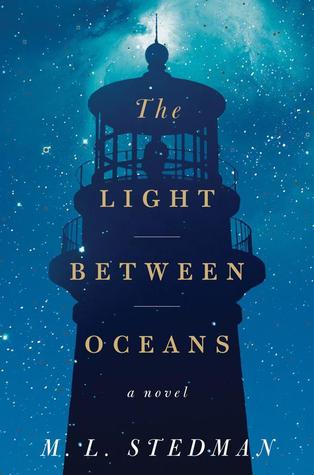
  If you are looking for a provocative page-turner, read The Light Between Oceans by M.L. Stedman. With delicious moral complexity and great writing, Stedman creates a world where there is no right answer and where justice for one person is another person's tragic loss. 

Description: After four harrowing years on the Western Front, Tom Sherbourne returns to Australia and takes a job as the lighthouse keeper on Janus Rock, nearly half a day’s journey from the coast. To this isolated island, where the supply boat comes once a season and shore leaves are granted every other year at best, Tom brings a young, bold, and loving wife, Isabel. Years later, after two miscarriages and one stillbirth, the grieving Isabel hears a baby’s cries on the wind. A boat has washed up onshore carrying a dead man and a living baby. 
   Tom, whose records as a lighthouse keeper are meticulous and whose moral principles have withstood a horrific war, wants to report the man and infant immediately. But Isabel has taken the tiny baby to her breast. Against Tom’s judgment, they claim her as their own and name her Lucy. When she is two, Tom and Isabel return to the mainland and are reminded that there are other people in the world. Their choice has devastated one of them. 


Review: The Light Between Oceans is a haunting tale that can only end in heart break. It is a story of moral dilemmas centered around two couples, a desperate attempt at happiness, and a life forever changed. Tom Sherbourne is an emotionally scarred World War I war veteran who returns to Australia looking for the comfort of solitude as a lighthouse keeper on remote Janus Rock island. While others complain of being far removed from other locals, Tom finds peace and unexpectedly falls in love with the vibrant and spirited Isabel. Their romance is sweet and progresses naturally. They marry and hope to start a family, but Isabel suffers miscarriages then loses a premature baby. Stedman effectively describes their gut wrenching pain, the slow fractures in Tom and Isabel's relationship. Tom desperately wants things to go back to normal, the pain reminding him of the war he can not shake off while Isabel sees a cold man and feeling along in her own personal war. My heart ached for both of the characters and I really hoped that they would get some ray of sunshine after some really rough months. 
  The sunshine does indeed come after two weeks after their last catastrophe. Miraculously a dinghy washes ashore containing a man's body and a crying infant. Isabel wants to keep the child, which she sees as a gift from God; Tom wants to act correctly and tell the authorities. Isabel's joy and attachment to the baby is so immense and the prospect of giving her up so destructive, that Tom gives way. 
  Like many things in life, all good things must come to an end. Years later the identity of the baby and her real family history resurface. Once again Isabel and Tom are faced with another moral dilemma: to admit to their mistake or to hide? As a reader I became so absorbed in this story not because of its plot but for the way Stedman puts her characters through the moral wringer. The plot as if almost ready made for a movie is so cleverly constructed and precise in providing character development that makes even the reader struggle for a resolution. Normally in stories of similar cases you could easily identify who is being selfish and clearly in the wrong, but with knowing the context of the situation things aren't easily black and white. The suspense leading to the resolution is fantastic and makes you turn the page quickly. With lush descriptions of Austrailia and vivid characters, this is a great debut novel and a perfect choice for a book club selection.  

Rating: 4 stars

Words of Caution: There is some strong language and gory descriptions of a miscarriage and delivery of a baby.

If you like this book try: The Pilot's Wife by Anita Shrieve, Atonement by Ian McEwan, The Husband's Secret by Liane Moriarity

Thursday, September 26, 2013

Z: A Novel of Zelda Fitzgerald

  There is a growing trend in historical fiction for adults that are revisiting the lives of famous artists/authors through the eyes of their wives/lovers. Loving Frank by Nancy Horan is a huge bestselling novel that centers on Frank Lloyd Wright and Martha Cheney was published in 2009. Two years later, The Paris Wife by Paula McLain, which details the love story between Ernest Hemingway and Hadley Mowrer, became a hot pick and this year's highly recommended novel Z details the lives of Zelda and F. Scott Fitzgerald. There are two more highly buzzed books set to release in a few months about Edgar Allen Poe in Mrs. Poe by Lynn Cullen and Robert Louis Stevenson in Wide Starry Sky by Nancy Horan.

Description: When beautiful, reckless Southern belle Zelda Sayre meets F. Scott Fitzgerald at a country club dance in 1918, she is seventeen years old and he is a young army lieutenant stationed in Alabama. Before long, the “ungettable” Zelda has fallen for him despite his unsuitability: Scott isn’t wealthy or prominent or even a Southerner, and keeps insisting, absurdly, that his writing will bring him both fortune and fame. Her father is deeply unimpressed. But after Scott sells his first novel, This Side of Paradise, to Scribner’s, Zelda optimistically boards a train north, to marry him in the vestry of St. Patrick’s Cathedral and take the rest as it comes.
  What comes, here at the dawn of the Jazz Age, is unimagined attention and success and celebrity that will make Scott and Zelda legends in their own time. Everyone wants to meet the dashing young author of the scandalous novel—and his witty, perhaps even more scandalous wife. Zelda bobs her hair, adopts daring new fashions, and revels in this wild new world. Each place they go becomes a playground: New York City, Long Island, Hollywood, Paris, and the French Riviera—where they join the endless party of the glamorous, sometimes doomed Lost Generation that includes Ernest Hemingway, Sara and Gerald Murphy, and Gertrude Stein.
   Everything seems new and possible. Troubles, at first, seem to fade like morning mist. But not even Jay Gatsby’s parties go on forever. Who is Zelda, other than the wife of a famous—sometimes infamous—husband? How can she forge her own identity while fighting her demons and Scott’s, too?


Review: Z: A Novel of Zelda Fitzgerald is a lovely, sad and compulsively readable book. It is a common misconception that Zelda Fitzgerald was the reason for F. Scott Fitzgerald's ruin, but Fowler does a great job in making Zelda a three dimensional character and a woman who is struggling to make her own identity outside of her husband's shadow. 
  It's very rare to completely disappear in a historical fiction novel, though details are present of the setting and ambiance you always get the sense that you are a distant from the characters. In Z Fowler's depiction of the Jazz Age is so immaculate that you don't merely revisit the time period but are virtually there witnessing the crazy dinner parties. The setting and details are exactly what we expected but the author goes beyond the superficial and gets to the heart of its subject matter.
  I was really surprised how much I liked Zelda as a character. Sure she was daring, unconventional, and self centered at times but she was also very traditional and paradoxically rooted in her Southern culture. The book briefly touches upon her childhood but mainly focuses on her life's whirlwind journey after she meets the handsome and charming Scott, a budding writer who is about to become famous. The lives Zelda and Scott shared were indulgent and decadent, leaving no securities for future emergencies. I couldn't help but shake my head in wonder how anyone could live their life so recklessly, but that was the rage of the Roaring Twenties. 
  The early years of their marriage are sublime, for both Scott and Zelda are high-spirited, passionate and deeply committed to each other. It's obvious that they adored one another, but there also many reflective moments where Zelda pauses to think how much Scott wanted her to play the role of a celebrity: always present wearing the most expensive and provocative clothes at parties, be charming but don't talk too much, and always try to bring the spotlight back to him. Zelda at first goes along with her husband, relishing the latest fashions, meeting, and even being a celebrity herself but she later realizes that Scott doesn't really want a wife present but a trophy to carry around. Soon all is temporarily forgotten when a chance to travel and live in Paris arises. There is a childlike awe in traveling to Paris, the hub of intellectual creativity, where they had an extensive and astonishing social circle that included Picasso and his mistress, with Cole Porter and his wife, with Gerald and Sara Murphy, Gertrude Stein and Alice B. Toklas, Ezra Pound and Jean Cocteau, Hemingway and Hadley. 
  With the success of This Side of Paradise, Scott quickly believes he is the greatest author alive, and life becomes an endless series of parties. His drinking escalates to the point where he was to drink in order to stay focused. The Fitzgerald's interactions with the Hemingway in particular highlights the flaws of both characters and their troubled marriage. Scott is so obsessed with being "the American author" that he catalyzes Zelda's own unhappiness and nervous breakdown, leading her to an asylum (she was misdiagnosed as a schizophrenic at the time and would now me diagnosed as having biopolar depression). We witness Zelda's increasing desperation to establish her own identity- she writes stories that Scott "claims" as his own to sell to the publisher when they desperately needed the money. She was also an artist who loved to paint and a great dancer. She in fact studied ballet and gets an invitation to join a dance company in Italy, but Scott won't allow her to leave. He bullies her, and she fights back. Their pull and tug relationship is made Zelda and Scott so alluring and memorable for readers. I know that as soon as I finished Z: A Novel of Zelda Fitzgerald, I wanted to read This Side of Paradise all over again. 

Rating: 4.5 stars

Words of Caution: There is language and sexual situations in the novel. Recommended for older teens and adults.

If you like this book try: The Romantic Egoists: Pictorial autobiography from the scrapbooks and albums of F. Scott and Zelda Fitzgerald edited by Matthew J. Bruccoli, The Paris Wife by Paula McLain, Call Me Zelda by Erika Robuck, Wide Starry Sky by Nancy Horan (released on January 2014)

Monday, September 23, 2013

Blog Tour: Namesake by Sue Macleod + Giveaway!

    Sue Macleod's Namesake is a book that I thoroughly enjoyed. The story grabbed me right away. If you are in the mood for a well written and suspenseful historical fiction read, be sure to check this book out! I'm also doing a giveaway of the book so if you're interested, be sure to check out the giveaway information at the end of this post.

Description: It started with a history project. Mr. Gregor assigned a research paper on a figure from the Tudor era, and of course Jane Grey had to pick her namesake—Lady Jane Grey, the fifteen-year-old girl whose parents schemed to place her on the throne of England, then abandoned her to face the executioner. The project is engrossing from the start, but when Jane opens a mysterious prayer book and finds herself in the Tower of London in 1553, she ends up literally drawn into her namesake’s story. Soon, Jane is slipping into the past whenever the present becomes too unbearable, avoiding her mother’s demands, her best friend’s fickleness, her crush’s indifference. In the Tower she plays chess with the imprisoned Lady Jane, awed by her new friend’s strength and courage. And it is in the Tower, keeping vigil as the day of the execution draws near, that Jane learns that she, too, must have the courage to fight for her own happiness.

Review: Namesake is an absorbing read that combines the excitement of time traveling, realistic fiction, and historical fiction. In the present day, our heroine Jane Grey is dealing with her own tenuous situation at home. Her father has passed away and her mother seeks solace by drinking heavily, leaving Jane in the dark with her wild mood swings. At school Jane is wrapped up in an assignment for her history class, detailing the life of Lady Jane Grey who was the Queen of England for just nine days until she saw her horrible end.
  I really liked present day Jane, she is an ordinary girl who has insecurities and doubts just like all of us, but by no means is she boring. Jane is sympathetic to Lady Jane's dilemma, recognizing the similarity in the extent of their dire circumstances and inability to change them. Jane is ashamed of her mother's drinking habit and would like to get help but doesn't want to exacerbate her mother's wild mood swings. Not surprising that Jane has concerns when her history group must meet at each other's homes for study and editing sessions. And with best friend Megan hanging out with the tactless, arty Crisco and wrapped up in a boyfriend situation, Jane is feeling more and more isolated and unable to find support. For Jane, slipping back into 1553 gives her an opportunity to exert some control.
  The way the time traveling works is very interesting. Lady Jane's Book of Prayers is Jane's portal back to time. While Namesake may be initially seen as a standard time-slip novel, with a contemporary character going back in time to learn something which she could apply to her own life, the book goes beyond trope by having both Janes interact and take active roles in each other's lives, even to the point of altering history if that could save their friendship. Jane educates Lady Jane on the vernacular and popular culture of her Halifax and Canada. And while Lady Jane does begin to try to wrap her head around the modern vernacular, I like how the author chose Lady Jane to use it as a foreign language instead of jumping back to modern language. Lady Jane's voice is authentic and learning modern English provides for some much-needed humor in a dark story. Her voice is true and melodic, never wavering from that of a sixteenth-century young woman. I really think you get a sense of who Lady Jane was as as person, a girl who died for her beliefs and who couldn't fight to changer her fate.    I'm really glad that the author chose a figure in the Tudor history who isn't necessarily scandalous and who isn't all that removed from the main character's age, to share their lives and their stories, and developing their new friendship which both of them needed desperately. Though the ending of Lady Jane's story is heartbreaking, it sparks a change in present day Jane and delivers a light romance along with a hopeful open ending. 

Rating: 4 stars

Words of Caution: There is some minor language in the book and there are allusions to the mother's alcoholism. Recommended for strong Grade 6 readers and up.

If you like this book try: Revolution by Jennifer Donnelly, Anastasia Secret by Susan Dunlap

GIVEAWAY

Due to the generosity of Pajama Press, the publisher for Namesake, I have 2 copies of the book to giveaway to 2 readers in the U.S. and/or Canada. The giveaway will last until Saturday, October 5th at 12:00 PM EST. To enter the giveaway, simply leave a comment with your name and email address so I can contact you if you win. The winners of the giveaway will be announced on the blog on Sunday, October 6th. Good luck!

Wednesday, September 18, 2013

Wonder Show

  Wonder Show was nominated for the William Morris award, an award given to debut authors, last year. I haven't heard much about the book until the book awards last year and decided to check it out.

Description: Ladies and gentlemen, boys and girls, step inside Mosco’s Traveling Wonder Show, a menagerie of human curiosities and misfits guaranteed to astound and amaze! But perhaps the strangest act of Mosco’s display is Portia Remini, a normal among the freaks, on the run from McGreavy’s Home for Wayward Girls, where Mister watches and waits. He said he would always find Portia, that she could never leave. Free at last, Portia begins a new life on the bally, seeking answers about her father’s disappearance. Will she find him before Mister finds her? It’s a story for the ages, and like everyone who enters the Wonder Show, Portia will never be the same.

Review: It's difficult to call Wonder Show a novel as it is more like vinettes showing the slices of Portia's life. The story takes place during the Great Depression. Portia is burdened with guilt over the sudden death of her friend. She escapes from the McGreavey Home for Wayward Girls to search for Max, her father. Portia believes her father escaped from their Gypsy camp and followed the circus in hopes of finding a job and getting enough money to come back for her. With this hope in her heart, Portia escapes on a stolen bicycle and joins a carnival and finds a family of sorts in Mosco's Traveling Wonder Show.
  The story moves rather slowly in a sort of dreamlike fashion due to the predominately third person narration, making the reader an observer rather an active participant in the story. The pace picks up when Portia is introduced to the various characters of the circus.  She shares a trailer with Violet, a restless teenager whose parents and brother are albinos; trains for the ballyhoo under Jackal, who lures spectators to the sideshow of "freaks"; and enjoys the protection of Gideon, a young man whose father was impoverished by the stock-market crash. Portia has an unique place in the circus, while she is shunned for and constantly reminded of being 'normal' amongst the freaks, she is protected when her safety is threatened by the incredibly creepy and smarmy "Mister," who runs McGreavey's, comes to the circus in search of Portia.    There is plenty of melodrama in Wonder Show, but author balances this with the book's vivid setting and wide variety of secondary characters which Portia learns some of their back stories. The author also adds some nice information and insights about the circus life to give her story some context especially in some of the steamy aspects of the circus. I'm not exactly sure how popular this book will be with teens or if it's a book for everyone, but it's certainly worth checking out if you're curious about circuses.

Rating: 3 stars

Words of Caution: There are dark themes including the inferences of molestation, abandonment, animal cruelty as well as a sideshow act where beautiful conjoined sisters do a naked dance which gives enough detail to know what is going on. There is also a handful of strong language in the book too. With these reservations, I would recommended the book to strong Grade 7 readers and up.

If you like this book try:  August Acrobat by Ron Roy, Circus Galacticus by Deva Fagan, Henrietta Hornbuckle's Circus of Life by Michael De Guzman or for older readers Water for Elephants by Sara Gruen, Night Circus by Erin Morgenstern,